
Today in News History
On July 1, several notable moments in the history of News stand out. In 1690, Glorious Revolution: Battle of the Boyne in Ireland (as reckoned under the Julian calendar). In 1867, The British North America Act takes effect as the Province of Canada, New Brunswick, and Nova Scotia join into confederation to create the modern nation of Canada. John A. Macdonald is sworn in as the first Prime Minister of Canada. This date is commemorated annually in Canada as Canada Day, a national holiday. In 1873, Prince Edward Island joins into Canadian Confederation. In 1878, Canada joins the Universal Postal Union. In 1885, The United States terminates reciprocity and fishery agreement with Canada. In 1890, Canada and Bermuda are linked by telegraph cable. In 1935, Regina, Saskatchewan, police and Royal Canadian Mounted Police ambush strikers participating in the On-to-Ottawa Trek. In 1958, Flooding of Canada's Saint Lawrence Seaway begins. In 1980, "O Canada" officially becomes the national anthem of Canada. In 2020, The United States-Mexico-Canada Agreement replaces NAFTA. Together, these milestones provide historical context for today's news news and ongoing narratives.
Carney, Inuit meeting wraps with pledge on new program to replace child funding
Narrative Analysis: Card Stacking
KUUJJUAQ — A meeting between Prime Minister Mark Carney and Inuit leaders Tuesday wrapped with a commitment for a new program to replace the Inuit Child First Initiative, and for Ottawa to use its channels to get a proposed Inuit Nunangat University accredited. Carney was in Kuujjuaq, Que., with six of his cabinet ministers for [] The post Carney, Inuit meeting wraps with pledge on new program to replace child funding appeared first on Loonie Politics.
Narrative Intelligence Brief
This article was published by Loonie Politics, a source frequently categorized with a Unknown bias based in Canada. Our narrative intelligence engine continuously monitors coverage from this outlet to track framing, bias, and rhetorical patterns. In this specific piece, our systems detected the potential use of the "Card Stacking" technique. This narrative approach is often used to shape reader perception by highlighting specific emotional or rhetorical angles. By understanding the editorial perspective of Loonie Politics, readers can better contextualize the information presented and compare it across our broader media matrix to find the real narrative.
More from Loonie Politics
July 1, 2026
Trump to visit newly built Theodore Roosevelt Presidential Library in North Dakota’s Badlands
July 1, 2026
US, Canada, Mexico begin bumpy negotiations to renew North American trade pact
July 1, 2026
Trump’s actions signal a move toward institutionalizing people with disabilities, advocates warn
July 1, 2026
Chips, rotisserie chickens and other foods go provincial sales tax-free in Manitoba
July 1, 2026
Negotiations set to continue as U.S. prepares to blow past trade deal deadline
Reliability Insights
P
Technique: Card Stacking
System analysis detected use of specific narrative techniques in this piece.Analysis Methodology
This narrative analysis was generated using the CoDataLab Global Intelligence Engine. Our proprietary AI scans thousands of cross-border sources to identify sentiment patterns, framing techniques, and potential media bias. While AI provides the data-driven foundation, our objective is to empower readers with additional context beyond the standard headline.The content displayed above is a structured summary designed for rapid information processing. For the full original report, please visit the source outlet.More Coverage
Discussion
"village people"
Village People's Victor Willis Dead at 74 After "Aggressive Illness”

Lead singer of Village People dies aged 74
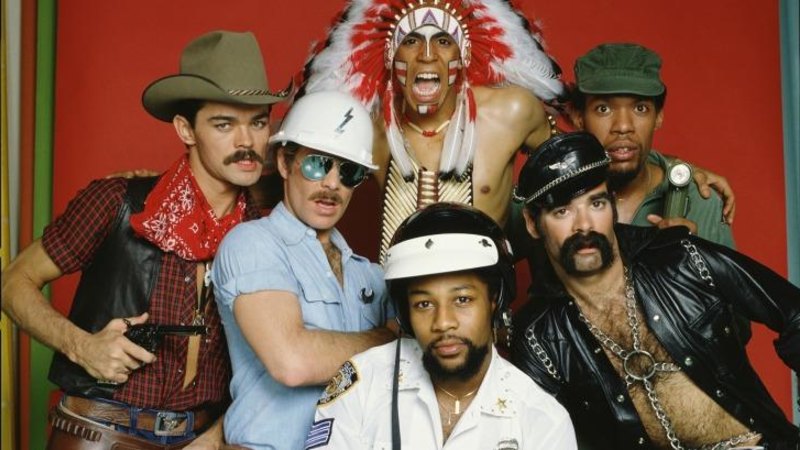
Trump honors Village People and ‘Y.M.C.A.’ singer Victor Willis after death announcement
