Today in News History
On July 9, several notable moments in the history of News stand out. In 1790, The Swedish Navy captures one third of the Russian Baltic fleet. In 1821, Four hundred and seventy prominent Cypriots including Archbishop Kyprianos are executed in response to Cypriot aid to the Greek War of Independence. In 1944, World War II: American forces take Saipan, bringing the Japanese archipelago within range of B-29 raids, and causing the downfall of the Tojo government. In 1950, Viktor Yanukovych, Ukrainian engineer and politician, 4th President of Ukraine was born. In 1955, The Russell-Einstein Manifesto calls for a reduction of the risk of nuclear warfare. In 1967, Yordan Letchkov, Bulgarian footballer was born. In 1974, Nikola Šarčević, Swedish singer-songwriter and bass player was born. In 1979, A car bomb destroys a Renault motor car owned by "Nazi hunters" Serge and Beate Klarsfeld outside their home in France in an unsuccessful assassination attempt. In 1997, A Fokker 100 from the Brazilian airline TAM launches engineer Fernando Caldeira de Moura Campos into 2,400 meters of free fall after an explosion that depressurized the aircraft. In 2006, One hundred and twenty-five people are killed when S7 Airlines Flight 778, an Airbus A310 passenger jet, veers off the runway while landing in wet conditions at Irkutsk Airport in Siberia. Together, these milestones provide historical context for today's news news and ongoing narratives.
Can Ukraine make Patriot missiles?
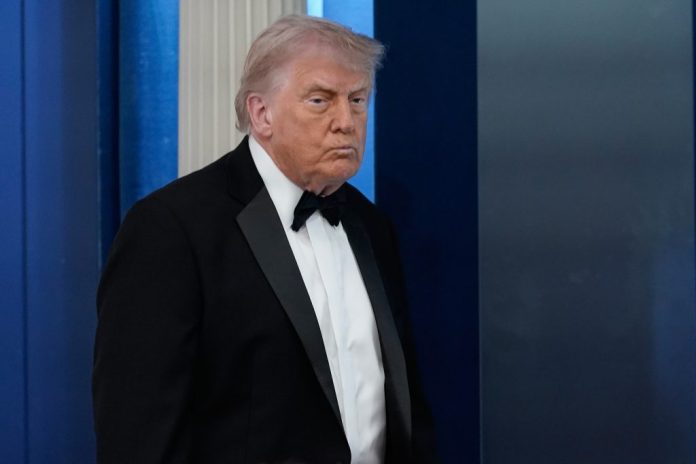
At the NATO summit on July 8th, President Donald Trump suggested to Ukrainian president Volodymyr Zelensky that Patriot missiles could be manufactured in Ukraine. CNN's Nick Paton Walsh reports on the challenges ahead, and how success could change the war.
Narrative Intelligence Brief
This article was published by CNN, a source frequently categorized with a lean left bias based in United States of America. Our narrative intelligence engine continuously monitors coverage from this outlet to track framing, bias, and rhetorical patterns. Our initial algorithmic scan of this specific piece did not flag high-confidence rhetorical techniques, suggesting a generally straightforward reporting style or neutral framing. By understanding the editorial perspective of CNN, readers can better contextualize the information presented and compare it across our broader media matrix to find the real narrative.
More from CNN
July 9, 2026
Draping covers scaffolding at White House
July 9, 2026
US struck multiple locations on Thursday - Iranian state media
July 9, 2026
This fashion designer traded gowns for body bags
July 9, 2026
Was the US-Iran deal ever real?
July 9, 2026
Ukraine’s new momentum, CA exodus & Trump’s AI red line | Fareed's Take roundup
Analysis Methodology
This narrative analysis was generated using the CoDataLab Global Intelligence Engine. Our proprietary AI scans thousands of cross-border sources to identify sentiment patterns, framing techniques, and potential media bias. While AI provides the data-driven foundation, our objective is to empower readers with additional context beyond the standard headline.The content displayed above is a structured summary designed for rapid information processing. For the full original report, please visit the source outlet.More Coverage
Discussion
"donald trump"
Trump’s Son Wipes $600M From Family Fortune With Disastrous Bet

Donald Trump's disturbing death joke to female journalist over Iran assassination threat exposed

Trump rightly calls off wedding after Iran’s abusive engagement