Today in News History
On June 20, several notable moments in the history of News stand out. In 1005, Ali az-Zahir, Fatimid caliph of Egypt (died 1036) was born. In 1652, Tarhoncu Ahmed Pasha is appointed Grand Vizier of the Ottoman Empire. In 1945, The United States Secretary of State approves the transfer of Wernher von Braun and his team of Nazi rocket scientists to the U.S. under Operation Paperclip. In 1950, Nouri al-Maliki, Iraqi politician, 76th Prime Minister of Iraq was born. In 1954, Ilan Ramon, Israeli colonel, pilot, and astronaut (died 2003) was born. In 1960, The Mali Federation gains independence from France (it later splits into Mali and Senegal). In 1982, The International Conference on the Holocaust and Genocide opens in Tel Aviv, despite attempts by the Turkish government to cancel it, as it included presentations on the Armenian genocide. In 1997, Cahit Külebi, Turkish poet and author (born 1917) passed away. In 2005, Larry Collins, American journalist, historian, and author (born 1929) passed away. In 2019, Iran's Air Defense Forces shoot down an American surveillance drone over the Strait of Hormuz amid rising tensions between the two countries. Together, these milestones provide historical context for today's news news and ongoing narratives.
Can the Kurds in Syria achieve autonomy after Assad? | DW Reporter
They are returning to their homeland, but it lies in ruins. Caught between fear and loss, Syria's Kurds ask themselves: Is there still a home for us? The journey home begins with hope — and often ends in despair. Many Kurdish families are venturing to return to their former homeland, only to find destroyed homes, new power arrangements and a fragile level of security. Mohammad recalls how he had to leave everything behind — now he stands amid the ruins of his life. The new ruling powers want a Syrian state, an army and centralized authority. This is the opposite of what the Kurdish authorities seek to preserve: decentralized governance, recognition of Kurdish identity and local security forces. As political promises clash with reality, uncertainty grows: How will the Kurds fit into the new Syria? DW's Senior International Correspondent Fanny Facsar and Afif Hanna Amireh report from Syria. Chapters: 00:00 Life after the war: Uncertainty in Syria 01:23 Escape and loss: Mohammad's story 02:31 Change of power and failed Kurdish talks 03:55 Journey through a fragmented country 04:55 Destruction in Aleppo and a difficult return 06:10 Afrin under Turkish influence 06:58 Memories of war and personal losses 08:20 Expert warns of instability and the threat of ISIS 09:14 Al-Roj Camp: Radicalization and lack of prospects 11:00 Hope for return despite an uncertain future #dwcurrentaffairs #syria #civilwar For more news go to: http://www.dw.com/en/ Follow DW on social media: ►Instagram: https://www.instagram.com/dwnews ►TikTok: https://www.tiktok.com/@dwnews ►Facebook: https://www.facebook.com/deutschewellenews/ ►Twitter: https://twitter.com/dwnews Für Videos in deutscher Sprache besuchen Sie: https://www.youtube.com/dwdeutsch Subscribe: https://www.youtube.com/user/deutschewelleenglish?sub_confirmation=1
Narrative Intelligence Brief
This article was published by DW News, a source frequently categorized with a lean left bias based in Germany. Our narrative intelligence engine continuously monitors coverage from this outlet to track framing, bias, and rhetorical patterns. Our initial algorithmic scan of this specific piece did not flag high-confidence rhetorical techniques, suggesting a generally straightforward reporting style or neutral framing. By understanding the editorial perspective of DW News, readers can better contextualize the information presented and compare it across our broader media matrix to find the real narrative.
More from DW News
June 20, 2026
Heat wave and summer storms grip Europe | DW News
June 20, 2026
One man killed as two freight trains collide in Munich | DW News
June 20, 2026
Who's really benefiting from the Iran-US 'deal'? | The Dip Podcast
June 20, 2026
Fire enfulfs luxury resort in Dominican Republic | DW News
June 20, 2026
Iran says Strait of Hormuz closed over Israel's attacks on Lebanon | DW News
Analysis Methodology
This narrative analysis was generated using the CoDataLab Global Intelligence Engine. Our proprietary AI scans thousands of cross-border sources to identify sentiment patterns, framing techniques, and potential media bias. While AI provides the data-driven foundation, our objective is to empower readers with additional context beyond the standard headline.The content displayed above is a structured summary designed for rapid information processing. For the full original report, please visit the source outlet.More Coverage
Discussion
"cup"
Cold War Steve on … the arrival of the World Cup superheroes

Cape Verde’s Roberto Lopes was working at a bank when he was recruited on LinkedIn to play soccer—he thought it was spam, now he’s at the World Cup

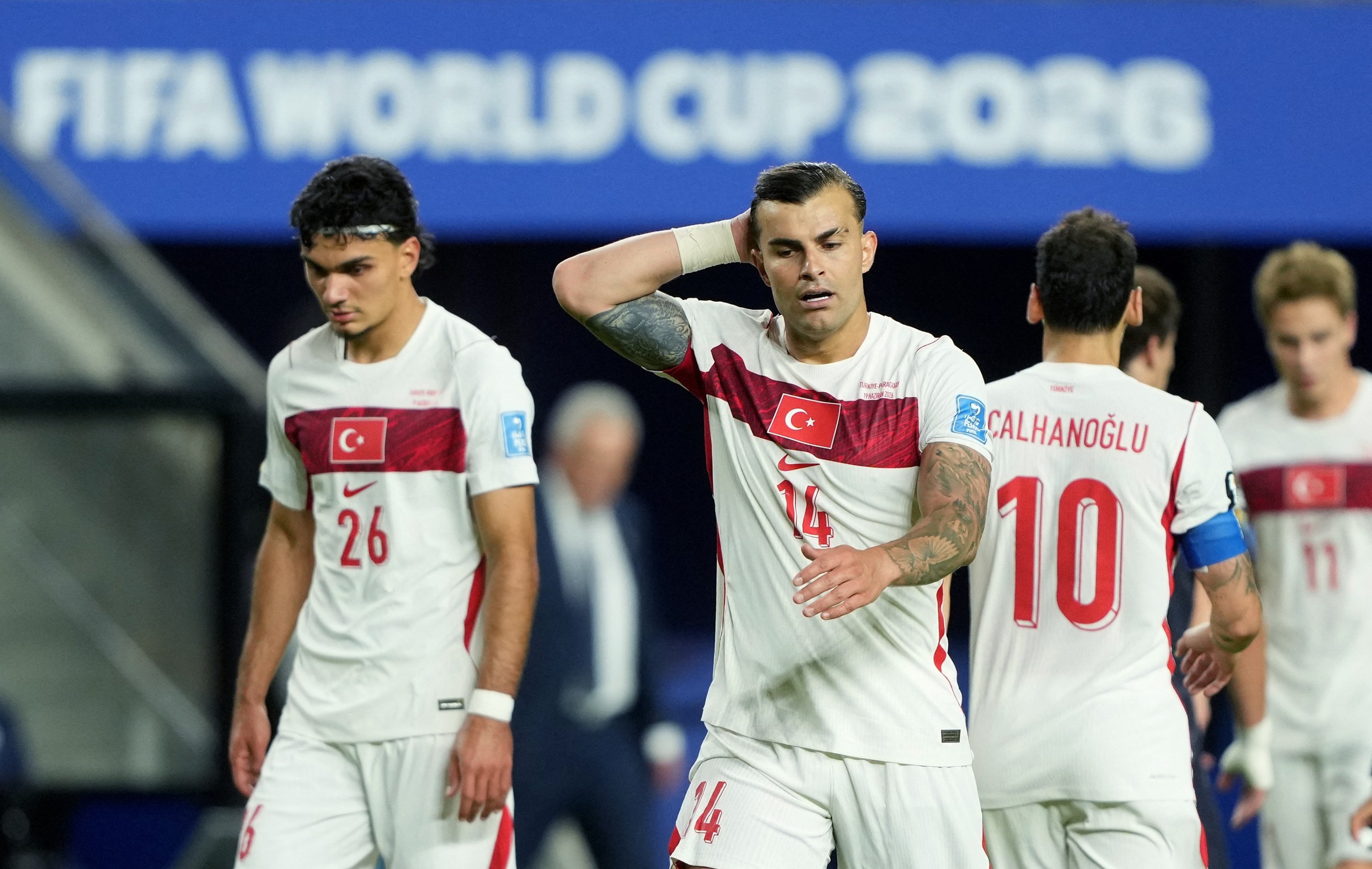
Türkiye eliminated from World Cup after 1-0 loss to Paraguay