Today in News History
On July 1, several notable moments in the history of News stand out. In 1870, The United States Department of Justice formally comes into existence. In 1881, The world's first international telephone call is made between St. Stephen, New Brunswick, Canada, and Calais, Maine, United States. In 1935, Regina, Saskatchewan, police and Royal Canadian Mounted Police ambush strikers participating in the On-to-Ottawa Trek. In 1963, ZIP codes are introduced for United States mail. In 1991, The Finnish operator Radiolinja is launched as the world's first GSM network. In 2002, The International Criminal Court is established to prosecute individuals for genocide, crimes against humanity, war crimes and the crime of aggression. In 2003, Over 500,000 people protest against efforts to pass anti-sedition legislation in Hong Kong. In 2007, Smoking in England is banned in all public indoor spaces. In 2008, Riots erupt in Mongolia in response to allegations of fraud surrounding the 2008 legislative elections. In 2014, Bob Jones, English lawyer and politician (born 1955) passed away. Together, these milestones provide historical context for today's news news and ongoing narratives.
Can police access your cellphone location data? Supreme Court issues huge ruling
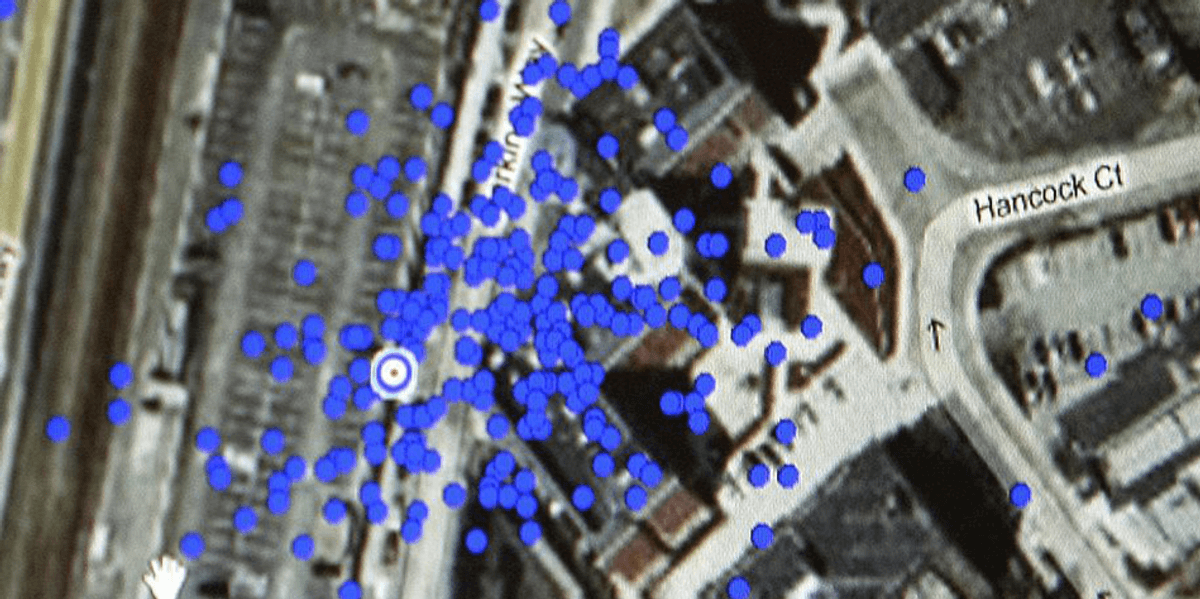
An armed robbery from seven years ago has led to a monumental ruling that some Supreme Court justices say will have seismic effects on the way the Fourth Amendment is interpreted.A man was indicted for a robbery of a credit union in 2019, demanding money at gunpoint and eventually making off with almost 200,000.'Police intrude on that constitutionally protected interest when they demand the information.'The Midlothian, Virginia, robbery had no immediate suspects, so police obtained a warrant directing Google to produce anonymous location data for all devices within 150 meters of the bank within an hour of the crime.This process included police obtaining the data, then requesting information on a more narrowed subset of the data, before finally asking Google to provide information on three specific sets. Google then provided the names, phone numbers, and account details for those three users.One of the three users was Okello Chatrie, whose data placed him at the scene of the crime, while other data pertaining to where he was at other times was also revealed. SCOTUSblog reported that the location data led to law enforcement obtaining a warrant to search two residencies linked to Chatrie, where they found 100,000 of the stolen cash, a gun, and demand notes.This led to a federal indictment of the 24-year-old.However, the Supreme Court recently found that in Chatrie v. United States, the warrant used by police to obtain historical cellphone location data from Google was in violation of the Fourth Amendment.RELATED: Killer drones have conquered the skies. Can we ever be safe again? Tom Brenner/Getty Images The Supreme Court voted 6-3 on the decision, with Justice Elena Kagan writing for the majority, which also included Justices Neil Gorsuch, Brett Kavanaugh, Ketanji Brown Jackson, John Roberts, and Sonia Sotomayor.Kagan wrote that an individual has a reasonable expectation of privacy in records about his cell phone's location, and police intrude on that constitutionally protected interest when they demand the information — even though for only a limited time, and from a third-party tech company.Justice Samuel Alito wrote in dissent — joined by Justices Amy Coney Barrett and Clarence Thomas — saying that the majority's opinions will send seismic waves through our Fourth Amendment doctrine but ultimately would not have any effect on Chatrie's case.RELATED: Google's Fitbit overhaul is actually great. There's just one catch. Jaap Arriens/NurPhoto/Getty Images Kagan further argued, joined by five of her colleagues, that the government conducts a search when it invades an area that an individual seeks to preserve ... as private and that the expectation of privacy is one that society is prepared to recognize as reasonable.Chatrie pleaded guilty to bank robbery and was sentenced to nearly 12 years in prison, along with three years of supervised release. Like Blaze News? Bypass the censors, sign up for our newsletters, and get stories like this direct to your inbox. Sign up here!
Narrative Intelligence Brief
This article was published by Conservative Review, a source frequently categorized with a right bias based in United States of America. Our narrative intelligence engine continuously monitors coverage from this outlet to track framing, bias, and rhetorical patterns. Our initial algorithmic scan of this specific piece did not flag high-confidence rhetorical techniques, suggesting a generally straightforward reporting style or neutral framing. By understanding the editorial perspective of Conservative Review, readers can better contextualize the information presented and compare it across our broader media matrix to find the real narrative.
More from Conservative Review
July 1, 2026
Alexandria Ocasio Cortez Blushes After Vance Singles Her Out As 2028 Democratic Frontrunner
July 1, 2026
License plate cameras will soon track phones, wearables, infotainment, and even your pets
July 1, 2026
The Supreme Court Doesn’t Have The Final Word On Birthplace Citizenship
July 1, 2026
The Supreme Court’s Abysmal Birthplace Citizenship Ruling Is Exactly Why We Should Ban Surrogacy
July 1, 2026
The birthright ruling leaves Trump one clear move
Analysis Methodology
This narrative analysis was generated using the CoDataLab Global Intelligence Engine. Our proprietary AI scans thousands of cross-border sources to identify sentiment patterns, framing techniques, and potential media bias. While AI provides the data-driven foundation, our objective is to empower readers with additional context beyond the standard headline.The content displayed above is a structured summary designed for rapid information processing. For the full original report, please visit the source outlet.More Coverage
Discussion
"supreme court"
The Supreme Court’s New 6–3 Elections Case Was Not Nearly as Bad as Expected
AP's long-time Supreme Court reporter Mark Sherman reflects on front row seat to legal history

Read Reporter’s Bizarre Explanation For Running With Bogus Alito Retirement Report