Today in News History
On July 2, several notable moments in the history of News stand out. In 1850, Robert Peel, English lieutenant and politician, Prime Minister of the United Kingdom (born 1788) passed away. In 1918, Indumati Bhattacharya, Indian politician (died 1990) was born. In 1936, Omar Suleiman, Egyptian general and politician, 16th Vice President of Egypt (died 2012) was born. In 1940, Kenneth Clarke, English politician, Lord High Chancellor of Great Britain was born. In 1948, Mutula Kilonzo, Kenyan lawyer and politician (died 2013) was born. In 1955, Kim Carr, Australian educator and politician, 31st Australian Minister for Human Services was born. In 1970, Steve Morrow, Northern Irish footballer and manager was born. In 1976, End of South Vietnam; Communist North Vietnam annexes the former South Vietnam to form the unified Socialist Republic of Vietnam. In 1997, The Bank of Thailand floats the baht, triggering the Asian financial crisis. In 2013, A magnitude 6.1 earthquake strikes Aceh, Indonesia, killing at least 42 people and injuring 420 others. Together, these milestones provide historical context for today's news news and ongoing narratives.
Can Malaysia’s unity government survive a major BN win in state polls?
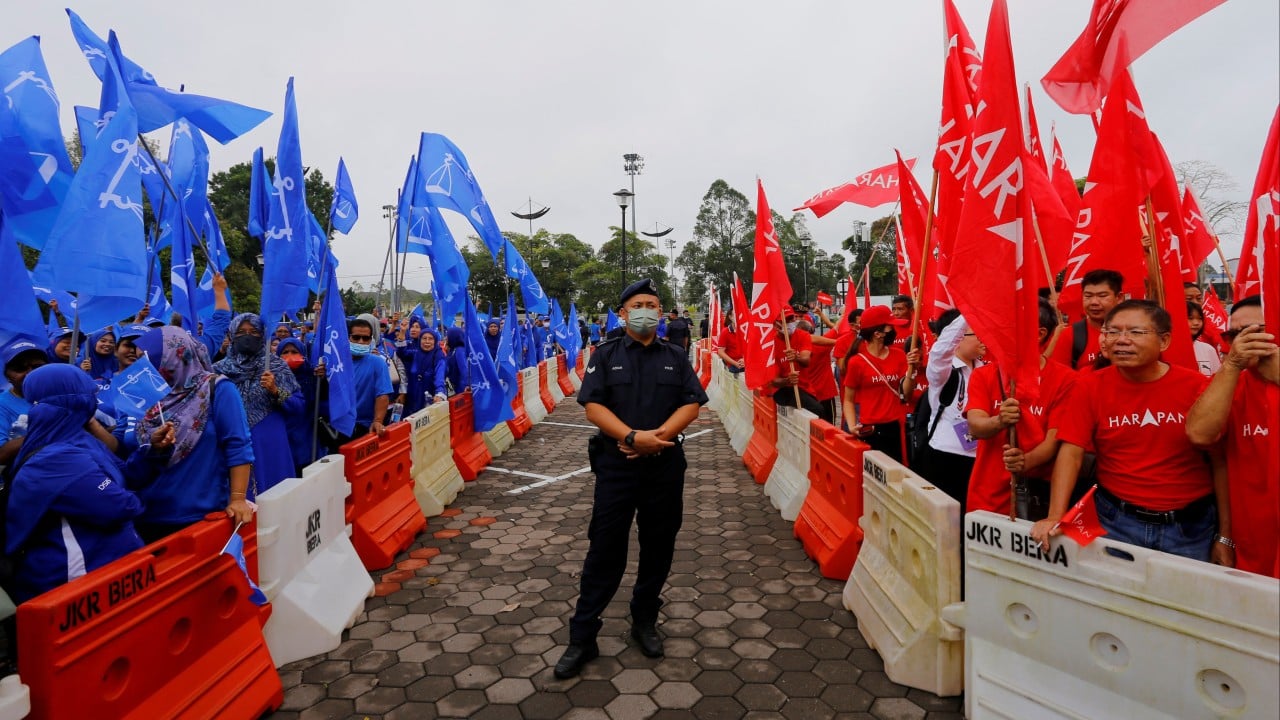
Knife-edge state polls in Johor and Negeri Sembilan may reconfigure Malaysian politics, as a regrouped Malay nationalist right seeks big wins to pressure Prime Minister Anwar Ibrahim into calling an early election. Barisan Nasional (BN), the Malay-led bloc, is going head-to-head against Anwar’s Pakatan Harapan (PH) in the ballots to be held this month and next, in a move by a key government coalition member that could destabilise the prime minister’s fragile administration from within. Analysts...
Narrative Intelligence Brief
This article was published by South China Morning Post, a source frequently categorized with a lean left bias based in Hong Kong. Our narrative intelligence engine continuously monitors coverage from this outlet to track framing, bias, and rhetorical patterns. Our initial algorithmic scan of this specific piece did not flag high-confidence rhetorical techniques, suggesting a generally straightforward reporting style or neutral framing. By understanding the editorial perspective of South China Morning Post, readers can better contextualize the information presented and compare it across our broader media matrix to find the real narrative.
More from South China Morning Post
July 2, 2026
Philippine senator links fatal school shooting to 764 extremist online group
July 2, 2026
Philippine senator links fatal school shooting to 764 online extremist network
July 2, 2026
Is expansion of Philippine bases for US use on track? Chinese think tank weighs in
July 2, 2026
When and how will China ease capital controls?
July 2, 2026
China aims to ‘infiltrate’ US-Mexico-Canada trade deal, says American manufacturing group
Analysis Methodology
This narrative analysis was generated using the CoDataLab Global Intelligence Engine. Our proprietary AI scans thousands of cross-border sources to identify sentiment patterns, framing techniques, and potential media bias. While AI provides the data-driven foundation, our objective is to empower readers with additional context beyond the standard headline.The content displayed above is a structured summary designed for rapid information processing. For the full original report, please visit the source outlet.More Coverage
Discussion
"supreme court"
Keystone Kash’s Girlfriend Makes Humiliating SCOTUS Blunder

The Hen Report: “It Doesn’t Seem Fair” | Animal Cruelty Laws, SCOTUS & Constitutional Rights for Animals

Dismantling The Disastrous ‘Birthright Citizenship’ Decision