Today in News History
On June 28, several notable moments in the history of News stand out. In 1745, A New England colonial army captures the French fortifications at Louisbourg (New Style). In 1776, American Revolutionary War: The Battle of Sullivan's Island ends with the American victory, leading to the commemoration of Carolina Day. In 1778, American Revolutionary War: The American Continentals engage the British in the Battle of Monmouth Courthouse resulting in standstill and British withdrawal under cover of darkness. In 1807, Second British invasion of the Río de la Plata; John Whitelocke lands at Ensenada on an attempt to recapture Buenos Aires and is defeated by the locals. In 1911, The Nakhla meteorite, the first one to suggest signs of aqueous processes on Mars, falls to Earth, landing in Egypt. In 1942, World War II: Nazi Germany starts its strategic summer offensive against the Soviet Union, codenamed Case Blue. In 1945, Poland's Soviet-allied Provisional Government of National Unity is formed over a month after V-E Day. In 1948, Cold War: The Tito-Stalin Split results in the expulsion of the League of Communists of Yugoslavia from the Cominform. In 1973, Elections are held for the Northern Ireland Assembly, which will lead to power-sharing between unionists and nationalists in Northern Ireland for the first time. In 1987, For the first time in military history, a civilian population is targeted for chemical attack when Iraqi warplanes bombed the Iranian town of Sardasht. Together, these milestones provide historical context for today's news news and ongoing narratives.
Britain to be hit with another heatwave in just days after brief respite from record-breaking temperatures
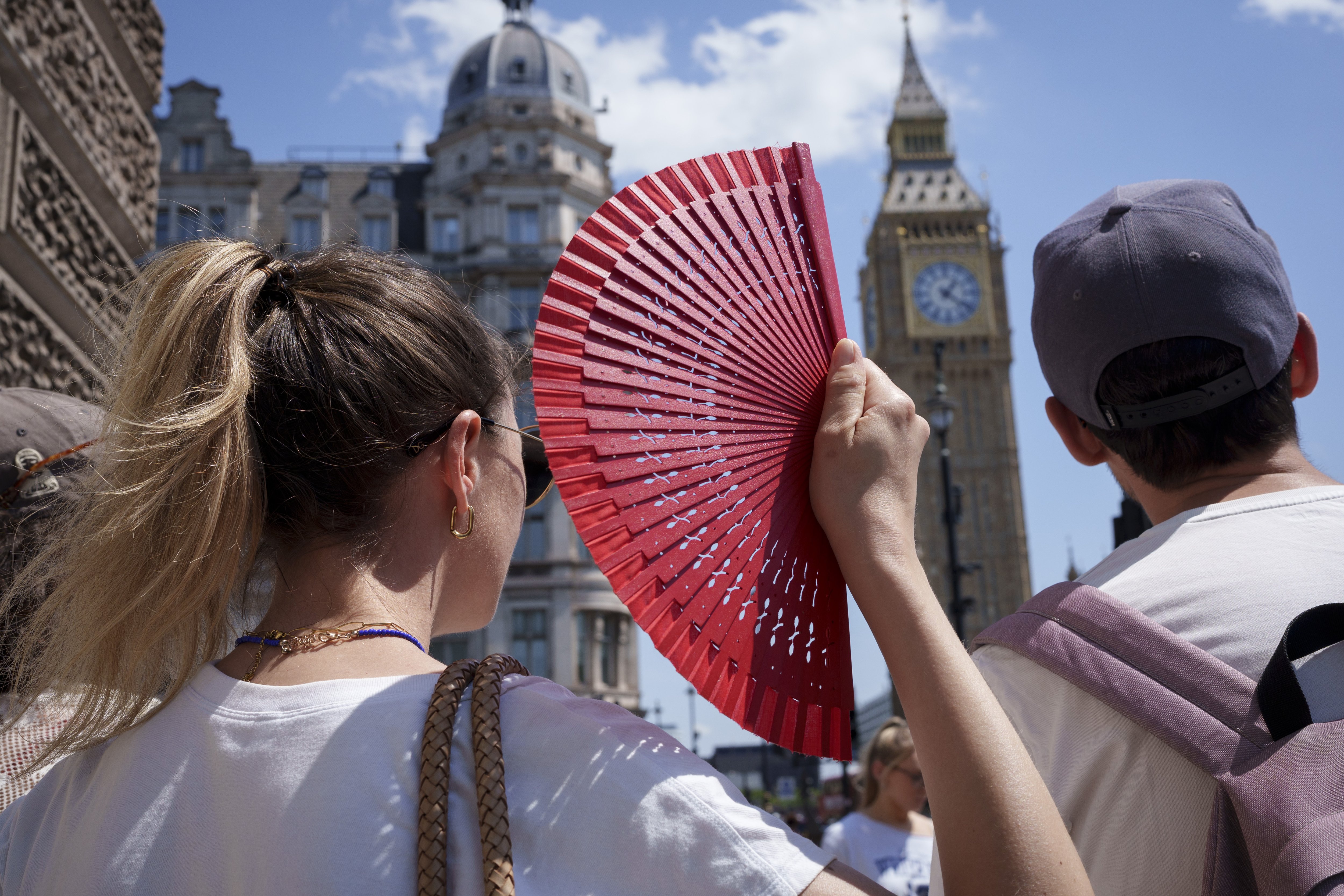
Britain is to be hit with another heatwave in just days after a brief respite from record-breaking temperatures this week. Forecasters are predicting London and much of central and southern England will face another spell of extreme heat beginning on Tuesday, just days after the nation experienced a historic June heatwave.The capital endured four straight days of mid-thirties temperatures during the recent hot spell.The London Ambulance Service reported a significant increase in patients suffering from heat-related conditions. TRENDING Stories Videos Your Say Scorching conditions will return with considerable intensity during this period, indicates weather mapping conducted by MetDesk. The tool projects temperatures reaching 32C across the capital on July 7, with the majority of England climbing above 30C on that date.Conditions are expected to intensify further on July 8, when London could see the thermometer hit 36C, marking the hottest day of the predicted heatwave.The mapping data shows swathes of red across central and southern regions, indicating temperatures exceeding 30C for at least five consecutive days through to July 12.July 9 is forecast to bring a peak of 34C, according to projections.Temperatures are expected to remain elevated towards the end of the week, with highs anticipated in the low 30s throughout this period.The weather mapping data suggests this will represent at least five consecutive days of heatwave conditions affecting the capital and surrounding areas.Most of England is expected to experience temperatures above 30C during this stretch, though London will bear the most intense heat throughout the period.LATEST DEVELOPMENTSTravel chaos erupts across Britain as thousands of flights delayed or cancelled amid extreme weatherEU Commission HQ shuts off air conditioning but Ursula von der Leyen's office left unaffectedBritons issues fresh Spain travel warning over hidden dangers of swimming - 'Take care!'The Met Office's extended forecast supports the prediction of sustained warm conditions, stating high pressure will dominate weather patterns into the second week of July, with England and Wales particularly affected.This meteorological setup typically brings settled, dry conditions, allowing temperatures to build over successive days.Londoners should prepare for another prolonged period of intense summer heat, following what has already been an exceptional June for temperatures across the country.The sustained hot weather is causing travel disruption across the UK. Thunderstorms occurring throughout the heatwave has meant more than 1,000 flights have been grounded or delayed over the weekend. Overnight air traffic restrictions on Saturday forced airports to limit departures and arrivals, stranding thousands of holidaymakers at terminals across the country after torrential downpours and lightning strikes. FlightRadar data showed Gatwick bore the brunt of the disruption with 391 delayed services and 31 cancellations.Heathrow saw 383 flights held up and 98 scrapped entirely.Edinburgh, Leeds Bradford and London City airports also experienced significant disruption.A spokesman for London City Airport said on Saturday: Flights are gradually returning to normal following this morning’s weather-related air traffic restrictions. There have been some associated delays and cancellations.A spokesman for British Airways said at the time: Like other airlines, we’ve had to make some adjustments to our schedule today due to Air Traffic Control restrictions caused by adverse weather conditions affecting parts of UK airspace.While the vast majority of our customers will be unaffected, we apologise for the inconvenience caused and our teams are working hard to help those impacted get their journeys back on track. Our Standards: The GB News Editorial Charter
Narrative Intelligence Brief
This article was published by GB News, a source frequently categorized with a lean right bias based in United States of America. Our narrative intelligence engine continuously monitors coverage from this outlet to track framing, bias, and rhetorical patterns. Our initial algorithmic scan of this specific piece did not flag high-confidence rhetorical techniques, suggesting a generally straightforward reporting style or neutral framing. By understanding the editorial perspective of GB News, readers can better contextualize the information presented and compare it across our broader media matrix to find the real narrative.
More from GB News
June 28, 2026
Neighbour from hell smacks homeowner with rounders bat after she told her 'you've got rats'
June 28, 2026
Harry Kane helps negotiate huge bonus if England win World Cup
June 28, 2026
Motorists face driving bans, unlimited fines and prison as police step up roadside safety checks
June 28, 2026
Marcus Rashford's girlfriend shares emotional health battle at World Cup
June 28, 2026
Lib Dems must act over anti-Christian discrimination in the party, ex-leader says
Analysis Methodology
This narrative analysis was generated using the CoDataLab Global Intelligence Engine. Our proprietary AI scans thousands of cross-border sources to identify sentiment patterns, framing techniques, and potential media bias. While AI provides the data-driven foundation, our objective is to empower readers with additional context beyond the standard headline.The content displayed above is a structured summary designed for rapid information processing. For the full original report, please visit the source outlet.More Coverage
Discussion