
Britain faces more than a DECADE of high energy bills: 'Not sustainable!'
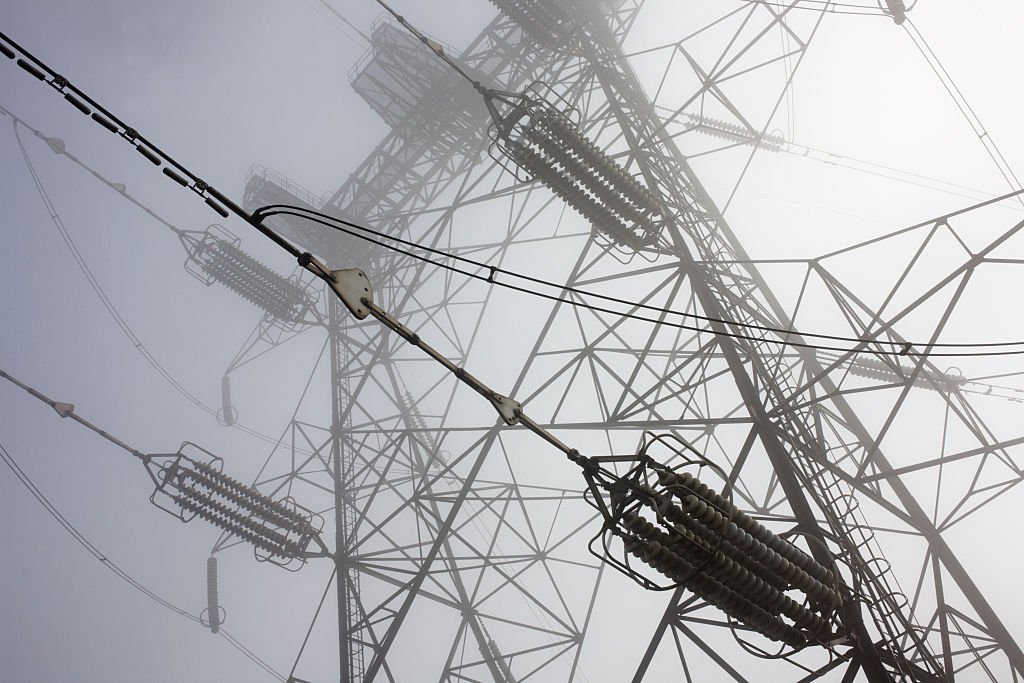
Britain faces more than a decade of high energy bills, a leading economist has warned. The UK already has some of the most expensive electricity in the developed world, with industrial prices up to four times higher than in parts of the US. Sir Dieter Helm, Professor of Economic Policy at the University of Oxford, said, because of the contracts system for renewables, the country was locked into high costs until at least 2040.“The economy can’t stand it,” he warned, and said it was “not sustainable”. Earlier this week, the Ofgem price cap rose by 13 per cent, meaning the average household will pay £221 more per year on energy bills. The rise was caused by the Iran conflict, and the Government argues this is the very volatility that renewables will protect consumers from. Speaking to the Institute for Fiscal Studies podcast, ‘Why is UK Electricity so Expensive’, Sir Dieter said the Net Zero consensus has been “shattered”, and a “serious and objective” analysis of the consequences was needed. TRENDING Stories Videos Your Say He explained how system costs, much of which were needed to integrate renewables, had added to bills. On the old network, 60 gigawatts of capacity were needed to hit a peak demand of 45GW. However, because renewable energy needs backup on, for example, windless days, it currently needs 120GW of capacity to hit a slightly lower peak. Prof Helm said that our electricity prices would increasingly move away from the price of gas as more renewables came online. But because renewable generators were paid on fixed contracts, this did not mean prices would necessarily fall, he said. It meant the cost was locked in over the term of the contracts. If the price of gas remained high, these prices could be lower. But Prof Helm said: “If the gas price goes down, it makes us even more exposed in international competitive markets, and nobody else is locking in the kind of fixed costs that we are. “So we are locked into high electricity prices until 2040, or, on the new contracts, 2045. This is a very high-cost energy economy for the next decade and a half, almost regardless of what we do. That’s just, I think, not sustainable. I don’t think it’s going to happen because the economy can’t stand it.” The Department for Energy Security and Net Zero (DESNZ) points out, thanks to renewables, gas was setting the price less frequently. It says in 2024, renewables pushed down the wholesale price by up to a quarter. Yet Prof Helm said consideration needed to go beyond current Government policies. A general election is less than three years away, he pointed out, with implications if Reform or the Conservatives won. LATEST DEVELOPMENTSBritain should follow South Korea and treat nuclear energy as a 'continuous national mission', new report saysMartin Lewis issues urgent energy bill guidance for households ahead of £211 hikesTop Tory tells Keir Starmer to ditch ‘bizarre’ energy policy as pressure mounts on PM to make U-turn“Now’s the time to think about not just what would happen if the Government policies continue, but rather, what are the alternatives? There are things in flux now which require really detailed objective analysis of the consequences, and I don’t see much of that happening outside the narrow frame of the opposition parties. “That’s what we should be doing now, because it’s now, for the first time, that the consensus on which all of this was built and the investments were built, has been shattered. And that’s the reality of where we now are.” One question, he said, was whether we should pause the “really successful build-out of renewables to stabilise the system. The Government has pledged to double down on clean power and add to our renewable capacity. Prof Helm said: “The politics would have you believe that it’s a win, win, win. We end up with home-grown energy which is cheaper and more secure. I think that all three of those are wrong, by the way, but that’s the Government’s position. Therefore, there’s no problem about going flat out to renewables, because that way we are going to have the cheapest energy, we are going to be a cheap energy superpower, and all these AI and data centres and steel industries are going to be leaving the US to get close to our cheap energy. “The opposition side of the political spectrum, and this is one of the very few areas where I have some sympathy, is on the basis that it isn’t cheaper... We are not going to be a cheap energy superpower – and therefore we have a really serious competitive position.” He said that our current plans weren’t impacting on climate change, pointing out the UK had “swapped domestic production for imports, but our carbon consumption hasn’t gone down in the way it’s proclaimed”. He said: “So we have the wrong target; it’s expensive, not cheap, and it has a massive effect on the competitiveness of the British economy. And that’s what we need to address, and it’s serious. In that context, we have to ask ourselves, do we really want to build some more wind, in the short term, at now nearly twice the cost of the wind a couple of years ago? My view is you have to explain how that’s going to work before you justify that outcome, rather than simply proclaim it’s going to be nine times cheaper, which it isn’t.” He said many energy-intensive industries, including refining and fertilisers, had been hit by closures and that data centres had chosen not to move here because of costs. He said: “It’s an industrially serious problem. It’s a serious problem for consumers. “The prices are fixed and locked into the system for the next 15 years, and, frankly, we have to find a way through this because otherwise the British economy is not going to be an AI superpower; it certainly isn’t a clean power superpower, and it isn’t going to have cheap energy. “That is an enormous fundamental problem for the future competitiveness of the economy, which we can’t escape, and we therefore have to rejig this and rethink how we do it.” Prof Helm said he believed that Net Zero should be affordable, but changes were needed to stop it hitting industry so hard. He said: “My view is it should be affordable, and it should be afforded, but, effectively, it’s a tax, a pollution tax, on UK citizens which shouldn’t feed through into the competitive market for industry.” A spokesman for DESNZ said: “Britain is taking back control of our energy by generating more clean power than ever before. “Independent research confirms that renewables can drive down electricity prices, already having reduced wholesale electricity prices by up to a quarter – or around £25/MWh – in 2024. This is alongside decisive action taken to break the influence of gas on electricity prices, to better protect households from energy crises and bring down bills for good.” The Department pointed out while gas had set the price of electricity 90 per cent of the time in the early 2020s, this had dropped to 60 per cent today. This is expected to fall to 50 per cent of the time by 2030. The last renewables auction secured prices more than 50 per cent lower than the cost of building and running new gas plants, it said.Our Standards: The GB News Editorial Charter
Narrative Intelligence Brief
This article was published by GB News, a source frequently categorized with a lean right bias based in United States of America. Our narrative intelligence engine continuously monitors coverage from this outlet to track framing, bias, and rhetorical patterns. Our initial algorithmic scan of this specific piece did not flag high-confidence rhetorical techniques, suggesting a generally straightforward reporting style or neutral framing. By understanding the editorial perspective of GB News, readers can better contextualize the information presented and compare it across our broader media matrix to find the real narrative.
Explore related topics: Stay informed with Real Narrative News as we track unfolding stories. Dive deeper into our coverage of pivotal topics including modern warfare, duty modern, white house, donald trump, earnings transcript, jean carroll, iran reach, roland garros, supreme court, and جنوب لبنان. Our intelligence streams continuously monitor these keywords to bring you unbiased analysis and real-time updates on topics like "Britain faces more than a DECADE of high energy bills: 'Not sustainable!'".
More from GB News
May 28, 2026
Keir Starmer developed 10 year plan for power but dropped it after entering No10, says former adviser
May 28, 2026
Cynthia Erivo blames racist reaction to Ariana Grande incident for stepping back from awards season
May 28, 2026
Isle of Man TT racer killed during qualifying crash
May 28, 2026
Popular fast food chain issues administration update after closing 23 restaurants - full list
May 28, 2026
Britain faces more than a DECADE of high energy bills: 'Not sustainable!'
Analysis Methodology
This narrative analysis was generated using the CoDataLab Global Intelligence Engine. Our proprietary AI scans thousands of cross-border sources to identify sentiment patterns, framing techniques, and potential media bias. While AI provides the data-driven foundation, our objective is to empower readers with additional context beyond the standard headline.The content displayed above is a structured summary designed for rapid information processing. For the full original report, please visit the source outlet.More Coverage
Discussion