Today in News History
On July 2, several notable moments in the history of News stand out. In 1821, Charles Tupper, Canadian physician and politician, 6th Prime Minister of Canada (died 1915) was born. In 1840, A Ms 7.4 earthquake strikes present-day Turkey and Armenia; combined with the effects of an eruption on Mount Ararat, kills 10,000 people. In 1927, James Mackay, Baron Mackay of Clashfern, Scottish lawyer and politician, Lord High Chancellor of Great Britain was born. In 1938, David Owen, English physician and politician, Secretary of State for Foreign and Commonwealth Affairs was born. In 1940, Kenneth Clarke, English politician, Lord High Chancellor of Great Britain was born. In 1954, Chris Huhne, English journalist and politician, Secretary of State for Energy and Climate Change was born. In 2005, The Live 8 benefit concerts takes place in the G8 states and in South Africa. More than 1,000 musicians perform and are broadcast on 182 television networks and 2,000 radio networks. In 2013, A magnitude 6.1 earthquake strikes Aceh, Indonesia, killing at least 42 people and injuring 420 others. In 2013, The International Astronomical Union names Pluto's fourth and fifth moons, Kerberos and Styx. In 2024, A stampede during a religious event in Uttar Pradesh, India, leaves at least 121 people dead and 150 others injured. Together, these milestones provide historical context for today's news news and ongoing narratives.
Britain braces for another spell of hot weather as five regions hit by heat health alerts
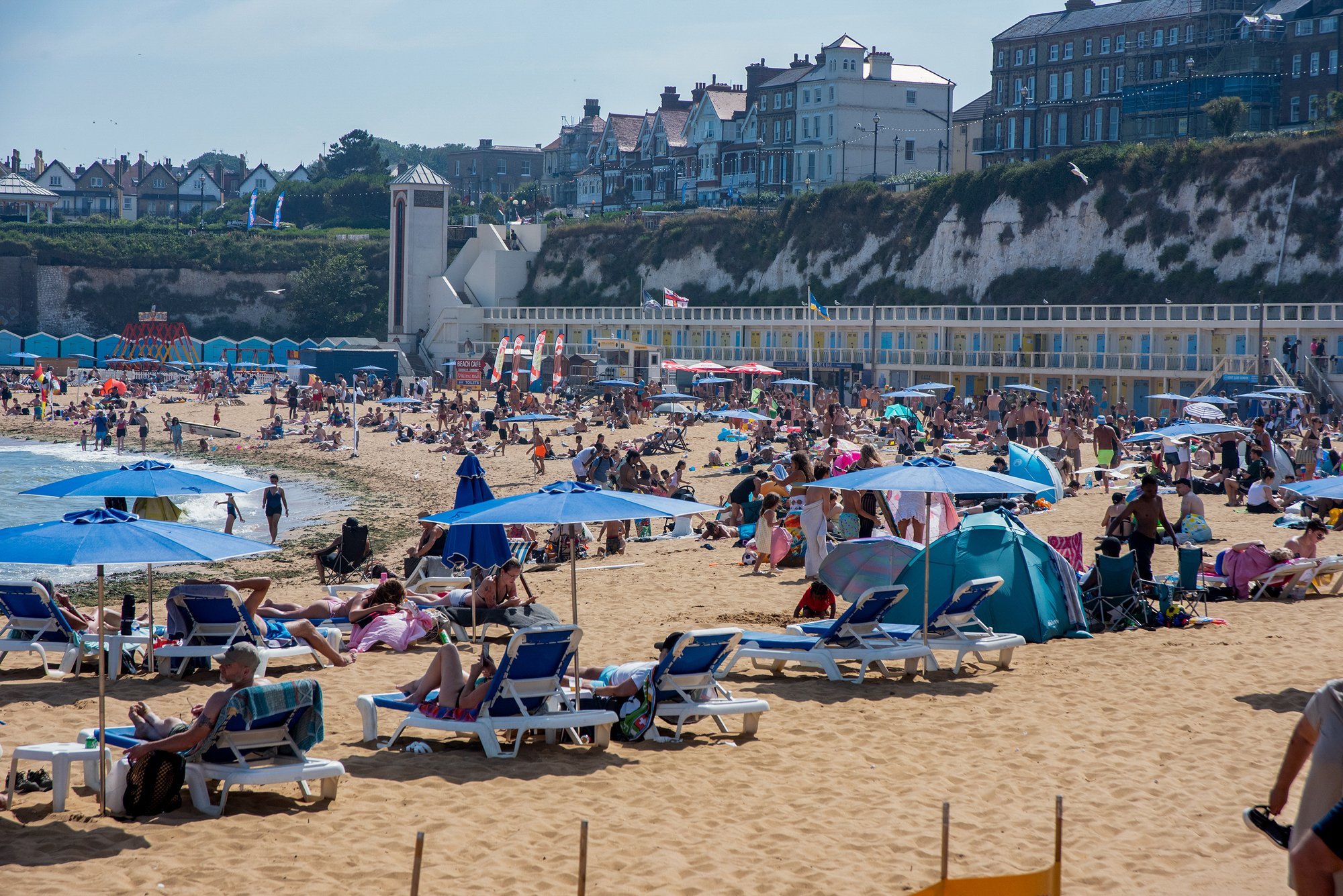
Britain is braced for another wave of abnormally hot weather, with five regions issued a heat health alert for this weekend and into early next week with temperatures set to climb beyond 30C.The UK Health Security Agency has deployed a yellow heat health alert for residents in the East Midlands, South East, South West, East of England, and London - between 12pm on Saturday and 5pm on Wednesday.This fresh alert means minor impacts are likely across health and social care services, with a greater risk to life of vulnerable people.According to Netweather models, temperatures are set to soar to 31C on three consecutive days from Sunday through to Tuesday, with hotter conditions in the high twenties set to continue well into next week. TRENDING Stories Videos Your Say Explaining the recurring heat of late, Met Office Scientist Dr Emily Carlisle said: This June was a clear example of how UK weather can deliver both unsettled conditions and record-breaking heat within the same month. The intensity of the late June heatwave, combined with exceptionally warm nights, has driven England’s warmest June on record for mean temperature, while the UK and Wales recorded their second warmest June on record.Coming 50 years after the 1976 heatwave, it also highlights how similar events are now playing out in a warmer climate, with higher temperatures and more widespread impacts than we would have seen in the past.All five regions affected by the looming temperatures have been deemed a risk score of seven, with those in the East Midlands and East of England likely to experience minor impacts, according to forecasters.Meanwhile, in London, the South East and South West, minor impacts are also likely, with the UKHSA warning of indoor environments becoming very warm, and water-related incidents may increase, including risks from cold-water shock and drowning.In the West Midlands, Yorkshire and The Humber, and the North East - all with a risk score of six - minor impacts are possible but not expected, with no heat health warning in place in these regions.The region at lowest risk of extreme conditions is the North West, with a risk score of five, as experts warn of potential for minor impacts, also not expected.Sarah Davies, Met Office head of environment and energy, said: “The weather in recent months highlights the variability we can experience, with a notably dry spring followed by a much wetter start to June, and more settled, drier conditions returning more recently.”LATEST DEVELOPMENTS:June was hottest ever on record for England, Met Office confirmsMan dies after being crushed by beach cleaning vehicle while asleep in Spanish holiday hotspotRoyal Mail confirms Saturday second-class deliveries to be SCRAPPED as part of major postal shake-upNorthern Britain is expected to have a cool Thursday night, but warm air will surge up from the southwest by Friday. Belfast up to 21C, Bristol and Birmingham around 25C and London around 28C - all before the peak temperatures of 28C to 31C over the weekend. This falls short of last week's heatwave, but still sees an increase to the low 20s we have seen this week.The frequency and intensity of heatwaves has increased worldwide, with Met Office projections indicating hot spells will become more frequent in our future climate, particularly over the South East of the UK. Temperatures are projected to rise in all seasons, but the heat would be most intense in summer.Heatwaves cause significant peaks in water demand, which can lead to public supply outages, with some areas of Kent hit with a hosepipe ban during the scorching heat of June.Helen Wakeham, National Drought Group chair and director of water at the Environment Agency, said: “While many of us enjoy the hot weather, we ask everyone to be mindful of their water use. Every drop saved leaves more available for farmers, our local rivers and wildlife.”Professor Stephen Belcher CBE, Met Office chief scientist, said: “June’s heatwave was a significant weather event, with a red extreme heat warning issued. Human-induced climate change has made events like this more likely and more intense.To see temperatures like this in the UK in June is sobering. Events like this bring home the implications of climate change, with very high temperatures and humidity bringing significant health implications from heat stress, as well as impacts to a range of sectors such as transport, energy and water supply.The Met Office stressed that those heading to the coast should be mindful that sea surface temperatures are not as high as they would be in mid-summer.The Royal Life Saving Society UK (RLSS UK) have also published accessible water safety resources available.Visit metoffice.gov.uk to stay up to date with the latest forecasts, and find extended safety guidance during periods of high temperatures. Our Standards: The GB News Editorial Charter
Narrative Intelligence Brief
This article was published by GB News, a source frequently categorized with a lean right bias based in United States of America. Our narrative intelligence engine continuously monitors coverage from this outlet to track framing, bias, and rhetorical patterns. Our initial algorithmic scan of this specific piece did not flag high-confidence rhetorical techniques, suggesting a generally straightforward reporting style or neutral framing. By understanding the editorial perspective of GB News, readers can better contextualize the information presented and compare it across our broader media matrix to find the real narrative.
More from GB News
July 2, 2026
POLL: Should all foreign criminals be deported? YOU DECIDE
July 2, 2026
Villagers fork out thousands to buy plots in bid to block illegal traveller land grab
July 2, 2026
Labour minister grilled on defence spending black hole as she tells GB News we are 'not at risk of attack'
July 2, 2026
GB News named among UK's 100 fastest-growing companies in Growth Index 2026
July 2, 2026
Petrol and diesel drivers secure huge victory as fuel stations introduce 'widespread price reductions'
Analysis Methodology
This narrative analysis was generated using the CoDataLab Global Intelligence Engine. Our proprietary AI scans thousands of cross-border sources to identify sentiment patterns, framing techniques, and potential media bias. While AI provides the data-driven foundation, our objective is to empower readers with additional context beyond the standard headline.The content displayed above is a structured summary designed for rapid information processing. For the full original report, please visit the source outlet.More Coverage
Discussion
"russian attack"
Russia destroys MOYO warehouse and office in 2 July attack – photos
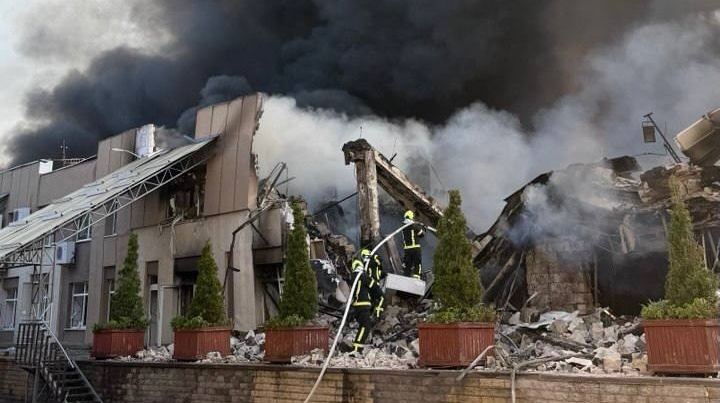
Russian attack kills at least 13, injures scores and causes damage across Ukraine capital
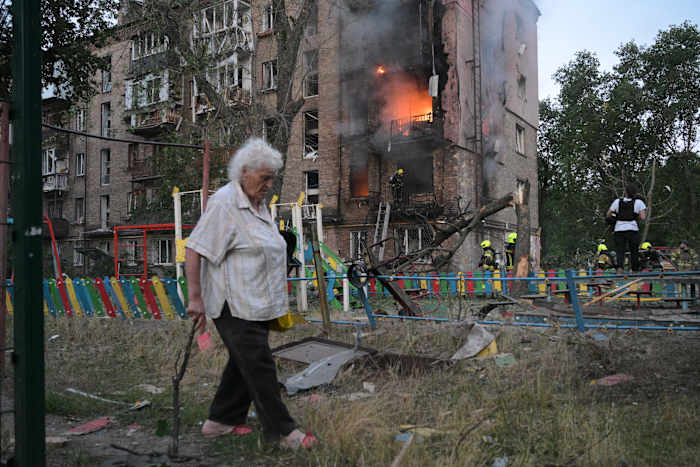
Watch: 9-storey Kyiv apartment building partially collapses after Russian attack; residents trapped