Today in News History
On June 20, several notable moments in the history of News stand out. In 1782, The U.S. Congress adopts the Great Seal of the United States. In 1862, Barbu Catargiu, the Prime Minister of Romania, is assassinated. In 1946, Xanana Gusmão, Timorese soldier and politician, 1st President of East Timor was born. In 1948, Ludwig Scotty, Nauruan politician, 10th President of Nauru was born. In 1949, Gotabaya Rajapaksa, 8th president of Sri Lanka was born. In 1956, A Venezuelan Super-Constellation crashes in the Atlantic Ocean off Asbury Park, New Jersey, killing 74 people. In 1963, Following the Cuban Missile Crisis, the Soviet Union and the United States sign an agreement to establish the so-called "red telephone" link between Washington, D.C., and Moscow. In 1965, Bernard Baruch, American financier and politician (born 1870) passed away. In 1973, Aeroméxico Flight 229 crashes on approach to Licenciado Gustavo Díaz Ordaz International Airport, killing all 27 people on board. In 1979, ABC News correspondent Bill Stewart is shot dead by a Nicaraguan National Guard soldier under the regime of Anastasio Somoza Debayle during the Nicaraguan Revolution. The murder is caught on tape and sparks an international outcry against the regime. Together, these milestones provide historical context for today's news news and ongoing narratives.
Bolivia’s president declares a state of emergency as road blockades choke supplies
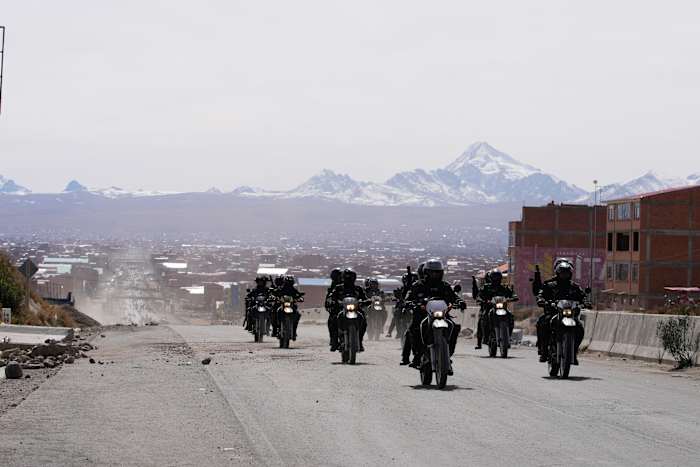
Bolivian President Rodrigo Paz has declared a state of emergency to empower the military to remove road blockades.
Narrative Intelligence Brief
This article was published by KSAT San Antonio, a source frequently categorized with a center bias based in United States of America. Our narrative intelligence engine continuously monitors coverage from this outlet to track framing, bias, and rhetorical patterns. Our initial algorithmic scan of this specific piece did not flag high-confidence rhetorical techniques, suggesting a generally straightforward reporting style or neutral framing. By understanding the editorial perspective of KSAT San Antonio, readers can better contextualize the information presented and compare it across our broader media matrix to find the real narrative.
More from KSAT San Antonio
June 20, 2026
Heavy storms left at least 17k people without power in San Antonio, CPS says
June 20, 2026
Male sexually assaults woman in Southeast Side park; Suspect still at large, SAPD says
June 20, 2026
Male sexually assaults woman in Southwest Side park; Suspect still at large, SAPD says
June 20, 2026
Police discover male body on South Side 'several days' after death, SAPD says
June 20, 2026
A founder of Assassin's Creed maker Ubisoft killed in a plane crash in western France