Today in News History
On June 21, several notable moments in the history of News stand out. In 1582, Sengoku period: Oda Nobunaga, the most powerful of the Japanese daimyōs, is forced to commit suicide by his own general Akechi Mitsuhide. In 1848, In the Wallachian Revolution, Ion Heliade Rădulescu and Christian Tell issue the Proclamation of Islaz and create a new republican government. In 1882, Lluís Companys, Spanish lawyer and politician, 123rd President of Catalonia (died 1940) was born. In 1898, The United States captures Guam from Spain. The few warning shots fired by the U.S. naval vessels are misinterpreted as salutes by the Spanish garrison, which was unaware that the two nations were at war. In 1958, Víctor Montoya, Bolivian journalist and author was born. In 1967, Pierre Omidyar, French-American businessman, founded eBay was born. In 1973, The Primer Congreso del Hombre Andino is inaugurated in Arica, Chile. In 1993, Hungrybox, Argentine-American esports player was born. In 1997, Fidel Velázquez Sánchez, Mexican trade union leader (born 1900) passed away. In 2012, A boat carrying more than 200 migrants capsizes in the Indian Ocean between the Indonesian island of Java and Christmas Island, killing 17 people and leaving 70 others missing. Together, these milestones provide historical context for today's news news and ongoing narratives.
Bolivian lawmakers approve state of emergency as protests choke supply chain
Narrative Analysis: Appeal to Fear
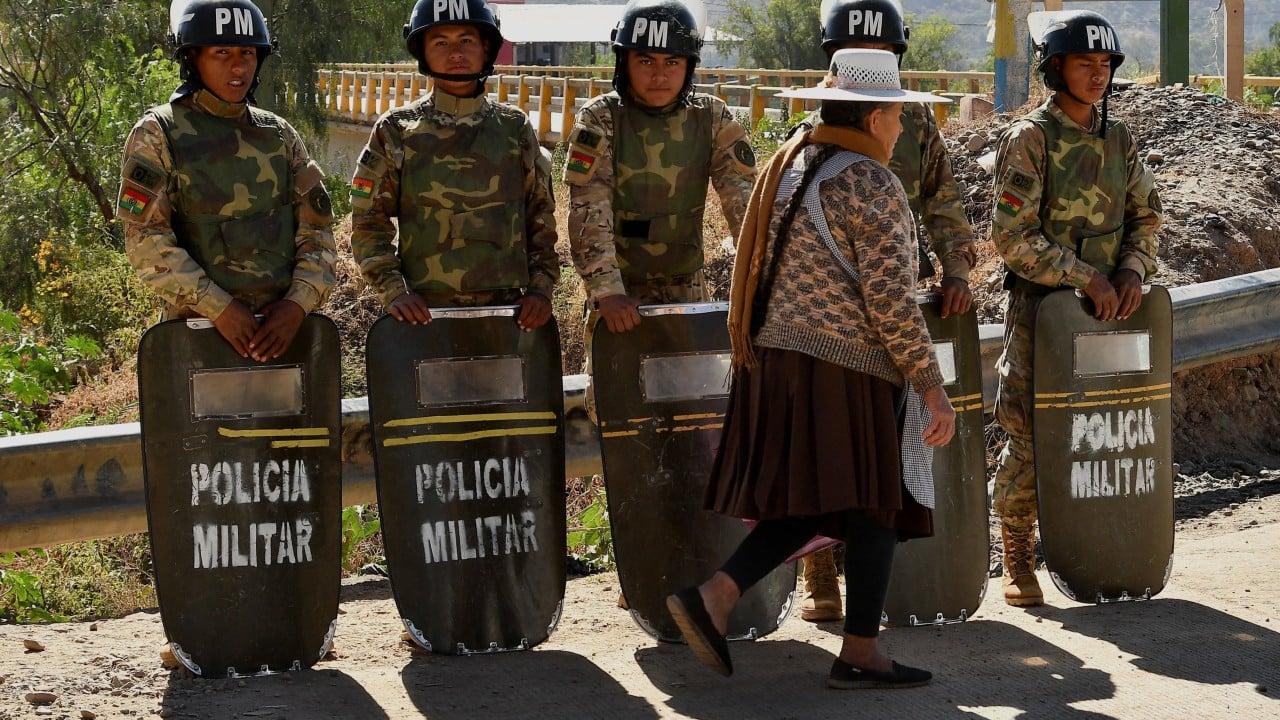
Bolivia began showing signs of returning to normalcy on Sunday, a day after President Rodrigo Paz declared a state of emergency to resolve a 50-day social crisis that had blocked the nation’s main highways. Early on Sunday, the Legislative Assembly overwhelmingly approved Paz’s decree, which aimed to restore transit and supply essential goods after protesting groups cut off key roads for weeks, stranding trucks and choking supplies of food, fuel and medicines to many areas. Sunday’s vote in...
Narrative Intelligence Brief
This article was published by South China Morning Post, a source frequently categorized with a lean left bias based in Hong Kong. Our narrative intelligence engine continuously monitors coverage from this outlet to track framing, bias, and rhetorical patterns. In this specific piece, our systems detected the potential use of the "Appeal to Fear" technique. This narrative approach is often used to shape reader perception by highlighting specific emotional or rhetorical angles. By understanding the editorial perspective of South China Morning Post, readers can better contextualize the information presented and compare it across our broader media matrix to find the real narrative.
More from South China Morning Post
June 21, 2026
Ethiopian PM’s party secures landslide win in national election
June 21, 2026
Europe hits 40ºC as heatwave threatens tourism industry, wildlife
June 21, 2026
Red Hawk rising: how the Z-20 family is plugging China’s chronic defence gaps
June 21, 2026
Hong Kong father, son arrested after parking ticket thrown at traffic wardens
June 21, 2026
Hong Kong man, 54, dies after e-bike plunges from goods platform
Reliability Insights
P
Technique: Appeal to Fear
System analysis detected use of specific narrative techniques in this piece.Analysis Methodology
This narrative analysis was generated using the CoDataLab Global Intelligence Engine. Our proprietary AI scans thousands of cross-border sources to identify sentiment patterns, framing techniques, and potential media bias. While AI provides the data-driven foundation, our objective is to empower readers with additional context beyond the standard headline.The content displayed above is a structured summary designed for rapid information processing. For the full original report, please visit the source outlet.More Coverage
Discussion
"iran"
This insane JD Vance admission has Republicans — and Fox News — paralyzed with fear

Trump’s fears about economy undercut U.S. leverage in Iran talks

Lawsuit filed on behalf of families of Minab victims against US