Today in News History
On July 4, several notable moments in the history of News stand out. In 940, Wang Jianli, Chinese general (born 871) passed away. In 945, Zhuo Yanming, Chinese Buddhist monk and emperor passed away. In 1896, Mao Dun, Chinese journalist, author, and critic (died 1981) was born. In 1910, Robert K. Merton, American sociologist and scholar (died 2003) was born. In 1921, Metropolitan Mikhail of Asyut (died 2014) was born. In 1979, Lee Wai Tong, Chinese footballer and manager (born 1905) passed away. In 1991, Victor Chang, Chinese-Australian surgeon and physician (born 1936) passed away. In 2002, A Boeing 707 crashes near Bangui M'Poko International Airport in Bangui, Central African Republic, killing 28. In 2012, Hiren Bhattacharyya, Indian poet and author (born 1932) passed away. In 2014, Richard Mellon Scaife, American businessman (born 1932) passed away. Together, these milestones provide historical context for today's news news and ongoing narratives.
Blaming China won’t bring jobs back to ‘post-industrial’ economies
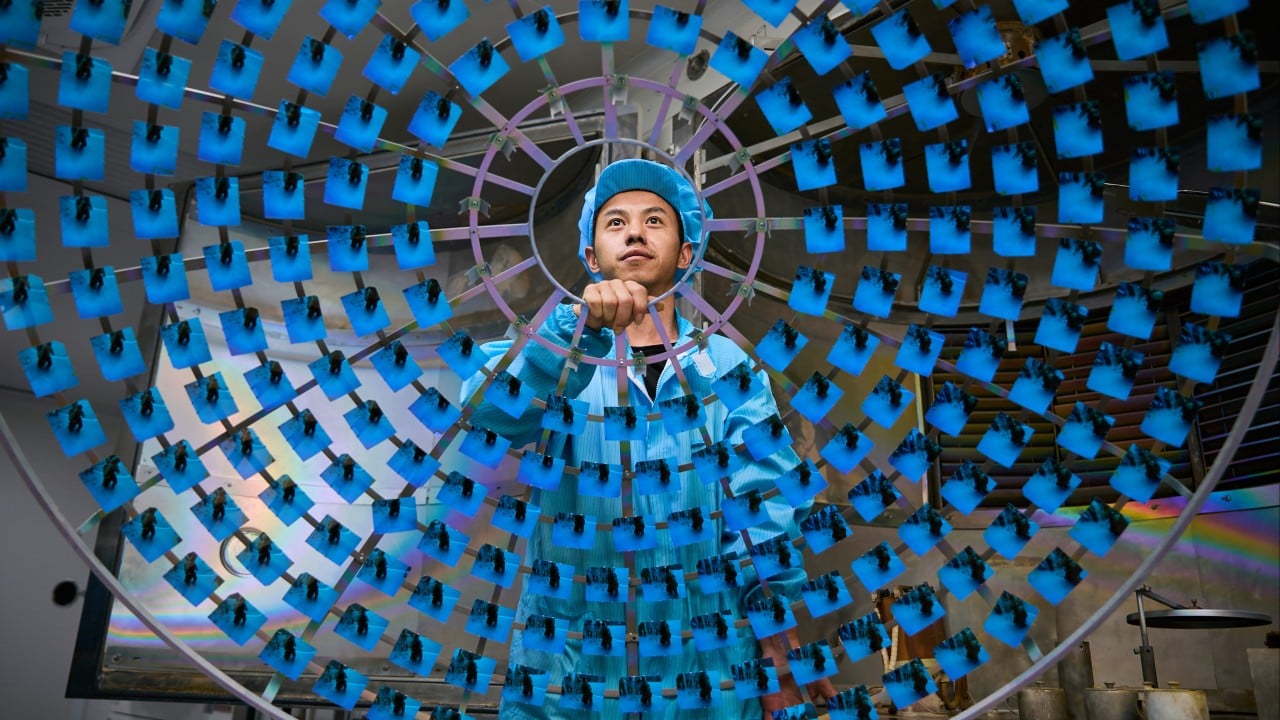
Almost anywhere you look these days, you can find claims from political, academic and other various sources that China’s supposed overproduction and exports of manufactured goods pose unfair advantages. These sources may also claim such unfair advantages justify protectionist countermeasures. But it is difficult to counter one’s own folly. For decades, the US, much of Europe and even Japan, long proud of its manufacturing skills, have prided themselves on becoming “post-industrial” and...
Narrative Intelligence Brief
This article was published by South China Morning Post, a source frequently categorized with a lean left bias based in Hong Kong. Our narrative intelligence engine continuously monitors coverage from this outlet to track framing, bias, and rhetorical patterns. Our initial algorithmic scan of this specific piece did not flag high-confidence rhetorical techniques, suggesting a generally straightforward reporting style or neutral framing. By understanding the editorial perspective of South China Morning Post, readers can better contextualize the information presented and compare it across our broader media matrix to find the real narrative.
More from South China Morning Post
July 4, 2026
China’s influence on African ports extends to software, automation and AI: study
July 4, 2026
Boy, 16, in a critical condition after fall through school classroom window
July 4, 2026
Development chief hails ‘diversified’ consortium in Northern Metropolis pilot bid
July 4, 2026
Pope visits Africa-Europe crossing as anti-migrant policies rise in US, EU
July 4, 2026
Wang Fuk Court administrator to hold crucial owners’ meeting on July 19
Analysis Methodology
This narrative analysis was generated using the CoDataLab Global Intelligence Engine. Our proprietary AI scans thousands of cross-border sources to identify sentiment patterns, framing techniques, and potential media bias. While AI provides the data-driven foundation, our objective is to empower readers with additional context beyond the standard headline.The content displayed above is a structured summary designed for rapid information processing. For the full original report, please visit the source outlet.More Coverage
Discussion
"cup"
Trump FURIOUS as USMNT Defies his ADMINISTRATION’S WISHES!!!

Mohamed Salah explains penalty after Egypt make history at World Cup 2026: ‘I had to decide at the last minute’
Luka Modrić Blasts VAR For Penalty Decision After Croatia's Round Of 32 Loss