Today in News History
On June 20, several notable moments in the history of News stand out. In 1791, King Louis XVI, disguised as a valet, and the French royal family attempt to flee Paris during the French Revolution. In 1914, Muazzez İlmiye Çığ, Turkish archaeologist and academic (died 2024) was born. In 1928, Jean-Marie Le Pen, French intelligence officer and politician (died 2025) was born. In 1946, Xanana Gusmão, Timorese soldier and politician, 1st President of East Timor was born. In 1960, The Mali Federation gains independence from France (it later splits into Mali and Senegal). In 1975, Suzanne Comhaire-Sylvain, Haitian anthropologist (born 1898) passed away. In 1982, The International Conference on the Holocaust and Genocide opens in Tel Aviv, despite attempts by the Turkish government to cancel it, as it included presentations on the Armenian genocide. In 1995, Emil Cioran, Romanian-French philosopher and educator (born 1911) passed away. In 2015, Angelo Niculescu, Romanian footballer and manager (born 1921) passed away. In 2017, Prodigy, American music artist (born 1974) passed away. Together, these milestones provide historical context for today's news news and ongoing narratives.
Beyond the shortcut: Is Ghana ready for the AI learning revolution?
Narrative Analysis: Glittering Generalities

The era of rote memorisation, commonly known in Ghana as chew and pour, is a thing of the past. For decades, the education system has rewarded the ability to chew (memorise) facts, store them briefly, and pour them onto an exam paper. But in the age of the 4th Industrial Revolution, memory is a cheap commodity. As Artificial Intelligence (AI) permeates our classrooms, we face a critical crossroads: Will we use AI as a high-tech crutch for shortcuts, or will we harness it as the ultimate partner in human intelligence? This urgent debate served as the central focus of the March 2026 edition of EdTech Mondays Ghana.
Narrative Intelligence Brief
This article was published by MyJoyOnline, a source frequently categorized with a center bias based in Ghana. Our narrative intelligence engine continuously monitors coverage from this outlet to track framing, bias, and rhetorical patterns. In this specific piece, our systems detected the potential use of the "Glittering Generalities" technique. This narrative approach is often used to shape reader perception by highlighting specific emotional or rhetorical angles. By understanding the editorial perspective of MyJoyOnline, readers can better contextualize the information presented and compare it across our broader media matrix to find the real narrative.
More from MyJoyOnline
June 20, 2026
Saibari screamer seals Morocco victory against Scotland
June 20, 2026
Hundreds stranded as downpour triggers transport chaos on Madina-Adenta stretch
June 19, 2026
This Saturday on ‘Prime Insight’: Multiple resignations and Ofori-Atta saga to dominate discussions
June 19, 2026
This Saturday on Newsfile: Student safety and discipline, Ofori-Atta’s Green Card and big resignations
June 19, 2026
GES must stop the 19th century administrative process now and fully activate GESIMS
Reliability Insights
P
Technique: Glittering Generalities
System analysis detected use of specific narrative techniques in this piece.Analysis Methodology
This narrative analysis was generated using the CoDataLab Global Intelligence Engine. Our proprietary AI scans thousands of cross-border sources to identify sentiment patterns, framing techniques, and potential media bias. While AI provides the data-driven foundation, our objective is to empower readers with additional context beyond the standard headline.The content displayed above is a structured summary designed for rapid information processing. For the full original report, please visit the source outlet.More Coverage
Discussion
"usa"
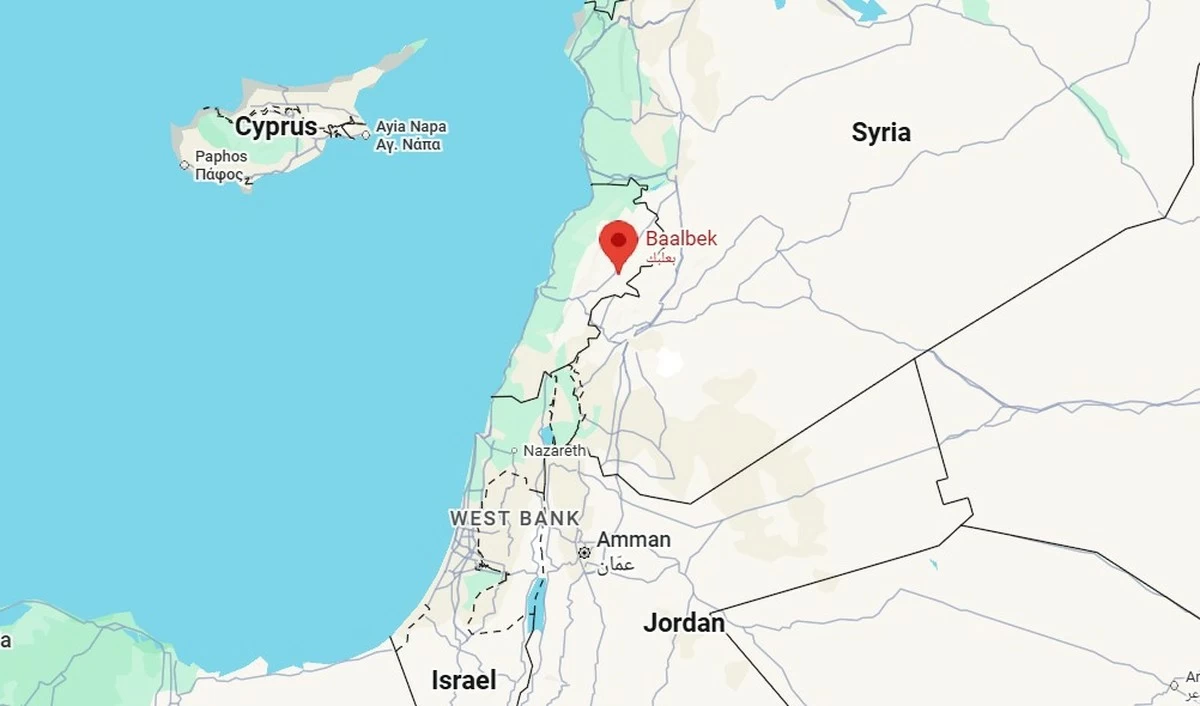
‘No One Tells Us What to Do’: Israel’s Katz Defies Criticism as Strikes Hit Lebanon's Baalbek
Harry Souttar and Aiden O’Neill reflect on US defeat

A Local Train System Is on a World Stage, and Everyone’s a Critic