Today in News History
On July 2, several notable moments in the history of News stand out. In 626, Li Jiancheng, Chinese prince (born 589) passed away. In 626, Li Yuanji, Chinese prince (born 603) passed away. In 626, Li Shimin, the future Emperor Taizong of Tang, ambushes and kills his rival brothers Li Yuanji and Li Jiancheng in the Xuanwu Gate Incident. In 649, Li Jing, Chinese general (born 571) passed away. In 706, In China, Emperor Zhongzong of Tang inters the bodies of relatives in the Qianling Mausoleum, located on Mount Liang outside Chang'an. In 1924, Chia-ying Yeh, Chinese-born Canadian poet and sinologist (died 2024) was born. In 1963, Alicia Patterson, American publisher, co-founded Newsday (born 1906) passed away. In 1966, France conducts its first nuclear weapon test in the Pacific, on Moruroa Atoll. In 1976, End of South Vietnam; Communist North Vietnam annexes the former South Vietnam to form the unified Socialist Republic of Vietnam. In 1997, The Bank of Thailand floats the baht, triggering the Asian financial crisis. Together, these milestones provide historical context for today's news news and ongoing narratives.
Beijing’s message for Asean – China doesn’t want to become a regional hegemon
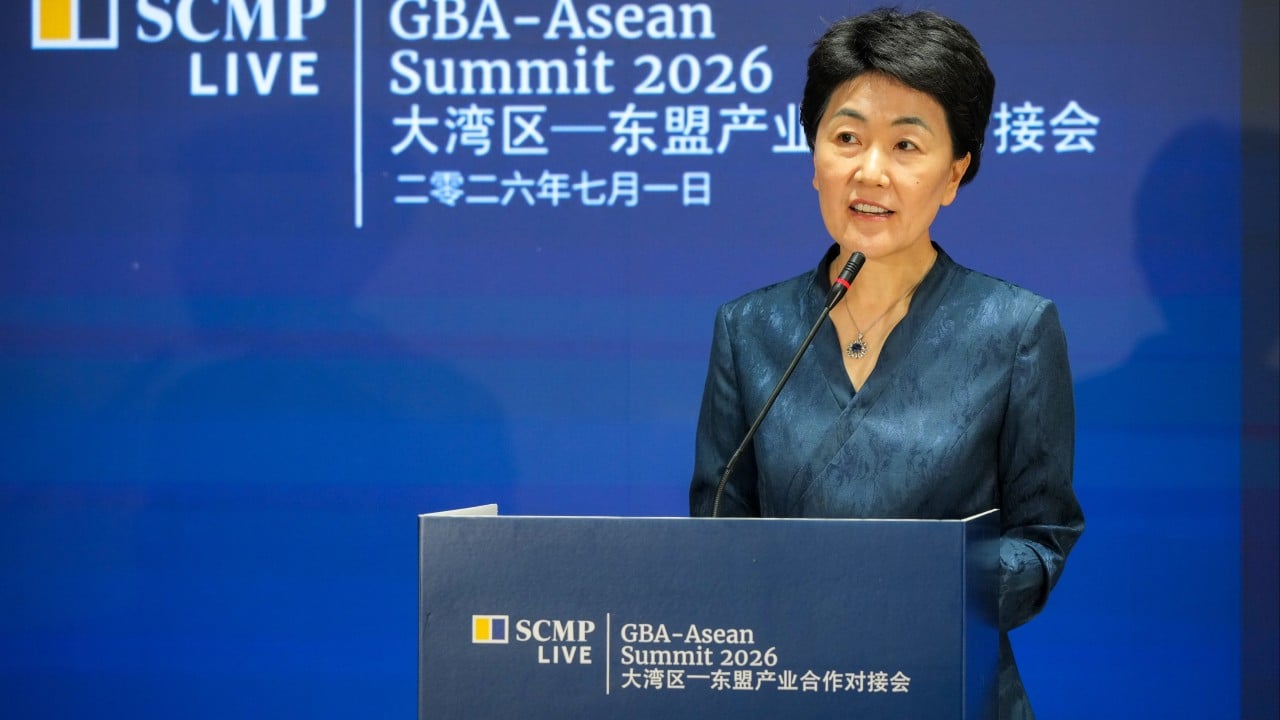
In comments directed at Asean, a top Communist Party official reiterated that Beijing did not want to become a regional hegemon, while vowing to strengthen its energy cooperation with the Southeast Asian bloc. “For a country like China, which has ‘harmonious coexistence’ embedded in its DNA, it is extremely difficult to undergo a ‘genetic mutation’ and become a militaristic hegemony that bullies the small and weak,” said Sun Haiyan, deputy head of the party’s International Department. Sun, who...
Narrative Intelligence Brief
This article was published by South China Morning Post, a source frequently categorized with a lean left bias based in Hong Kong. Our narrative intelligence engine continuously monitors coverage from this outlet to track framing, bias, and rhetorical patterns. Our initial algorithmic scan of this specific piece did not flag high-confidence rhetorical techniques, suggesting a generally straightforward reporting style or neutral framing. By understanding the editorial perspective of South China Morning Post, readers can better contextualize the information presented and compare it across our broader media matrix to find the real narrative.
More from South China Morning Post
July 1, 2026
Alibaba agrees to pay US$600 million to settle US probe into illegal product sales
July 1, 2026
Trump sees progress as US and Iran hold talks in Qatar
July 1, 2026
California to institute Bruce Lee Day, a first for a Chinese-American in the state
July 1, 2026
Rare momentum: Hong Kong universities, schools prop up commercial property market
July 1, 2026
US won’t renew USMCA trade pact as Greer targets Canada’s China ties
Analysis Methodology
This narrative analysis was generated using the CoDataLab Global Intelligence Engine. Our proprietary AI scans thousands of cross-border sources to identify sentiment patterns, framing techniques, and potential media bias. While AI provides the data-driven foundation, our objective is to empower readers with additional context beyond the standard headline.The content displayed above is a structured summary designed for rapid information processing. For the full original report, please visit the source outlet.More Coverage
Discussion
"england"
Harry Kane’s quickfire double saves England from World Cup humiliation

Harry Kane leads England past DR Congo into World Cup Round of 16

Asda axes 7,500 staff jobs as supermarket giant's debt soars to £730million