Today in News History
On June 23, several notable moments in the history of News stand out. In 1893, William Fox, English-New Zealand lawyer and politician, 2nd Prime Minister of New Zealand (born 1812) passed away. In 1905, Jack Pickersgill, Canadian civil servant and politician, 35th Secretary of State for Canada (died 1997) was born. In 1913, William P. Rogers, American commander, lawyer, and politician, 55th United States Secretary of State (died 2001) was born. In 1936, Costas Simitis, Greek economist, lawyer, and politician, 180th Prime Minister of Greece (died 2025) was born. In 1947, Bryan Brown, Australian actor and producer was born. In 1958, John Hayes, English politician, Minister of State at the Department of Energy and Climate Change was born. In 1961, The Antarctic Treaty System, which sets aside Antarctica as a scientific preserve and limits military activity on the continent, its islands and ice shelves, comes into force. In 1964, Nicolas Marceau, Canadian economist and politician was born. In 1977, Hayden Foxe, Australian footballer and manager was born. In 2010, John Burton, Australian public servant and diplomat (born 1915) passed away. Together, these milestones provide historical context for today's news news and ongoing narratives.
Australia withholds climate fund reports over risk of diplomatic ‘damage’

Australia is the largest contributor to the Tuvalu Trust Fund, which has been invested on Tuvalu's behalf in funds exposed to coal mining, gas exploration and a crude oil refinery.
Narrative Intelligence Brief
This article was published by The Japan Times, a source frequently categorized with a center bias based in Japan. Our narrative intelligence engine continuously monitors coverage from this outlet to track framing, bias, and rhetorical patterns. Our initial algorithmic scan of this specific piece did not flag high-confidence rhetorical techniques, suggesting a generally straightforward reporting style or neutral framing. By understanding the editorial perspective of The Japan Times, readers can better contextualize the information presented and compare it across our broader media matrix to find the real narrative.
More from The Japan Times
June 23, 2026
Japan top court upholds order to dissolve Unification Church
June 23, 2026
Israel targeted Palestinian children resulting in genocide, U.N. inquiry reports
June 23, 2026
Takaichi and JIP agree to pass bill on backup capital this parliamentary session
June 23, 2026
Ex-lawmaker Ono found partly not guilty over slush fund scandal
June 23, 2026
Katayama-Bessent call pulls yen back as it approaches four-decade low
Analysis Methodology
This narrative analysis was generated using the CoDataLab Global Intelligence Engine. Our proprietary AI scans thousands of cross-border sources to identify sentiment patterns, framing techniques, and potential media bias. While AI provides the data-driven foundation, our objective is to empower readers with additional context beyond the standard headline.The content displayed above is a structured summary designed for rapid information processing. For the full original report, please visit the source outlet.More Coverage
Discussion
"france"
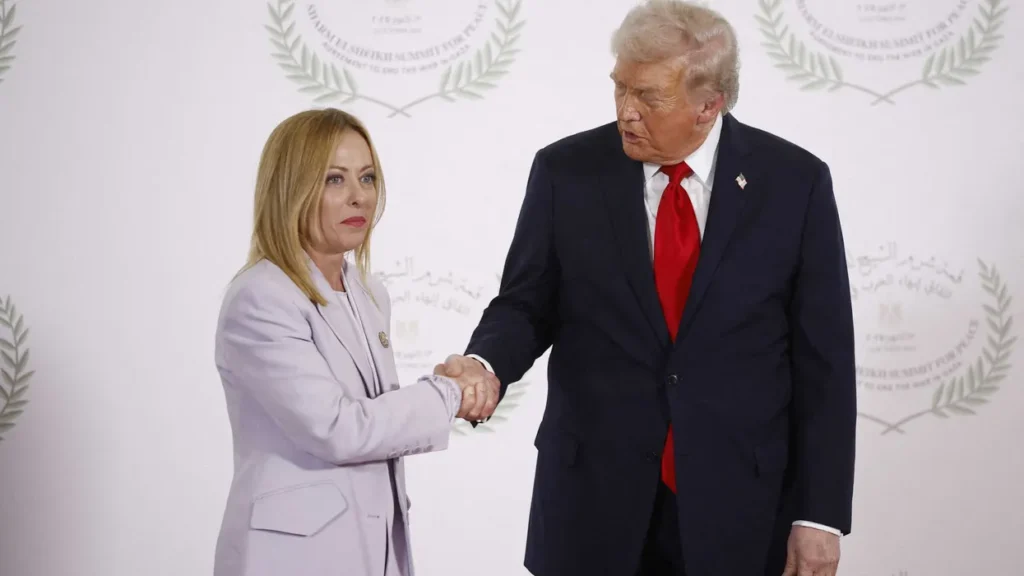
🚨Trump RAGES after HUMILIATION by ITALIAN LEADER

Europe’s current heat wave is so bad the French are considering banning outdoor drinking and adopting AC ‘if necessary’

Report reveals what started Trump’s feud with Italian pal: ‘She doesn’t see this as petty’