Today in News History
On June 22, several notable moments in the history of News stand out. In 1812, France declares war on Russia, starting Napoleon's invasion. In 1813, War of 1812: After learning of American plans for a surprise attack on Beaver Dams in Ontario, Laura Secord sets out on a thirty kilometres (19 mi) journey on foot to warn Lieutenant James FitzGibbon. In 1896, Leonard W. Murray, Canadian admiral (died 1971) was born. In 1938, C. J. Dennis, Australian poet and author (born 1876) passed away. In 1939, Don Matthews, American-Canadian football player and coach (died 2017) was born. In 1942, World War II: Erwin Rommel is promoted to Field Marshal after the Axis capture of Tobruk. In 1948, The ship HMT Empire Windrush brought the first group of 802 West Indian immigrants to Tilbury, marking the start of modern immigration to the United Kingdom. In 2002, An earthquake measuring 6.5 Mw strikes a region of northwestern Iran killing at least 261 people and injuring 1,300 others and eventually causing widespread public anger due to the slow official response. In 2007, The small town of Elie, Manitoba is hit by Canada’s most intense tornado on record. In 2012, A Turkish Air Force McDonnell Douglas F-4 Phantom II fighter plane is shot down by the Syrian Armed Forces, killing both of the plane's pilots and worsening already-strained relations between Turkey and Syria. Together, these milestones provide historical context for today's news news and ongoing narratives.
Australia scores its largest defense export ever with a $1.75 billion long-range radar deal with Canada
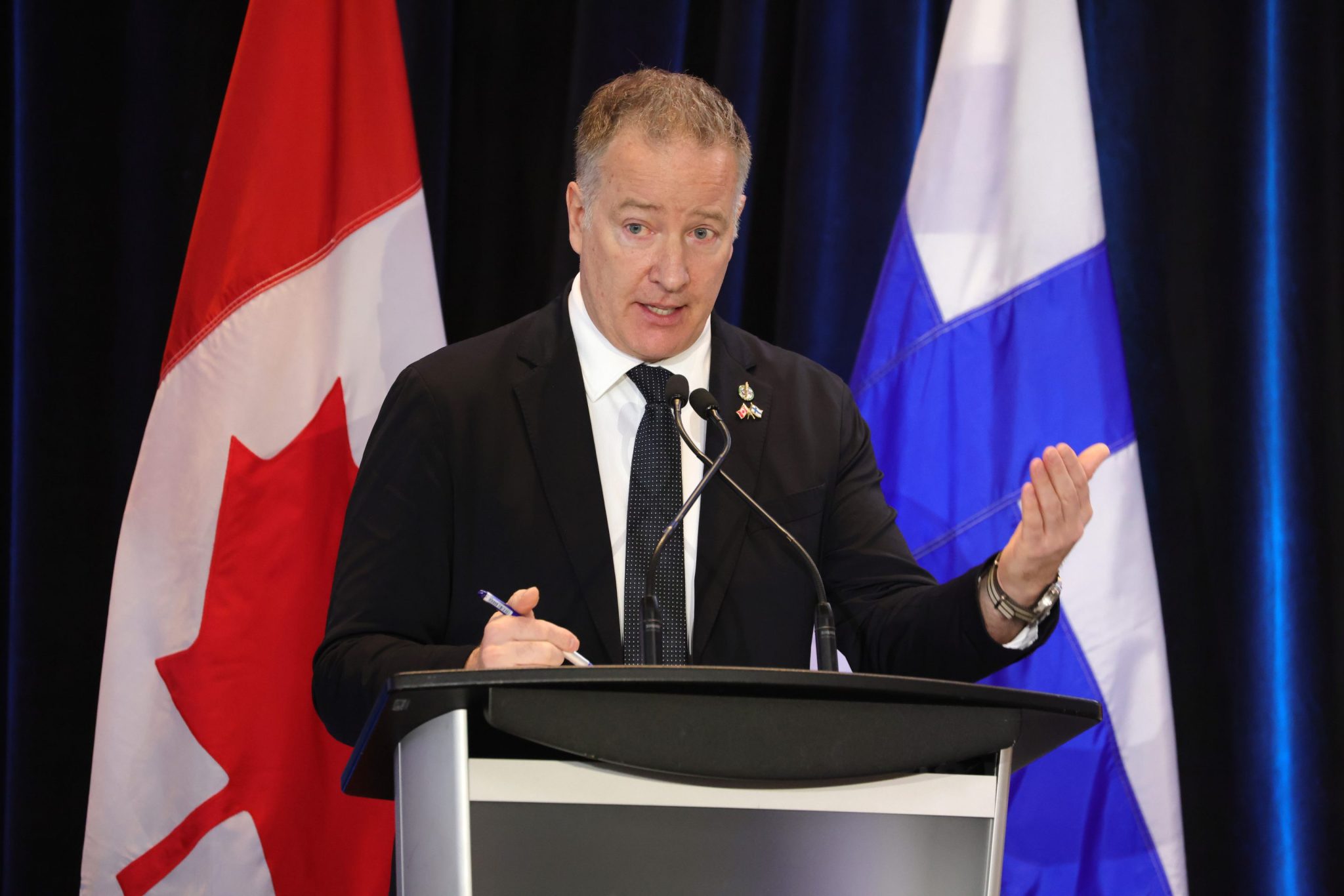
Canadian Prime Minister Mark Carney chose Australia’s radar system over comparable U.S. technology last year.
Narrative Intelligence Brief
This article was published by Fortune, a source frequently categorized with a center bias based in United States of America. Our narrative intelligence engine continuously monitors coverage from this outlet to track framing, bias, and rhetorical patterns. Our initial algorithmic scan of this specific piece did not flag high-confidence rhetorical techniques, suggesting a generally straightforward reporting style or neutral framing. By understanding the editorial perspective of Fortune, readers can better contextualize the information presented and compare it across our broader media matrix to find the real narrative.
More from Fortune
June 22, 2026
The Fed is fed up with inflation and will bring down the hammer with a series of rate hikes this year, reversing earlier cuts, BofA says
June 22, 2026
Europe’s current heat wave is so bad the French are considering banning outdoor drinking and adopting AC ‘if necessary’
June 22, 2026
Meet the 2 men putting New York’s $300 billion pension fund in play for the first time in 20 years
June 22, 2026
OpenAI’s new ‘super app’ boss hopes to persuade users and potential IPO investors that the company is about way more than just chat
June 22, 2026
Texas and Charlotte used to build huge McMansions—now they’re copying the California design tricks they once mocked
Analysis Methodology
This narrative analysis was generated using the CoDataLab Global Intelligence Engine. Our proprietary AI scans thousands of cross-border sources to identify sentiment patterns, framing techniques, and potential media bias. While AI provides the data-driven foundation, our objective is to empower readers with additional context beyond the standard headline.The content displayed above is a structured summary designed for rapid information processing. For the full original report, please visit the source outlet.More Coverage
Discussion
"keir starmer"
Breaking! Keir Starmer Steps Down, Trump’s Cuba Threats, Oil Barrel Crisis | PBD #821

Kemi Badenoch breaks silence after Starmer’s resignation, reveals what she says is Labour’s real problem

‘Too hard for Starmer’: PM holds back tears as he resigns from office