
Astrologers believe they have found remains of entire galaxy absorbed by Milky Way
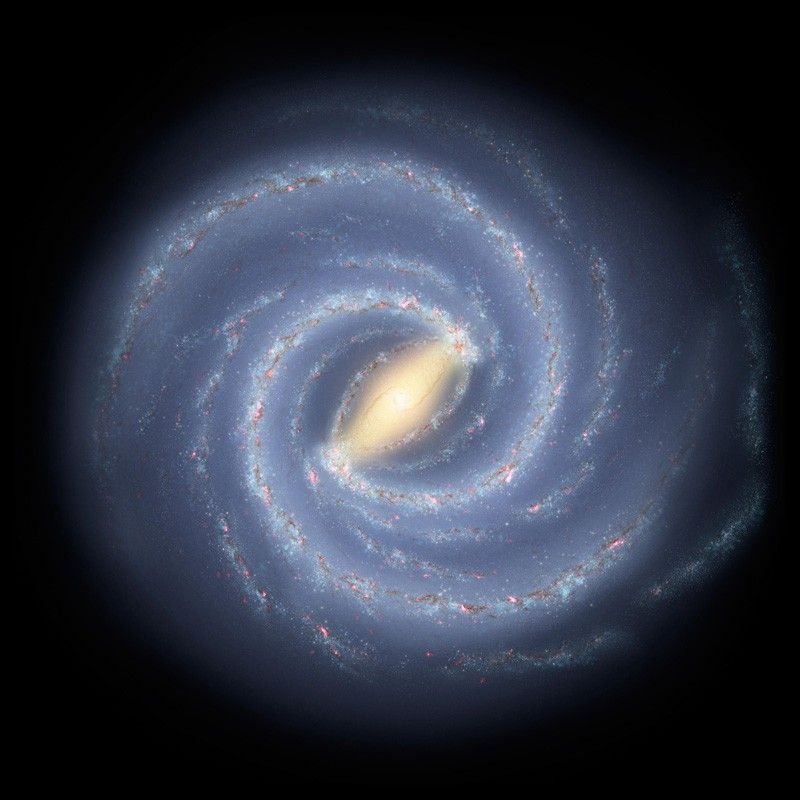
Astronomers believe they have uncovered traces of an entire galaxy consumed by the Milky Way billions of years ago.A research team has identified 20 peculiar stars within our galaxy's disc that appear to be leftovers from a small dwarf galaxy swallowed during the Milky Way's formative years.The findings, published this month in the Monthly Notices of the Royal Astronomical Society, point to a cosmic merger that occurred approximately 10 billion years ago.Scientists have dubbed the hypothetical parent galaxy Loki, drawing inspiration from the Norse trickster deity. TRENDING Stories Videos Your Say These ancient stars are classified as very metal-poor, containing virtually none of the heavier elements found in younger stellar populations.Their chemical signatures indicate they formed within the first two to three billion years following the Big Bang.What makes these stellar objects particularly intriguing is their unusual movement through space.Eleven of the stars travel in prograde orbits, following the same rotational direction as the galactic disc.The remaining nine move in retrograde fashion, orbiting in the opposite direction entirely.Ordinarily, astronomers would interpret such mixed orbital patterns as evidence of two separate source populations with comparable histories.However, detailed analysis revealed the chemical fingerprints across all 20 stars to be remarkably similar.This near-identical composition across both orbital groups strongly suggests the stars share a single point of origin rather than emerging from distinct systems.LATEST DEVELOPMENTSWatch the moment Elon Musk’s SpaceX rocket explodes after dramatic splashdownAlien material uncovered inside Earth's crater 'rewriting human historyAstronomers shocked by 'huge surprise' after looking below the clouds on distant planetThe puzzle of how one absorbed galaxy could scatter its stars into opposing orbital directions became the central question driving the research team's investigation.The research drew upon observations from the European Space Agency's Gaia telescope, which mapped the positions, velocities and compositions of two billion stars across our galaxy between July 2014 and January 2025.Dr Federico Sestito, a postdoctoral fellow at the University of Hertfordshire's Centre for Astrophysics Research, led the study alongside colleagues who conducted follow-up observations using the high-resolution spectrograph at the Canada-France-Hawaii Telescope near Maunakea's summit.The stars sit roughly 7,000 light-years from our solar system, with chemical compositions suggesting ages exceeding 10 billion years.Sestito explained the naming choice reflected the difficulty in deciphering the stars' origins: Similarly, our accreted stars gave us some hard time in understanding their origin. At first it was not easy to reconcile the fact that an accreted system can disperse its stars in both prograde and opposite orbits.The discovery carries significant weight for understanding how our galaxy assembled itself over cosmic time.Dr Alexander Ji, assistant professor in astronomy and astrophysics at the University of Chicago, noted that major galactic mergers can fundamentally alter the Milky Way's developmental trajectory.If this is real, it would indicate that we are missing a major part of our Milky Way's formation history, and we might need to revisit our current picture to see the impact of such an event, Dr Ji said.The proposed Loki merger would rival the scale of the well-documented Gaia-Sausage-Enceladus collision, which occurred between eight and ten billion years ago and helped transform our galaxy from its chaotic early state into its current stable disc structure.Dr Ji expressed appropriate caution, noting that apparent new merger discoveries sometimes prove to be extensions of previously identified systems.Our Standards: The GB News Editorial Charter
Narrative Intelligence Brief
This article was published by GB News, a source frequently categorized with a lean right bias based in United States of America. Our narrative intelligence engine continuously monitors coverage from this outlet to track framing, bias, and rhetorical patterns. Our initial algorithmic scan of this specific piece did not flag high-confidence rhetorical techniques, suggesting a generally straightforward reporting style or neutral framing. By understanding the editorial perspective of GB News, readers can better contextualize the information presented and compare it across our broader media matrix to find the real narrative.
Explore related topics: Stay informed with Real Narrative News as we track unfolding stories. Dive deeper into our coverage of pivotal topics including pope leo, earnings transcript, جنوب لبنان, مراسل المنار, المقاومة الإسلامية, swot analysis, حزب الله, premier ministre, ألوان الشرق, and internet access. Our intelligence streams continuously monitor these keywords to bring you unbiased analysis and real-time updates on topics like "Astrologers believe they have found remains of entire galaxy absorbed by Milky Way".
More from GB News
May 25, 2026
Hundreds evacuated as huge fire breaks out at tourist hotel in British-favourite holiday hotspot
May 25, 2026
Ebola fears spread as suspected cases detected in Italy amid Covid-style measures
May 25, 2026
Astrologers believe they have found remains of entire galaxy absorbed by Milky Way
May 25, 2026
Astronomers believe they have found remains of entire galaxy absorbed by Milky Way
May 25, 2026
Labour left plotting to sabotage 'coronation' of Andy Burnham as Prime Minister
Analysis Methodology
This narrative analysis was generated using the CoDataLab Global Intelligence Engine. Our proprietary AI scans thousands of cross-border sources to identify sentiment patterns, framing techniques, and potential media bias. While AI provides the data-driven foundation, our objective is to empower readers with additional context beyond the standard headline.The content displayed above is a structured summary designed for rapid information processing. For the full original report, please visit the source outlet.More Coverage
Discussion