Today in News History
On July 1, several notable moments in the history of News stand out. In 1878, Canada joins the Universal Postal Union. In 1923, The Parliament of Canada suspends all Chinese immigration. In 1941, Myron Scholes, Canadian-American economist and academic, Nobel Prize laureate was born. In 1955, Li Keqiang, Chinese economist and politician, 7th Premier of the People's Republic of China (died 2023) was born. In 1957, The International Geophysical Year begins. In 1990, German reunification: East Germany accepts the Deutsche Mark as its currency, thus uniting the economies of East and West Germany. In 1997, China resumes sovereignty over the city-state of Hong Kong, ending 156 years of British colonial rule. The handover ceremony is attended by British Prime Minister Tony Blair, Charles, Prince of Wales, Chinese President Jiang Zemin and U.S. Secretary of State Madeleine Albright. In 2003, Over 500,000 people protest against efforts to pass anti-sedition legislation in Hong Kong. In 2006, The first operation of Qinghai-Tibet Railway is conducted in China. In 2020, The United States-Mexico-Canada Agreement replaces NAFTA. Together, these milestones provide historical context for today's news news and ongoing narratives.
As China narrows maths gap with US, Hong Kong bids to host 2030 global event
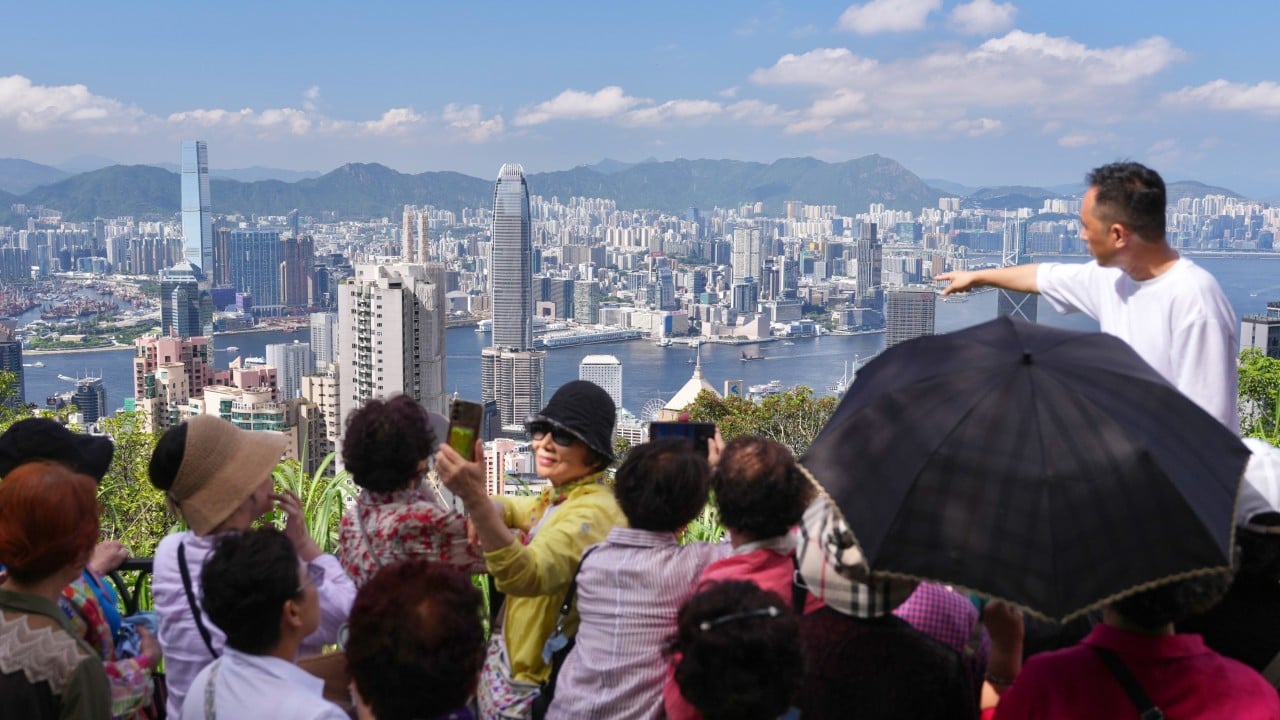
Even before the world’s top mathematicians gather in Philadelphia in late July for the International Congress of Mathematicians, a high-stakes battle is unfolding over where the global event will next take place. Spearheaded by 1982 Fields Medallist and Tsinghua University professor Shing-Tung Yau, Hong Kong’s bid to host the 2030 congress faces competition from Glasgow and Tokyo. An inspection delegation from the International Mathematical Union (IMU) – the congress’s governing body – completed...
Narrative Intelligence Brief
This article was published by South China Morning Post, a source frequently categorized with a lean left bias based in Hong Kong. Our narrative intelligence engine continuously monitors coverage from this outlet to track framing, bias, and rhetorical patterns. Our initial algorithmic scan of this specific piece did not flag high-confidence rhetorical techniques, suggesting a generally straightforward reporting style or neutral framing. By understanding the editorial perspective of South China Morning Post, readers can better contextualize the information presented and compare it across our broader media matrix to find the real narrative.
More from South China Morning Post
July 1, 2026
Xi projects confidence for China’s Communist Party at home and on world stage
July 1, 2026
Vietnam offers cash for babies but potential parents are not biting
July 1, 2026
A US missile killed Iranian schoolchildren 4 months ago. Still, no one accepts blame
July 1, 2026
Communist Party a ‘fundamental safeguard’ of Hong Kong’s prosperity: John Lee
July 1, 2026
Chinese PhD graduate invites favourite eatery owners to graduation via delivery order
Analysis Methodology
This narrative analysis was generated using the CoDataLab Global Intelligence Engine. Our proprietary AI scans thousands of cross-border sources to identify sentiment patterns, framing techniques, and potential media bias. While AI provides the data-driven foundation, our objective is to empower readers with additional context beyond the standard headline.The content displayed above is a structured summary designed for rapid information processing. For the full original report, please visit the source outlet.More Coverage
Discussion
"cup"
Why FIFA’s World Cup hydration breaks are so controversial

Van Dijk despairs after Netherlands World Cup exit: ‘The most terrible moments for a footballer’
SOLWAY: Everything has become political — and why that's dangerous