Today in News History
On June 28, several notable moments in the history of News stand out. In 1914, Aribert Heim, Austrian SS physician and Nazi war criminal (died 1992) was born. In 1934, Georges Wolinski, Tunisian-French journalist and cartoonist (died 2015) was born. In 1938, Leon Panetta, American lawyer and politician, 23rd United States Secretary of Defense was born. In 1950, Korean War: Suspected communist sympathizers (between 60,000 and 200,000) are executed in the Bodo League massacre. In 1981, A powerful bomb explodes in Tehran, killing 73 officials of the Islamic Republican Party. In 1987, For the first time in military history, a civilian population is targeted for chemical attack when Iraqi warplanes bombed the Iranian town of Sardasht. In 1989, On the 600th anniversary of the Battle of Kosovo, Slobodan Milošević delivers the Gazimestan speech at the site of the historic battle. In 2001, Slobodan Milošević is extradited to the ICTY in The Hague to stand trial. In 2004, Iraq War: Sovereign power is handed to the interim government of Iraq by the Coalition Provisional Authority, ending the U.S.-led rule of that nation. In 2016, A terrorist attack in Turkey's Istanbul Atatürk Airport kills 42 people and injures more than 230 others. Together, these milestones provide historical context for today's news news and ongoing narratives.
Araghchi says Iran alone controls Hormuz over next 30 days; warns against attacks
Iranian Foreign Minister Abbas Araghchi held a press conference in Baghdad following meetings with his Iraqi counterpart Fuad Hussein. He thanked the Iraqi government and people for their support during the war and congratulated the new Iraqi government. He said the visit also covered final preparations for the funeral processions of the late Iranian Supreme Leader Ayatollah Ali Khamenei, to be held in Najaf and Karbala in early July. On the Strait of Hormuz, Araghchi reiterated that the waterway "remains under the total oversight and management of Iran" for the next 30 days under the MoU, and that no other party should interfere. He warned that any unilateral action would "exacerbate the situation" and delay the reopening of the strait. He also said the US must ensure Israel ceases its attacks on Lebanon and withdraws from occupied territories, calling this "item one" of the MoU. Araghchi condemned continued US strikes on Iranian military and port facilities, saying they violate the MoU. Iraqi Foreign Minister Fuad Hussein offered to mediate between the GCC countries, Iran and Iraq to defuse regional tensions and restore stability. Araghchi welcomed the proposal. For Iraq, the closure of the Strait of Hormuz has had a severe economic impact, as the country relies on oil revenues for more than 95% of its national income. Al Jazeera's Mahmoud Abdelwahed reports from Baghdad. Subscribe to our channel: http://bit.ly/AJSubscribe Follow us on X: https://X.com/AJEnglish Find us on Facebook: https://www.facebook.com/aljazeera Check our website: http://www.aljazeera.com/ Check out our Instagram page: https://www.instagram.com/aljazeeraenglish/ Download AJE Mobile App: https://aje.news/AJEMobile #Araghchi #Iraq #Iran #Baghdad #Israel #USIranPeaceDeal #USIranMemorandumOfUnderstanding #IranWar #LebanonWar #AliKhameneiFuneral #StraitOfHormuz #HormuzControl #USAttacksIran #IranAttacksBahrain #IranAttacksKuwait
Narrative Intelligence Brief
This article was published by Al Jazeera English, a source frequently categorized with a lean left bias based in Qatar. Our narrative intelligence engine continuously monitors coverage from this outlet to track framing, bias, and rhetorical patterns. Our initial algorithmic scan of this specific piece did not flag high-confidence rhetorical techniques, suggesting a generally straightforward reporting style or neutral framing. By understanding the editorial perspective of Al Jazeera English, readers can better contextualize the information presented and compare it across our broader media matrix to find the real narrative.
More from Al Jazeera English
June 28, 2026
From empires to occupation: The long history of Gaza explained
June 28, 2026
Brief: Iran attacks US targets in retaliation. Israel and Lebanon agree on new framework | The Take
June 28, 2026
Nigeria begins evacuation of citizens from South Africa after xenophobic attacks
June 28, 2026
Israel expands Gaza military zone, forcing more families to flee
June 28, 2026
Qatar sends search and rescue teams to support Venezuela earthquake response
Analysis Methodology
This narrative analysis was generated using the CoDataLab Global Intelligence Engine. Our proprietary AI scans thousands of cross-border sources to identify sentiment patterns, framing techniques, and potential media bias. While AI provides the data-driven foundation, our objective is to empower readers with additional context beyond the standard headline.The content displayed above is a structured summary designed for rapid information processing. For the full original report, please visit the source outlet.More Coverage
Discussion
"cup"
Spain’s Nico Williams hits out at ‘completely unnecessary’ Uruguay tackle that injured him

LA reporter’s ignorant joke about Bosnia in the World Cup lands her in hot water

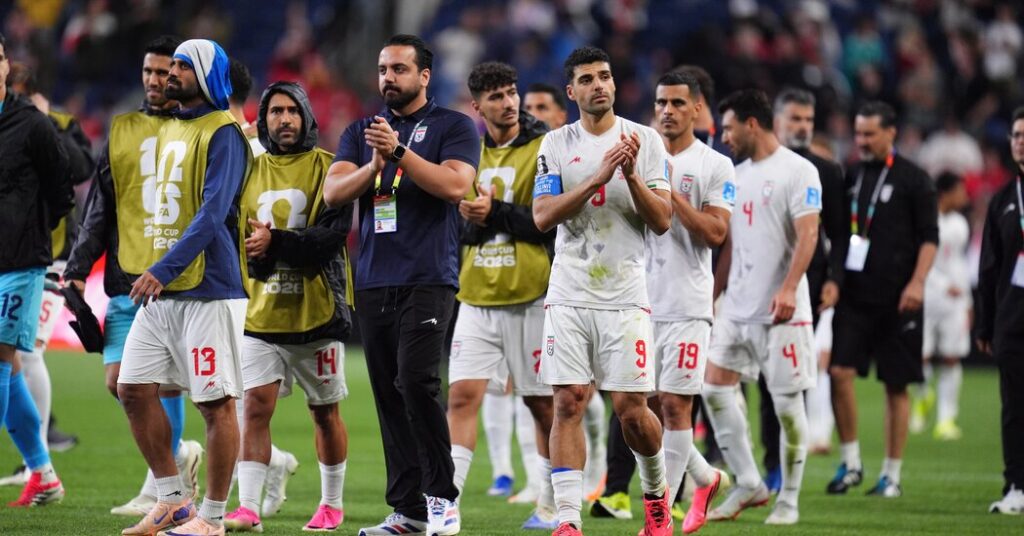
Iran’s World Cup Elimination Ends a Politically Charged Odyssey