Today in News History
On June 23, several notable moments in the history of News stand out. In 229, Sun Quan proclaims himself emperor of Eastern Wu. In 947, Wang, imperial consort of Later Tang passed away. In 947, Li Congyi, prince of Later Tang (born 931) passed away. In 1810, John Jacob Astor forms the Pacific Fur Company. In 1812, War of 1812: Great Britain revokes the restrictions on American commerce, thus eliminating one of the chief reasons for going to war. In 1893, William Fox, English-New Zealand lawyer and politician, 2nd Prime Minister of New Zealand (born 1812) passed away. In 1940, Henry Larsen begins the first successful west-to-east navigation of Northwest Passage from Vancouver, British Columbia, Canada. In 1961, The Antarctic Treaty System, which sets aside Antarctica as a scientific preserve and limits military activity on the continent, its islands and ice shelves, comes into force. In 2012, James Durbin, English economist and statistician (born 1923) passed away. In 2014, The last of Syria's declared chemical weapons are shipped out for destruction. Together, these milestones provide historical context for today's news news and ongoing narratives.
Anxious West seeks to rewrite global trade rules to counter China

At the recent Brussels summit, the leaders of all 27 European Union states called on the European Commission to expand the bloc’s trade defence toolbox against “global macroeconomic imbalances”, widely understood to refer to China’s so-called overcapacity. Measures under discussion include mechanisms for sector-wide tariffs and other restrictions in industries such as chemicals and green technology. Europe, long a critic of Washington’s Section 301 tariffs, is now considering instruments that...
Narrative Intelligence Brief
This article was published by South China Morning Post, a source frequently categorized with a lean left bias based in Hong Kong. Our narrative intelligence engine continuously monitors coverage from this outlet to track framing, bias, and rhetorical patterns. Our initial algorithmic scan of this specific piece did not flag high-confidence rhetorical techniques, suggesting a generally straightforward reporting style or neutral framing. By understanding the editorial perspective of South China Morning Post, readers can better contextualize the information presented and compare it across our broader media matrix to find the real narrative.
More from South China Morning Post
June 23, 2026
What fuels global trade imbalances: China’s overcapacity or America’s failure to adapt?
June 23, 2026
Russia considers fuel imports amid Ukraine’s strikes on refineries: newspaper
June 23, 2026
Ex-Chinese official’s son remanded in Hong Kong over HK$64m money laundering case
June 23, 2026
Don’t restrict AI in sports, ensure fair access, Hong Kong lawmaker urges
June 23, 2026
China builds record-breaking 100-metre observation tower in South China Sea
Analysis Methodology
This narrative analysis was generated using the CoDataLab Global Intelligence Engine. Our proprietary AI scans thousands of cross-border sources to identify sentiment patterns, framing techniques, and potential media bias. While AI provides the data-driven foundation, our objective is to empower readers with additional context beyond the standard headline.The content displayed above is a structured summary designed for rapid information processing. For the full original report, please visit the source outlet.More Coverage
Discussion
"trump"
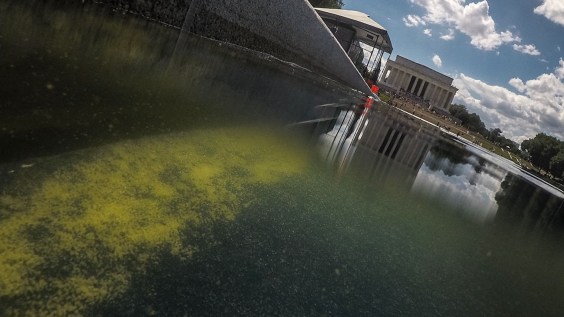
Dead Duck Count Mounts Around Trump’s Green Slime Lagoon

You Can Now Be Arrested For Sticking Your Hand In Donald Trump’s Disgusting Reflecting Pool
Chicago Mayor ignores another bloody weekend to focus on something called a, quote, “Transfemicide State of Emergency"