
0
Anthropic launches a design tool to take on all the other design tools
April 17, 2026
Posted 2 hours ago by
Anthropic Labs just announced a new product for its flagship AI model called Claude Design. According to Anthropic, the new tool “lets you collaborate with Claude to create polished visual work like designs, prototypes, slides, one-pagers, and more.” The company is billing the tool as a way for non-designers to mock up visuals, and a way for designers to quickly test out a range of initial prototypes.
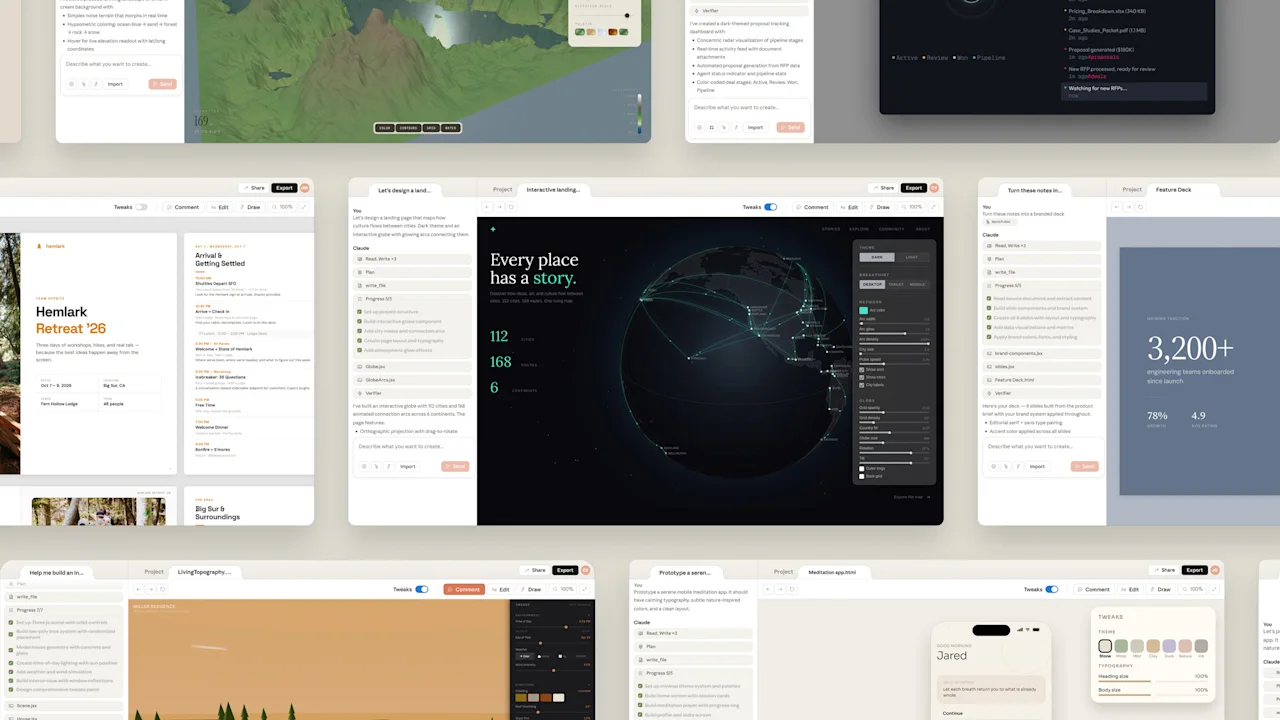
It’s powered by Claude’s most recent new model, Opus 4.7, which is trained to handle difficult coding prompts and complex, long-running tasks. Claude Design is available starting today to Claude Pro, Max, Team, and Enterprise Subscribers. [Image: Anthropic] Anthropic joins a growing number of companies developing their own AI-based design tools, including Figma, Canva, Adobe Express, and Google’s Stitch. As each of these companies expands its AI capabilities, the segmentation between their capabilities is becoming less and less pronounced: Canva is an AI company with design tools, Figma is a UX company running on AI, and, now, Claude is a powerful chatbot with a design and UX assistant. [Image: Anthropic] How Claude Design works Claude Design functions like an ultra-intelligent middle man between designers and product engineers. To use the tool, users start with a text prompt, as well as supplementary materials they want to use for reference, like a codebase, images, or documents. For example, a user might type, “Prototype a serene mobile meditation app. It should have calming typography, subtle nature-inspired colors, and a clean layout.” [Image: Anthropic] From there, Claude Design will produce a first draft. The tool’s UX is designed to make editing intuitive: an inline comment box facilitates specific tweaks, like, in this case, adding a dark mode toggle; custom sliders automatically spawn for small adjustments, such as color and type size; and users can also make direct edits on the draft themselves. It’s clearly designed to feel iterative and collaborative; like bouncing ideas off of a very fast colleague. This same workflow applies whether a user is making an app, a webpage, a powerpoint, or a social media post. Bigger teams can bring Claude Design into the loop on their company’s needs by uploading a codebase and design files. Claude will then digest that information and create a design system that uses the appropriate colors, typography, and components automatically. Once a design is complete, it can be shared as an internal URL within an organization, saved as a folder, or exported to Canva, PDF, PPTX, or standalone HTML files. Claude Design offers a one-stop shop for design consultation on app prototypes, web UX, and marketing assets, and it feels like an encapsulation of where the industry is headed. In the AI design space, the biggest players aren’t specializing—they’re becoming jacks of all trades.
Fast Company
Coverage and analysis from United States of America. All insights are generated by our AI narrative analysis engine.