Today in News History
On June 29, several notable moments in the history of News stand out. In 1819, Thomas Dunn English, American poet, playwright, and politician (died 1902) was born. In 1928, Ian Bannen, Scottish actor (died 1999) was born. In 1948, Ian Paice, English drummer, songwriter, and producer was born. In 1953, Colin Hay, Scottish-Australian singer and guitarist was born. In 1956, Nick Fry, English economist and businessman was born. In 1979, Andy O'Brien, English footballer was born. In 1979, Lowell George, American singer-songwriter, guitarist, and producer (born 1945) passed away. In 2001, Gunnar Henderson, American baseball player was born. In 2001, Aaron Schoupp, Australian rugby league player was born. In 2014, Dermot Healy, Irish author, poet, and playwright (born 1947) passed away. Together, these milestones provide historical context for today's news news and ongoing narratives.
Andy Burnham's 'Manchesterism' is just tax-and-spend with a northern accent
Narrative Analysis: Plain Folks
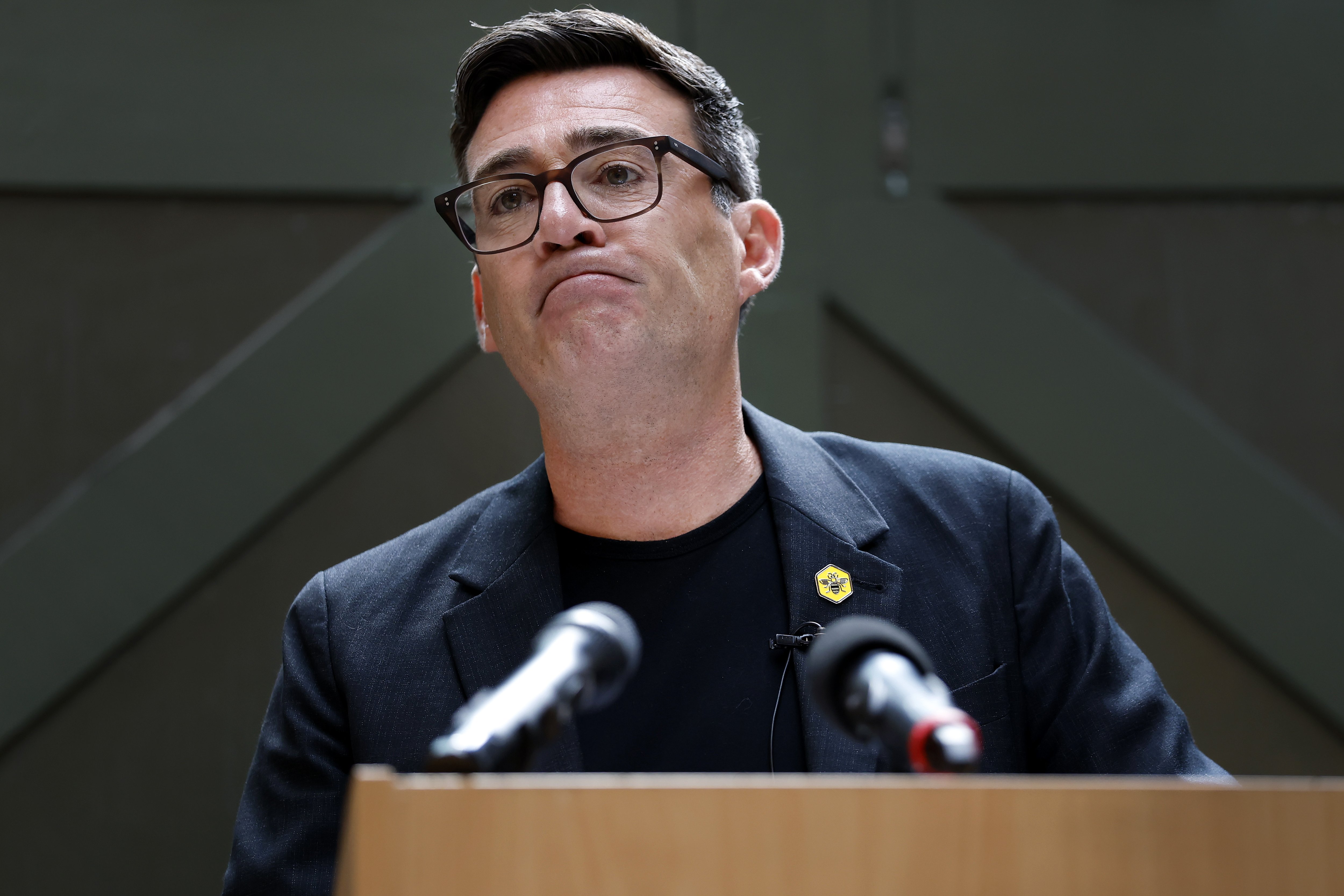
“I don’t have to sell my soul,” begins I Wanna Be Adored, The Stone Roses’ best-known song. Often mistaken for a love song, it is really about the dangerous hunger for attention, admiration and even worship.Given Andy Burnham’s rock-star return to Westminster last week, complete with the swagger, the fanfare, and the messiah-like reverence with which Burnham is treated, it is hard to think of a more fitting soundtrack. The Stone Roses may be one of his favourite bands, but after his first speech delivered at the People’s History Museum in Manchester, Burnham appeared less interested in being adored and more in being outright canonised as the saviour of both the Labour Party and the country as a whole.His focus? Taking the ‘power out of the centre’, decentralisation and bringing ‘good growth in every postcode and hope in every heart’. And while this may appeal to Burnham’s faithful cheerleaders in the room, unfortunately for taxpayers, there was little behind the clichés and political sweet nothings of his speech. TRENDING Stories Videos Your Say What was there was nothing Brits haven’t heard before and was, in many ways, a doubling down on the failed orthodoxies of state interventionism and shuffling around accountability.There were promises to “rewire Britain”, vague appeals to hope and endless declarations that the country needed to do politics differently. At times, the speech sounded less like a programme for Government and more like a parody of one: under a Burnham administration, local authorities would face a statutory duty to deliver “more good things”, while Westminster would finally be ordered to stop doing “bad things”. Enough is enough: YES to good things, NO to bad things. NO to arguing, YES to doing things.While this is little more than nauseating tripe, what was really missing was a serious explanation of how much any of these plans to rewire Britain would cost, who would pay for it, or how a Government led by Burnham would ease the burdens on households and businesses already being taxed to breaking point.To be fair, Burnham did say that families needed “breathing space” to cope with rising costs, which sounds reassuring enough. But the likelihood that this will materialise in simply more government spending, rather than tax cuts, is a bet I would be willing to lay down.After all, politicians rarely create breathing space by taking less. Their instinct is to borrow more, spend more and then boast about the generosity of programmes funded from money taken out of somebody else’s pocket. LATEST DEVELOPMENTSAndy Burnham's big speech was short on hard answers and that should worry us all – Tom HarwoodHere's the reason why white working-class pupils are struggling – Luke TaylorAndy Burnham isn’t PM yet but he’s already shown us the type of leader he will be - Carole MaloneBurnham’s speech gave no reason to indicate to anyone that he would be any different to the tax and spend politicians of years gone by. His answer appears to be that the state should play an even larger role in directing the economy and encouraging so-called ‘good growth’.His supporters, and indeed Burnham himself, have attempted to package this philosophy as “Manchesterism”, as though giving a stale idea a regional label somehow makes it innovative. But in practice, it simply means more meddling in the economy, more spending powers and statutory obligations being dumped on local politicians and quangos, and ultimately less accountability for Burnham himself when he finally gets into Downing Street.Now, there is nothing inherently wrong with devolving power. Decisions should often be taken closer to the people affected by them. But genuine localism requires local accountability, transparency and responsibility for raising the money being spent.Burnham’s version risks offering local politicians the power to spend while leaving national taxpayers to pick up the bill or, worse still, forcing local authorities to hike taxes while keeping his hands clean. Manchesterism then appears less like the decentralisation of powers and more like the decentralisation of blame.Nor should taxpayers be reassured by Burnham’s insistence that the state must become more involved in generating growth. Governments do not create sustainable growth by holding conferences, establishing development bodies or producing top-down ten-year plans stuffed with bureaucratic jargon.Britain’s problem is not that ministers lack sufficient mechanisms for interference.Businesses face some of the highest energy costs in the developed world, a punitive tax system, endless regulation, a dysfunctional planning regime and a public sector consuming an ever-growing share of the economy.Creating another board, fund, strategy or regional authority will not solve those problems. It will merely create another layer of officials somewhere to meet and drain taxpayers’ cash, all the while ordinary people struggle beneath the burden imposed by the existing ones.Burnham must therefore ditch the tired clichés and tell taxpayers what he would actually do. Would he rule out further tax rises and end the stealth raid caused by frozen thresholds? Would he bring welfare and Whitehall spending under control? Would he abolish quangos rather than creating new regional bureaucracies? The answer to all of these questions, I predict, will be a resounding no.The truth of the matter is that the rock star of Makerfield is a thoroughly conventional tax-and-spend politician whose proposed revolution looks suspiciously like more of the same.Burnham may want to be adored, but taxpayers should judge him not by the size of the applause or the poetry of his slogans, but by whether he is prepared to let them keep more of their own money.If he genuinely wants to give families breathing space, there is a simple place for him to start: get politicians out of their pockets. Our Standards: The GB News Editorial Charter
Narrative Intelligence Brief
This article was published by GB News, a source frequently categorized with a lean right bias based in United States of America. Our narrative intelligence engine continuously monitors coverage from this outlet to track framing, bias, and rhetorical patterns. In this specific piece, our systems detected the potential use of the "Plain Folks" technique. This narrative approach is often used to shape reader perception by highlighting specific emotional or rhetorical angles. By understanding the editorial perspective of GB News, readers can better contextualize the information presented and compare it across our broader media matrix to find the real narrative.
More from GB News
June 29, 2026
Novak Djokovic asks for 'invite to wedding' after couple get engaged during Serbian's match at Wimbledon
June 29, 2026
More than 200 runners don red as they complete 5km run in memory of Henry Nowak
June 29, 2026
Nasa's spiritual successor to Concorde capable of breaking sound barrier without sonic boom
June 29, 2026
Keir Starmer set to deny England fans day off for key World Cup clash despite potential 1am kick-off
June 29, 2026
Police vow to come down on antisocial yobs as neighbourhoods disturbed in more than a million cases
Reliability Insights
P
Technique: Plain Folks
System analysis detected use of specific narrative techniques in this piece.Analysis Methodology
This narrative analysis was generated using the CoDataLab Global Intelligence Engine. Our proprietary AI scans thousands of cross-border sources to identify sentiment patterns, framing techniques, and potential media bias. While AI provides the data-driven foundation, our objective is to empower readers with additional context beyond the standard headline.The content displayed above is a structured summary designed for rapid information processing. For the full original report, please visit the source outlet.More Coverage
Discussion
"supreme court"
Samuel Alito’s outburst directed at Sonia Sotomayor is part of a troubling trend

The Supreme Court upholds Fed independence by saving Lisa Cook’s job—and also saves U.S. debt from a crisis

‘Irresponsible Escapade’: Alito Rips SCOTUS Majority in Ruling Involving Big Tech Data and a Bank Robbery