Today in News History
On July 3, several notable moments in the history of News stand out. In 1767, Norway's oldest newspaper still in print, Adresseavisen, is founded and the first edition is published. In 1775, American Revolutionary War: George Washington takes command of the Continental Army at Cambridge, Massachusetts. In 1778, American Revolutionary War: The Iroquois, allied with Britain, killed 360 people in the Wyoming Valley massacre. In 1919, Gerald W. Thomas, American soldier and academic (died 2013) was born. In 1940, Lamar Alexander, American lawyer and politician, 5th United States Secretary of Education was born. In 1971, Julian Assange, Australian journalist, publisher, and activist, founded WikiLeaks was born. In 1979, U.S. President Jimmy Carter signs the first directive for secret aid to the opponents of the pro-Soviet regime in Kabul. In 2009, John Keel, American journalist and author (born 1930) passed away. In 2012, Yvonne B. Miller, American educator and politician (born 1934) passed away. In 2014, Ira Ruskin, American politician (born 1943) passed away. Together, these milestones provide historical context for today's news news and ongoing narratives.
America’s first sphere of influence becomes the test of its power at 250
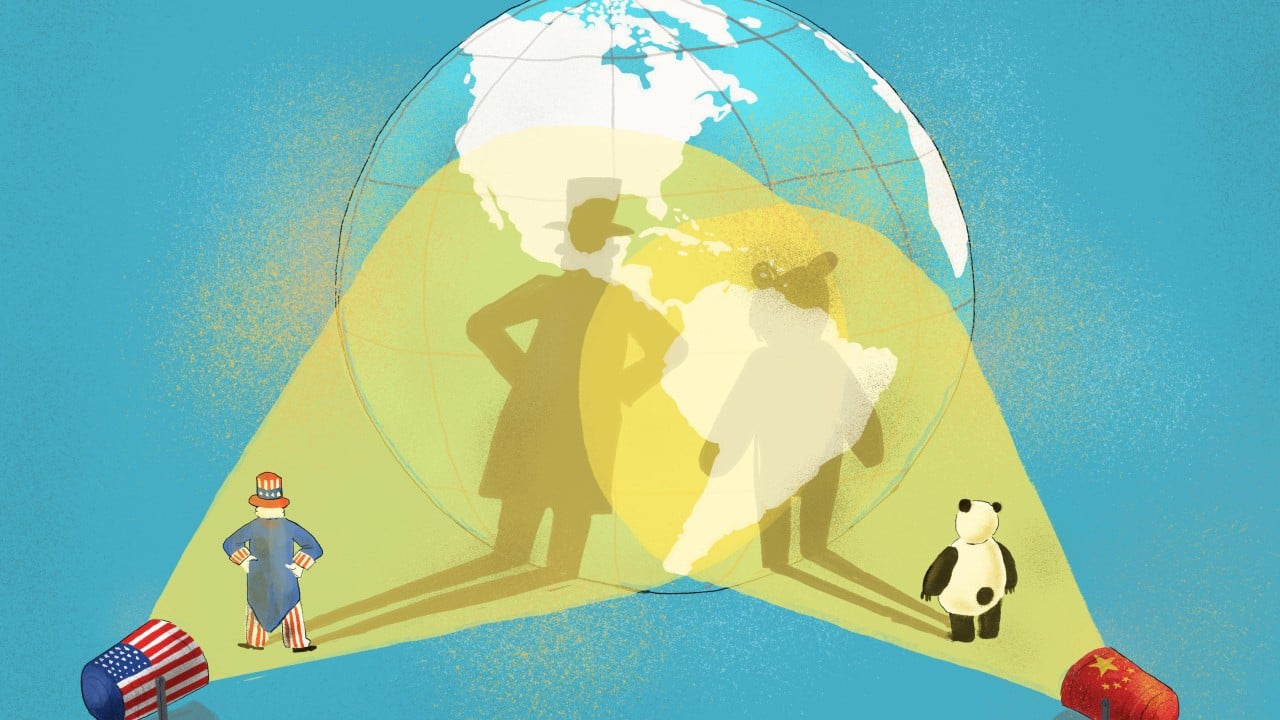
As the United States marks the 250th anniversary of its founding, it confronts a new world order dominated by its relationship with China. In this wide-ranging series, we examine the pressure points and possibilities in those ties, from hard tech to soft power. Here, Teresa Elena Frontado and Igor Patrick look at how Beijing is testing long-standing US influence in the western hemisphere. Asked during the 2024 presidential campaign whether he was concerned about Brazil and Mexico drifting...
Narrative Intelligence Brief
This article was published by South China Morning Post, a source frequently categorized with a lean left bias based in Hong Kong. Our narrative intelligence engine continuously monitors coverage from this outlet to track framing, bias, and rhetorical patterns. Our initial algorithmic scan of this specific piece did not flag high-confidence rhetorical techniques, suggesting a generally straightforward reporting style or neutral framing. By understanding the editorial perspective of South China Morning Post, readers can better contextualize the information presented and compare it across our broader media matrix to find the real narrative.
More from South China Morning Post
July 3, 2026
‘I’m so scared’: parents of dying Hong Kong girl, 13, pray for organ ‘miracle’
July 3, 2026
China’s satellite engine smashes record, leaves US rival far behind
July 3, 2026
Merz hits back at Trump for ridiculing Germany’s defence spending drive
July 3, 2026
Alibaba bans staff from using Claude Code over Anthropic spyware concerns
July 3, 2026
Will Johor-Singapore causeway bottlenecks sway outcome of Malaysia’s state election?
Analysis Methodology
This narrative analysis was generated using the CoDataLab Global Intelligence Engine. Our proprietary AI scans thousands of cross-border sources to identify sentiment patterns, framing techniques, and potential media bias. While AI provides the data-driven foundation, our objective is to empower readers with additional context beyond the standard headline.The content displayed above is a structured summary designed for rapid information processing. For the full original report, please visit the source outlet.More Coverage
Discussion
"trump"
🇺🇸 Trump Throws America’s WORST Birthday Party

Trump fights fraud by freezing funding for New York’s Medicaid Fraud Control Unit
Tim Walz pardons illegal alien despite HORRIFIC child sex crimes — which may shield him from deportation