
Today in News History
On June 23, several notable moments in the history of News stand out. In 1868, Christopher Latham Sholes received a patent for an invention he called the "Type-Writer". In 1907, James Meade, English economist and academic, Nobel Prize laureate (died 1995) was born. In 1912, Alan Turing, English mathematician and computer scientist (died 1954) was born. In 1969, IBM announces that effective January 1970 it will price its software and services separately from hardware thus creating the modern software industry. In 1972, Watergate scandal: U.S. President Richard M. Nixon and White House Chief of Staff H. R. Haldeman are taped talking about illegally using the Central Intelligence Agency to obstruct the Federal Bureau of Investigation's investigation into the Watergate break-ins. In 1995, Roger Grimsby, American journalist (born 1928) passed away. In 2006, Aaron Spelling, American actor, producer, and screenwriter, founded Spelling Television (born 1923) passed away. In 2007, Elliana Walmsley, American dancer was born. In 2009, Ed McMahon, American game show host and announcer (born 1923) passed away. In 2021, John McAfee, British-American computer programmer and businessman, founded McAfee (born 1945) passed away. Together, these milestones provide historical context for today's news news and ongoing narratives.
Amazon’s first ever ChatGPT ads reveal a key part of the e-commerce giant’s AI strategy
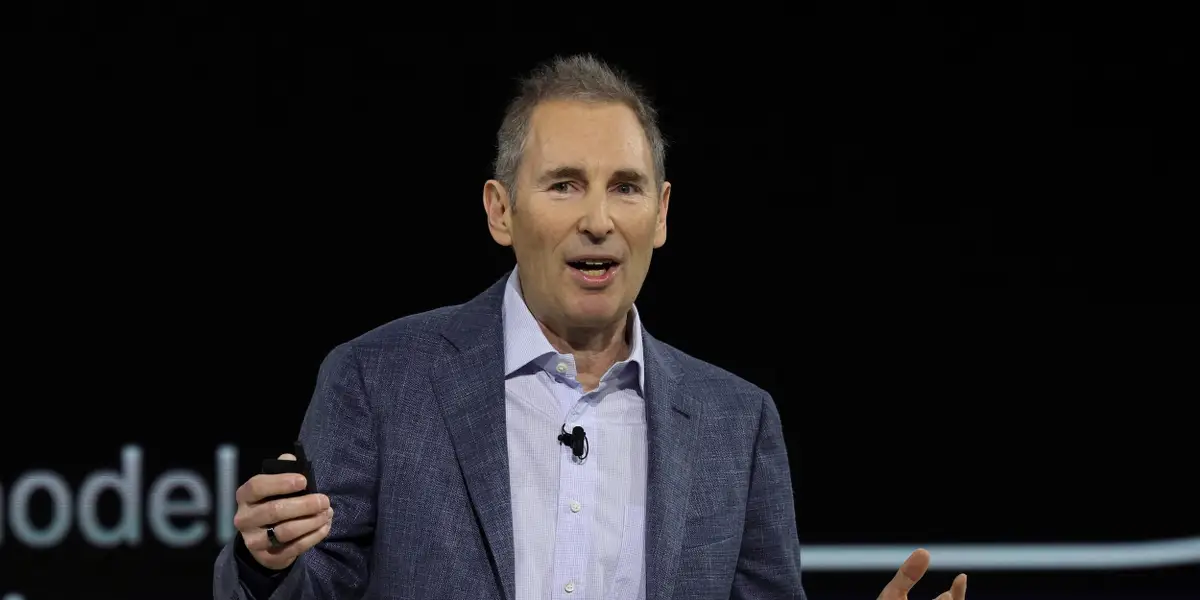
Amazon CEO Andy Jassy Brendan McDermid/Reuters Amazon buys ads on ChatGPT to drive users back to its own marketplace. Amazon blocks AI companies from scraping its product and pricing data. OpenAI’s ad business could get a major boost from Amazon’s presence. Amazon wants ChatGPT‘s users. It just doesn’t want OpenAI to have its data. Amazon []
Narrative Intelligence Brief
This article was published by DNyuz, a source frequently categorized with a lean right bias based in Armenia. Our narrative intelligence engine continuously monitors coverage from this outlet to track framing, bias, and rhetorical patterns. Our initial algorithmic scan of this specific piece did not flag high-confidence rhetorical techniques, suggesting a generally straightforward reporting style or neutral framing. By understanding the editorial perspective of DNyuz, readers can better contextualize the information presented and compare it across our broader media matrix to find the real narrative.
More from DNyuz
June 23, 2026
Chaos engulfs Trump loyalist’s group as even right-wing ‘kook heaven’ abandons him: report
June 23, 2026
Abortion Rights Group Endorses Platner Over Collins in Maine
June 23, 2026
Ex U.S. ambassador says Mexico’s former president feared Sinaloa boss would expose corrupt officials
June 23, 2026
White House ally holds ‘big chip of leverage’ that may decide Trump’s fate: analysis
June 23, 2026
Trump on the Shabby Condition of the Reflecting Pool: Not My Fault
Analysis Methodology
This narrative analysis was generated using the CoDataLab Global Intelligence Engine. Our proprietary AI scans thousands of cross-border sources to identify sentiment patterns, framing techniques, and potential media bias. While AI provides the data-driven foundation, our objective is to empower readers with additional context beyond the standard headline.The content displayed above is a structured summary designed for rapid information processing. For the full original report, please visit the source outlet.More Coverage
Discussion
"iran war"
Trump accuses newspaper of ‘treason’ after it questioned what the Iran war had actually achieved
UK ‘did not like’ Starmer refusing to be drawn into Iran war, says Trump

We Parsed Trump’s Shifting Rhetoric on the Iran War
