
Amazingly, Apple may emerge unscathed from its AI mess
Narrative Analysis: Appeal to Fear
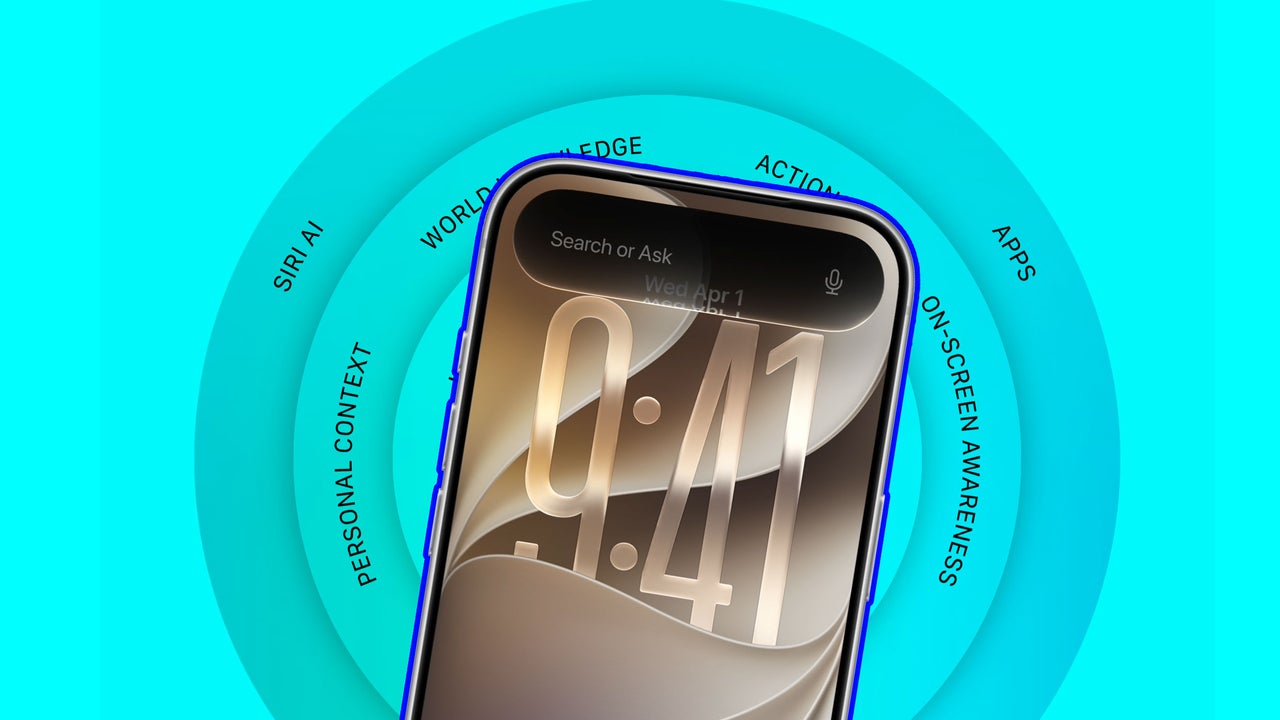
Hello again from Fast Company and welcome back to Plugged In. Throughout its 15-year history, Siri has often seemed to be cursed, or at least an eternal underachiever. Few products have had so much unfulfilled potential for so long. Yet none of the AI assistant’s previous disappointments rivaled the one that began two years ago, when Apple declared that Siri had entered a new era, showed off a profusion of new AI-powered capabilities . . . and then failed to ship them. But Apple is finally on the cusp of putting this epic vaporware fiasco behind it. Judging from the Siri update and other Apple Intelligence AI features unveiled in this week’s keynote at its WWDC developer conference, the company might even extricate itself from the situation with surprisingly minimal damage. To recap the story thus far: At WWDC 2024, Apple depicted Siri complying with fancy, free-form requests such as, “Add this photo to the email I drafted to Madiha and Josh,” “Show me my photos of Stacy in New York wearing her pink coat,” and “Search Fitness+ for new yoga classes.” But when that fall’s updates for iOS, iPadOS, and MacOS arrived, most of Siri’s new features were AWOL. In March 2025, Apple acknowledged that they were unexpectedly challenging to implement and said it expected to roll them out in “the coming year.” That turned out to mean “by the end of 2026.” The lengthy postponement provided plenty of time for additional shoes to drop. Last December, Apple’s artificial intelligence chief, John Giannandrea—whose bona fides as a technologist had never translated into much progress for Siri—announced his retirement. His departure was part of a reshuffling that included the arrival of Amar Subramanya, a Google and Microsoft alum, as VP of AI. A few months later, Mike Rockwell, the Apple Vision Pro godfather, was put in charge of Siri. And in January of this year, Apple and Google announced that the latter company’s Gemini AI model and cloud technology would be ingredients in future Apple AI experiences, including Siri. All of that led to WWDC 2026, where AI dominated the keynote once again. Most notably, Apple essentially reannounced the version of Siri that had fallen into limbo in 2024. It didn’t exactly undersell the update, now dubbed Siri AI: In the keynote video, Rockwell called it “profoundly more capable” than previous incarnations. But at every turn, the company took pains to prove that what it was showing was real. Indeed, this year’s prerecorded keynote had a cinema verité feel, complete with pregnant pauses as Siri AI chugged away before responding to requests. At subsequent WWDC briefings, executives did plenty of live demos of Siri and other AI updates, helping to instill confidence that they actually, you know, worked. This eagerness to let the new software be judged for what it is extended to Apple’s policy on reviews. In the past, the company discouraged journalists who installed the developer betas from publishing their impressions, preferring that they wait for later, more polished public betas. This year, it didn’t attempt to impose that moratorium. My own early experiences with the new AI features—which I’ve been trying on my iPhone 16 Pro and iPad Pro—have been largely positive. In my experiments, Siri AI effectively handled the kind of multistep requests Apple has been touting, including ones such as, “Text some photos of Aunt Liz to Marie” and “Find Mark Wilson’s Gmail address and add him as a contact.” The assistant even checked messages in my iPhone’s voicemail to help it answer questions, a reminder that an AI assistant embedded in an operating system can know us better than one that is not. It can also look at what’s on-screen to answer questions such as, “Based on this article, who’s investing in SpaceX?” All of Apple’s new AI is slickly integrated into iOS and iPadOS features such as Spotlight rather than walled off in a chatbot. That said, there is a new Siri app, a rough counterpart to ChatGPT, Claude, Copilot, and company. As you might expect of an Apple product, it’s a tad cautious: For instance, I couldn’t get it to generate images of specific humans at all (including Lincoln and Cleopatra, who probably wouldn’t have complained). Most people who are already smitten with another AI bot probably won’t be tempted to switch, especially if they’re paying for advanced features Siri lacks. But I could see the app-ified version of Siri being popular with folks who might otherwise be casual users of the free versions of competitors. Apple’s pledge of privacy by design is another point in Siri AI’s favor. We already know that people are having sensitive conversations with AI on topics such as their health, making the technology far more intimate than plugging keywords into search engines ever was. Apple hands off aspects of AI that can’t be processed on its devices to its Private Cloud Compute infrastructure, where it isn’t stored and can’t be read by anyone, including Apple. Meanwhile, Google, Meta, and OpenAI have every incentive to use AI queries on free services for ad targeting purposes, an inherently unnerving business model. The sudden spurt of progress reflected in Siri and other AI features is possible only because of a sweeping under-the-hood upgrade spanning all of Apple’s platforms. During the WWDC keynote video and a follow-up ”tech talk,” the Apple software chief Craig Federighi acknowledged Gemini’s role in powering this update. However, as he explained it, the Gemini large language model supports Apple’s own models—known as Apple Foundation Models—rather than supplanting them. Instead of intermingling with Google’s own Gemini infrastructure or even resembling it, Apple’s new AI stack is isolated on its own Nvidia-based servers in Google data centers. (As used by Google’s products, Gemini runs on machines powered by Google’s custom TPU chips.) Given how all-in Google is on promoting Gemini as its AI brand, I understand Federighi’s desire to dispel any impression that Apple Intelligence amounts to relabeled Google technology. It’s a little as if someone licensed the rights to 5 of Colonel Sanders’s 11 secret herbs and spices, then used them in a chicken dish that wasn’t KFC. No matter how tasty it was, people would be confused. Still, it’s also easy to see why Apple turned to Google to expedite the process of building a new AI framework for the iPhone, iPad, Mac, and other devices. Siri’s very longevity helps explain why reimagining it for the post-ChatGPT age proved so extraordinarily difficult: By 2026 AI standards, it had the engine of a Model T. The new platform Federighi outlined is clearly much more modern—capable of enabling not just the AI features Apple announced at WWDC, but many more it hasn’t even thought of yet. Ultimately, Apple’s AI push is about making the technology essential to myriad features across its hardware platforms. Other makers of operating systems and devices are still figuring that out, too, leaving Apple less behind than it might have been if they’d made more progress in the past two years. Microsoft, for instance, keeps ushering in the age of the AI PC, and yet it still doesn’t feel like it’s really here. On the AI-everywhere front, Apple’s most formidable rival is its partner Google. Less than three weeks before WWDC, the company announced 100 things—its count, not mine—at its I/O conference. The buzziest debutante was Gemini Spark, a personal AI agent, with access to data stored in Google products such as Gmail and Drive, that can work more independently on users’ behalf than anything Apple previewed at WWDC. However, WWDC wasn’t a washout on the AI agent front. Among its most intriguing announcements were the new ability to vibe code Shortcuts and Safari extensions for use on iPhones, iPads, and Macs, giving relatively nontechnical people the ability to create new features for their devices. In the first developer beta, at least, these tools are a tad rudimentary, but also useful, fun, and agentic by nature. So is another Safari AI addition, Notify Me, which can autonomously monitor webpages for changes, such as an out-of-stock product becoming available again. They’re not Spark, but they have a spark of life not always visible in past iterations of Apple Intelligence. A few days with early developer betas can tell you only so much about Apple’s OS updates, which are likely to evolve further before shipping the fall. And with AI’s relentless pace, the company could fall behind again if it doesn’t have stellar WWDCs in 2027, 2028, and beyond. Regardless, the mojo it showed off this week was more significant news than any single AI feature. Now it just needs to turn it into momentum. You’ve been reading Plugged In, Fast Company’s weekly tech newsletter from me, global technology editor Harry McCracken. If a friend or colleague forwarded this edition to you—or if you’re reading it on fastcompany.com—you can check out previous issues and sign up to get it yourself every Friday morning. I love hearing from you: Ping me at hmccracken@fastcompany.com with your feedback and ideas for future newsletters. I’m also on Bluesky, Mastodon, and Threads, and you can follow Plugged In on Flipboard. More top tech stories from Fast Company Anthropic’s Claude Fable 5 plays it too safe on safety, developers sayDevelopers are complaining on social media that Claude Fable 5’s safety system is blocking benign prompts, from résumé edits to shopping lists. Read More Alamo Drafthouse CEO clears the air on that controversial new phone policyAlamo Drafthouse loyalists are upset over a move to a digital ordering system, but the company says it’s on track to have its best year for box office revenue since 2019. Read More The real reason enterprise AI is stuckThe AI industry is still building from metaphors. And metaphors do not industrialize. Read More Formlabs’ new 3D printer is poised to reshape manufacturingThe Fuse X1 is designed to bring large-format SLS printing to more engineering teams and production lines. Read More The startup that tried to fix food waste—and got hit by a disinformation campaignApeel was quickly growing until a wave of social media attacks spread by wellness influencers. Here’s how it survived. Read More The backlash against AI, in 4 chartsAmericans are quickly turning against artificial intelligence. Read More
Narrative Intelligence Brief
This article was published by Fast Company, a source frequently categorized with a lean left bias based in United States of America. Our narrative intelligence engine continuously monitors coverage from this outlet to track framing, bias, and rhetorical patterns. In this specific piece, our systems detected the potential use of the "Appeal to Fear" technique. This narrative approach is often used to shape reader perception by highlighting specific emotional or rhetorical angles. By understanding the editorial perspective of Fast Company, readers can better contextualize the information presented and compare it across our broader media matrix to find the real narrative.
Explore related topics: Stay informed with Real Narrative News as we track unfolding stories. Dive deeper into our coverage of pivotal topics including elon musk, facebook instagram, david hockney, worlds trillionaire, spacex ipo, coupe monde, musk worlds, white house, donald trump, and taylor swift. Our intelligence streams continuously monitor these keywords to bring you unbiased analysis and real-time updates on topics like "Amazingly, Apple may emerge unscathed from its AI mess".
More from Fast Company
June 12, 2026
SpaceX just went public. These alum-founded startups are following its playbook
June 12, 2026
The Pentagon and Pete Hegseth are facing a lawsuit from 9 renewable energy groups. Here’s why
June 12, 2026
160,000 lbs. of this frozen pizza product are being recalled due to potential metal fragment contamination
June 12, 2026
SpaceX IPO today: How volatile trading could impact your 401k retirement account—and why investors are worried
June 12, 2026
Markets and oil prices react to Trump’s claims of a breakthrough in peace talks with Iran
Reliability Insights
P
Technique: Appeal to Fear
System analysis detected use of specific narrative techniques in this piece.Analysis Methodology
This narrative analysis was generated using the CoDataLab Global Intelligence Engine. Our proprietary AI scans thousands of cross-border sources to identify sentiment patterns, framing techniques, and potential media bias. While AI provides the data-driven foundation, our objective is to empower readers with additional context beyond the standard headline.The content displayed above is a structured summary designed for rapid information processing. For the full original report, please visit the source outlet.More Coverage
Discussion