
Today in News History
On July 12, several notable moments in the history of News stand out. In 1862, The Medal of Honor is authorized by the United States Congress. In 1892, Alexander Cartwright, American firefighter, invented baseball (born 1820) passed away. In 1928, Elias James Corey, American chemist and academic, Nobel Prize laureate was born. In 1961, Indian city Pune floods due to failure of the Khadakwasla and Panshet dams, killing at least two thousand people. In 1973, A fire destroys the entire sixth floor of the National Personnel Records Center of the United States. In 1995, Chinese seismologists successfully predict the 1995 Myanmar-China earthquake, reducing the number of casualties to 11. In 2003, Mark Lovell, English race car driver (born 1960) passed away. In 2006, The 2006 Lebanon War begins. In 2012, A tank truck explosion kills more than 100 people in Okobie, Nigeria. In 2013, Six people are killed and 200 injured in a French passenger train derailment in Brétigny-sur-Orge. Together, these milestones provide historical context for today's news news and ongoing narratives.
'Adding fuel to the fire': Experts warn Trump energy policies come with $650B price tag
Narrative Analysis: Card Stacking
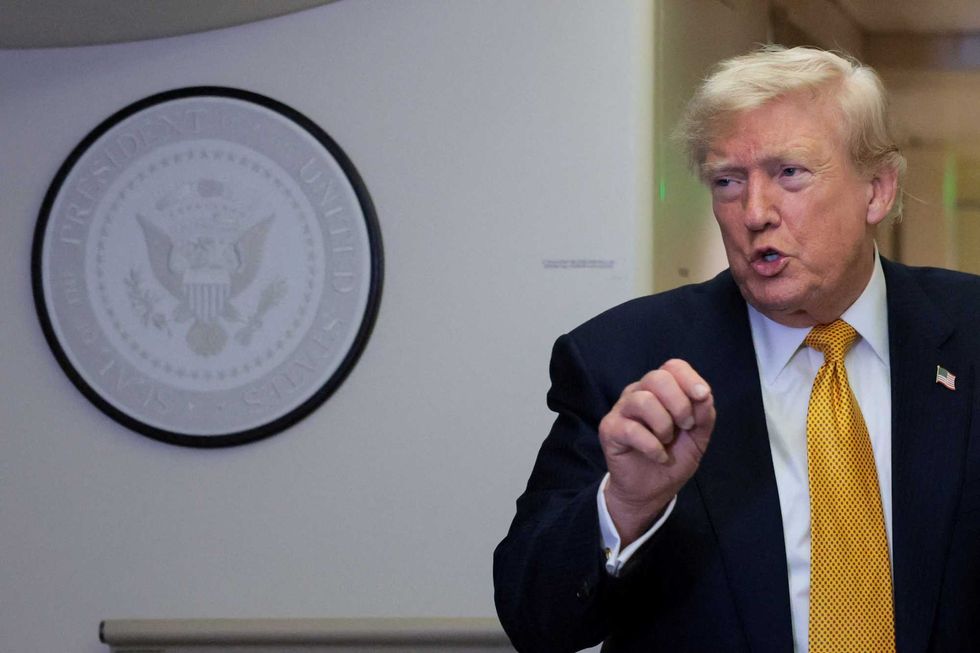
The Trump administration’s rollback of clean energy policies will cost American consumers 650 billion in additional energy bills by 2040, according to an analysis published Wednesday by a nonpartisan think tank.Energy Innovation, a San Francisco-based energy and climate policy think tank, said in its report that “federal policy changes since January 2025 will increase energy prices, slow economic growth and job creation, increase air pollution and healthcare costs, and worsen grid reliability.”The analysis examines seven major policy shifts during the second term of President Donald Trump, who—for the third time—ran on an aggressively pro-fossil fuel and anti-clean energy platform:Passage of the so-called One Big Beautiful Bill Act (OBBBA);The Environmental Protection Agency’s (EPA) reconsideration and repeal of Clean Air Act Greenhouse Gas Standards, Mercury and Air Toxics Standards, and Clean Water Act Effluent Limitations Guidelines for electric power plants;EPA’s repeal of the endangerment finding and federal tailpipe emissions standards;Passage of Congressional Review Act resolutions overturning approvals for state-level tailpipe emissions standards;Actions to limit renewable energy development—especially onshore and offshore wind plants—including limitations on issuance of new permits;Department of Energy cancellations of hydrogen hub funding and easing of 45V tax credit qualification for natural gas-based hydrogen; andEPA’s cancellation of the 7 billion Solar for All grant program.According to the analysis, “Households will pay an additional 650 billion for energy—an average of 460 per household in 2035 and 490 in 2040.”Additionally, the report states that “cutting policies that drive innovation and efficiency in the transportation sector will inflate gasoline prices 14 in 2035 and 26 in 2040, atop near-term upward pressure from the Iran War and other market forces.”“OBBBA and reduced federal support for domestic manufacturing and innovation will cost the US economy 820,000 jobs per year on average over the next decade, in addition to the 144,000 clean energy jobs lost within the past 18 months,” the publication forecasts.“Slowing down electrification and domestic energy manufacturing will lower [gross domestic product] in all years, totaling 2.3 trillion cumulative lost GDP, with effects flowing into other economic sectors,” the study warns. “The US economy will lose 150 billion in GDP in 2030, peaking at a 250 billion net loss in 2032, then reverting to losses of 200 billion in 2035 and 120 billion in 2040.”Furthermore, “worsening local air pollution will raise healthcare costs by 43 billion, with annual increases of 4 billion in 2035 and 4.5 billion in 2040, contributing to rising household costs alongside rising energy prices and goods inflation.”Energy Innovation stressed that states must act to mitigate the costs and harms of federal inaction. The report recommends helping wind and solar projects qualify for expiring tax credits under safe harbor rules, removing barriers to additional clean energy development, boosting electric vehicles, supporting energy efficient electrification, and stimulating investment in new clean industries.The new analysis—whose findings are disputed by the Trump administration—comes amid an unabated affordability crisis that Trump vowed to tackle, and as electricity prices soar in much of the nation as a heat dome, fueled by human burning of fossil fuels, broils large swaths of the country in what many experts warn is the new normal in a worsening climate emergency.Responding to the analysis, Candice Fortin, US campaigns manager at the climate action group 350.org, said: “This report puts numbers on something households are already feeling in their bills and their blackouts. We were told cutting clean energy would lower costs. Instead, we’re seeing the opposite: rates spiking, grids failing under record heat, and households paying more while data centers’ electricity use explodes.”“You can’t fix an affordability crisis by blocking the cheapest, fastest power we have to build,” Fortin added. “The fossil fuel industry and this administration’s policies are adding fuel to the fire, and ordinary ratepayers are the ones getting burned.”
Narrative Intelligence Brief
This article was published by Raw Story, a source frequently categorized with a left bias based in United States of America. Our narrative intelligence engine continuously monitors coverage from this outlet to track framing, bias, and rhetorical patterns. In this specific piece, our systems detected the potential use of the "Card Stacking" technique. This narrative approach is often used to shape reader perception by highlighting specific emotional or rhetorical angles. By understanding the editorial perspective of Raw Story, readers can better contextualize the information presented and compare it across our broader media matrix to find the real narrative.
More from Raw Story
July 12, 2026
Lindsey Graham dies after 'brief and sudden illness'
July 12, 2026
Middle East erupts as Iran launches missile attacks at multiple US allies: journalist
July 12, 2026
'Forbidden from taking deep breaths’: Report exposes alarming tactics used on DHS staff
July 12, 2026
‘Now they pay’: World braces as Pete Hegseth issues ominous threat against Iran
July 12, 2026
‘Uh what?’ Trump’s DOJ said to make startling admission in response to Epstein allegation
Reliability Insights
P
Technique: Card Stacking
System analysis detected use of specific narrative techniques in this piece.Analysis Methodology
This narrative analysis was generated using the CoDataLab Global Intelligence Engine. Our proprietary AI scans thousands of cross-border sources to identify sentiment patterns, framing techniques, and potential media bias. While AI provides the data-driven foundation, our objective is to empower readers with additional context beyond the standard headline.The content displayed above is a structured summary designed for rapid information processing. For the full original report, please visit the source outlet.More Coverage
Discussion
"cup semifinal"
Former Spanish PM Rajoy makes racist remarks about France's football team
[Photo] JUST IN: 🇦🇷 Argentina officially advances to the FIFA World Cup semifinal after defeat [...]

Argentina's hero: "We are just two steps away from the goal"

How other outlets are covering this story
Compare narratives across 5 related reports from 5 sources. Real Narrative News aggregates the coverage spectrum so you can see who emphasises what — bias tags reflect the outlet, not the story.
Coverage bias distribution
5 sources
Left 40%
Center 20%
Right 40%
The Wall Street Journal - Business
· Jul 7, 2026
The Iran War Has Oil-Rich Alaska Freaked Out About $9 Gas
Trump’s energy agenda is poised to boost the industry, but Alaskans are reeling from war-driven price increases.
Foreign Policy Journal
· Jun 27, 2026
High Gas Prices Threaten Republican Seats As November Midterms Approach
Gasoline prices have emerged as a critical political liability for Republicans, with historical data suggesting the party could face significant losses in the November midterm elections. President Donald Trump’s administration has shown clear awareness of the political danger, with Trump ordering the Justice Department via social media to investigate oil companies he accused of gouging [] The post High Gas Prices Threaten Republican Seats As November Midterms Approach appeared first on Foreign Policy Journal.
Fortune
· Jun 29, 2026
Current price of oil as of June 29, 2026
When oil prices change, it affects your energy costs—and even the price of everyday items. Here’s why.
Knewz
· Jun 30, 2026
President Donald Trump melts down at gas retailers, warns ‘big problems lie ahead’ if ‘totally illegal’ price gouging on oil continues
President Donald Trump criticized energy companies over high gasoline prices, accusing retailers of engaging in “totally illegal” price gouging and demanding immediate price cuts for American consumers as fuel costs remain elevated nationwide. High national gas prices According to national pricing data, the average cost of a gallon of gas stands at 3.86 — down...
The Big Issue
· Jul 1, 2026
Energy bills are rising. What do I do if I can’t afford to pay?
Energy bills are are set to rise with Ofgem's new energy price cap. Here's everything you need to know, including where to get help if you can't afford to pay The post Energy bills are rising. What do I do if I can’t afford to pay? appeared first on Big Issue.
Topics:
Related coverage for "'Adding fuel to the fire': Experts warn Trump energy policies come with $650B price tag": The Wall Street Journal - Business — The Iran War Has Oil-Rich Alaska Freaked Out About $9 Gas. Foreign Policy Journal — High Gas Prices Threaten Republican Seats As November Midterms Approach. Fortune — Current price of oil as of June 29, 2026. Knewz — President Donald Trump melts down at gas retailers, warns ‘big problems lie ahead’ if ‘totally illegal’ price gouging on oil continues. The Big Issue — Energy bills are rising. What do I do if I can’t afford to pay?