
A&E delays linked to 305 deaths a week as doctors send troubling message to NHS in damning report
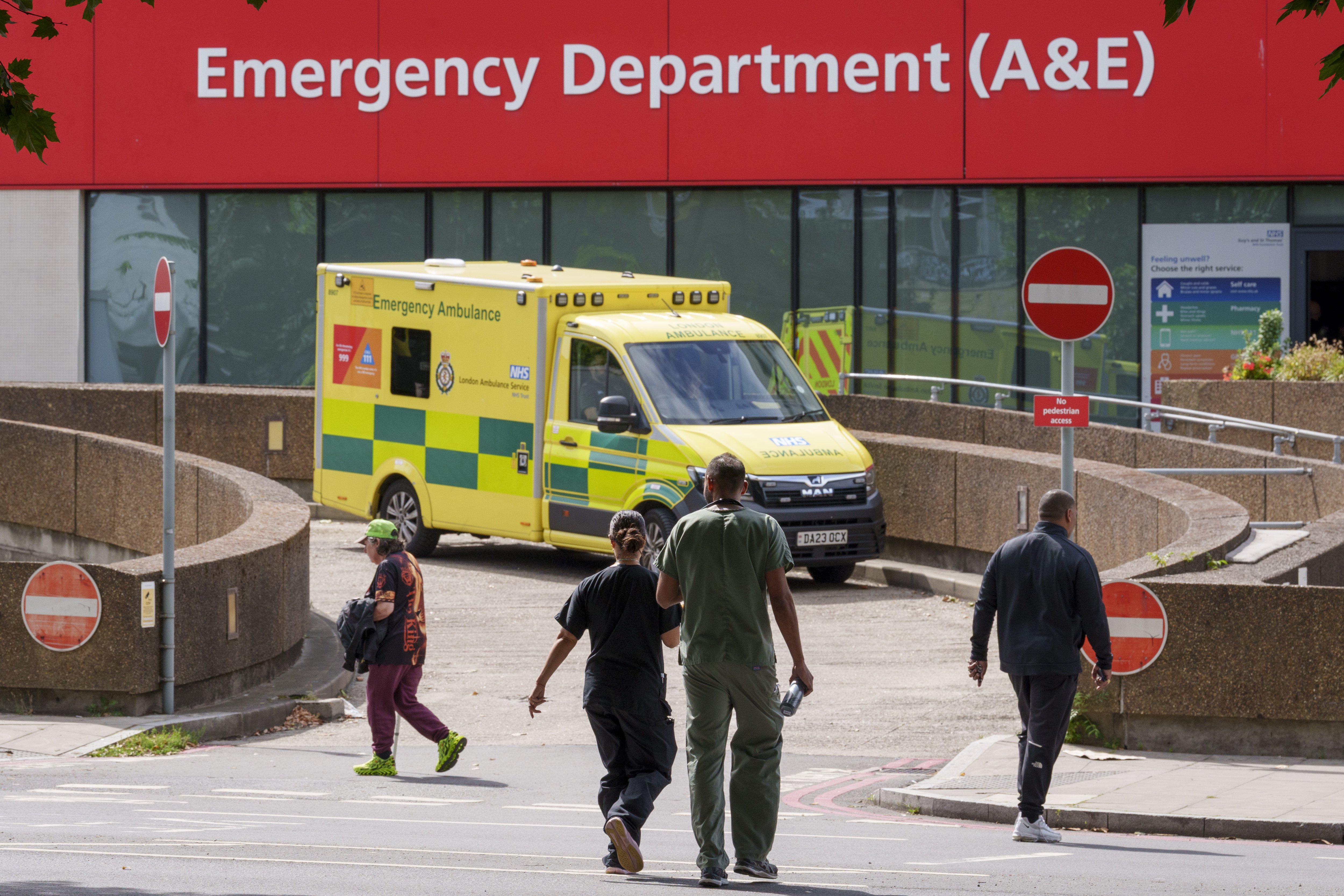
AE delays are linked to 305 deaths a week, as doctors warn the NHS is chasing the wrong targets, a report has found.The study, published today by the Royal College of Emergency Medicine - RCEM - associated AE delays with 15,860 excess deaths last year. This is the equivalent of around 305 a week and an almost ten-fold increase in a decade.In 2015, the college estimated there were 1,657 excess deaths associated with long waits.The RCEM called for the Government's approach to be overhauled. TRENDING Stories Videos Your Say In a statement the RCEM asks: How many deaths will it take before we see a meaningful plan to end the crisis?Its report states: There can no longer be any doubt as to the scale of the problem facing emergency medicine, and the need for the government's current approach to be reviewed.Professor Carl Heneghan, Director of Oxford University's Centre for Evidence-Based Medicine and an urgent care GP, called for an immediate response. He said: If 15,860 people were dying each year from a recognised safety failure elsewhere in the NHS, there would be national outrage. Emergency department overcrowding deserves the same urgency and the same response.He added: These deaths are not inevitable: They are a consequence of overcrowding and a system that is failing to move patients through hospitals safely and efficiently. If we are serious about patient safety, then eliminating avoidable deaths from long waits must become a national priority.Almost 17 million people attended England's major emergency departments in 2025 - the highest figure ever recorded, the report shows.Yet just 60.5 per cent of patients were admitted, transferred or discharged within four hours, well below the NHS constitutional standard of 95 per cent.Meanwhile, 1,744,993 patients waited 12 hours or more after arriving in AE.Nearly half a million people - 489,138 patients - waited 24 hours or more in an emergency department, an increase of around 150,000 patients in just three years, the study says.LATEST DEVELOPMENTSTwo UK doctors to testify in major US Covid vaccine probeGender distress calls to Childline soar 20 in just one yearOne in four children leaves primary school unable to swim as child deaths doubleThe situation was even worse for those waiting for a hospital bed after doctors had decided they needed admitting. A record 554,251 patients waited at least 12 hours after the decision to admit had been made.The RCEM says these delays are costing lives.Research cited in the report found that for every 72 patients who wait between eight and 12 hours in an emergency department before being admitted, there is one additional death.The college estimates that 15,860 excess deaths were associated with long waits in 2025 and says these are avoidable deaths which government must act swiftly to address.Doctors say one of the main drivers of the crisis is exit block - where patients cannot leave AE because there are no beds available elsewhere in the hospital.The report states general and acute hospital bed occupancy averaged 93.1 per cent last year, well above the level considered necessary to maintain operational effectiveness.At the same time, it found an average of 12,906 patients a day were medically fit for discharge but remained in hospital, restricting bed availability and patient flow.The report also highlights research showing almost one in five patients in UK emergency departments are being cared for in escalation spaces not designed for patient care. These include corridors, cupboards, waiting rooms, and chairs.It warns that privacy, dignity, and clinical safety are impossible to maintain in such environments.The study also found up to 26 per cent of departments had no immediate resuscitation cubicle capacity available.Such overcrowding is putting people off going to AE, it warns, with 42 per cent of patients saying they would hesitate to attend because of concerns about long waits.And while the number of excess deaths is slightly lower than 2024 - when there were 16,644 extra deaths associated with overcrowding - the report suggests the problem is being exacerbated by recent government initiatives.It argues policymakers are too often focusing on individual parts of the problem rather than tackling overcrowding across the entire patient pathway.It says: There has also been a tendency to chase one target at the expense of another, or to pursue short-term solutions.The report states there have been undue focus on isolated parts of the problem, at the expense of focusing on the problem in the round.For example, recent efforts to get ambulances back on the road more quickly are worsening overcrowding in AE, it says, because hospitals are failing to free up enough space.The report also raises concerns some measures may be hiding the true scale of the problem as well as failing to address the underlying causes of overcrowding. For example, patients are increasingly being moved out of AE and into Same Day Emergency Care units - hospital assessment areas designed to avoid overnight admission.While doctors say the units can be beneficial, the report warned clinicians often feel under pressure to transfer patients there because once they leave AE, their long waits will not be measured.The college also criticised suggestions that corridor care can be solved by diverting less seriously ill patients to Urgent Treatment Centres - walk-in clinics that treat conditions which do not require full AE care.The report argues that the patients ending up in corridors are usually those waiting for hospital beds, not those with minor injuries or illnesses.It says: Whilst attempts to 'decongest' emergency departments using such facilities as Urgent Treatment Centres, badging these as an answer to corridor care shows a lack of understanding of the fundamental problem.According to RCEM, overcrowding is being driven primarily by a lack of capacity elsewhere in hospitals, with thousands of patients unable to move through the system.The report found that staff are also under increasing strain.A survey of emergency medicine clinical leads found 97 per cent described the situation as unsustainable in the long term.The RCEM is now calling for a national commitment to end overcrowding in emergency departments and eliminate mortality associated with long waits by the end of the decade.Overcrowding in an ED reflects failure in an organisation and system, the report concludes.A Department of Health and Social Care spokesperson said: It is unacceptable for patients to face long waits for emergency care, and our thoughts are with those who have lost loved ones.While AE waiting times are at their lowest level in half a decade, we know there is more to do. That is why we are investing over £215 million in 40 new and expanded same-day emergency care and urgent treatment centres across England to reduce pressure on AE.We are also deploying specialist teams to trusts with the highest levels of corridor care to drive rapid improvements and eradicate the unacceptable practice.After the NHS delivered a stronger performance this winter despite record demand, we are going further to modernise urgent and emergency care, backed by record investment. Our Standards: The GB News Editorial Charter
Narrative Intelligence Brief
This article was published by GB News, a source frequently categorized with a lean right bias based in United States of America. Our narrative intelligence engine continuously monitors coverage from this outlet to track framing, bias, and rhetorical patterns. Our initial algorithmic scan of this specific piece did not flag high-confidence rhetorical techniques, suggesting a generally straightforward reporting style or neutral framing. By understanding the editorial perspective of GB News, readers can better contextualize the information presented and compare it across our broader media matrix to find the real narrative.
Explore related topics: Stay informed with Real Narrative News as we track unfolding stories. Dive deeper into our coverage of pivotal topics including missiles israel, christian eriksen, iran fires, iran launches, fires missiles, eriksen collapses, launches missiles, gears war, war eday, and الجيش الإسرائيلي. Our intelligence streams continuously monitor these keywords to bring you unbiased analysis and real-time updates on topics like "A&E delays linked to 305 deaths a week as doctors send troubling message to NHS in damning report".
More from GB News
June 7, 2026
Labour MP demands Keir Starmer SACK Ed Miliband as he brands Net Zero targets 'insane'
June 7, 2026
A&E delays linked to 305 deaths a week as doctors send troubling message to NHS in damning report
June 7, 2026
World Cup tales part 8: When Germany thumped Brazil to leave host nation in mourning
June 7, 2026
Keir Starmer set to impose internet restrictions on millions of Britons within days
June 7, 2026
Trans row erupts over Wonder Woman as DC release new version of iconic superhero as part of 'trans power fantasy' series
Analysis Methodology
This narrative analysis was generated using the CoDataLab Global Intelligence Engine. Our proprietary AI scans thousands of cross-border sources to identify sentiment patterns, framing techniques, and potential media bias. While AI provides the data-driven foundation, our objective is to empower readers with additional context beyond the standard headline.The content displayed above is a structured summary designed for rapid information processing. For the full original report, please visit the source outlet.More Coverage
Discussion