
Today in News History
On July 12, several notable moments in the history of News stand out. In 1394, Ashikaga Yoshinori, Japanese shōgun (died 1441) was born. In 1880, Tod Browning, American actor, director, and screenwriter (died 1962) was born. In 1916, Lyudmila Pavlichenko, Ukrainian-Russian soldier and sniper (died 1974) was born. In 1920, Pierre Berton, Canadian journalist and author (died 2004) was born. In 1922, Mark Hatfield, American soldier and politician, 29th Governor of Oregon (died 2011) was born. In 1923, James E. Gunn, American science fiction author (died 2020) was born. In 1928, Alastair Burnet, English journalist (died 2012) was born. In 1932, Otis Davis, American sprinter (died 2024) was born. In 1933, Victor Poor, American engineer, developed the Datapoint 2200 (died 2012) was born. In 1943, Paul Silas, American basketball player and coach (died 2022) was born. Together, these milestones provide historical context for today's news news and ongoing narratives.
A rifle-toting war reporter died with Custer at Little Bighorn 150 years ago
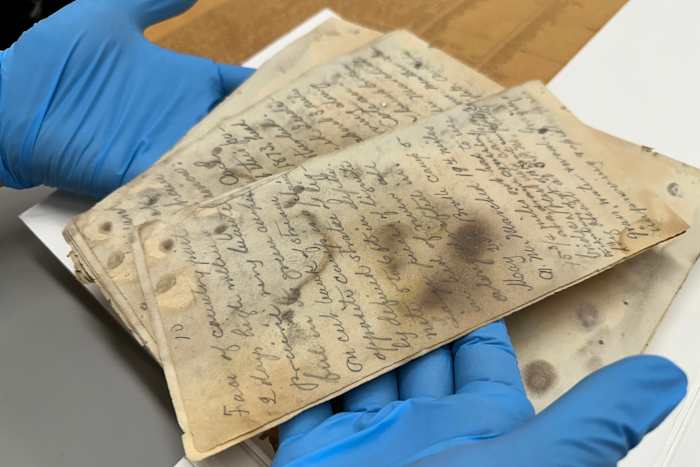
Thirty-eight journalists have died on the job while gathering news for The Associated Press over the years.
Narrative Intelligence Brief
This article was published by KSAT San Antonio, a source frequently categorized with a center bias based in United States of America. Our narrative intelligence engine continuously monitors coverage from this outlet to track framing, bias, and rhetorical patterns. Our initial algorithmic scan of this specific piece did not flag high-confidence rhetorical techniques, suggesting a generally straightforward reporting style or neutral framing. By understanding the editorial perspective of KSAT San Antonio, readers can better contextualize the information presented and compare it across our broader media matrix to find the real narrative.
More from KSAT San Antonio
July 12, 2026
What bar, restaurant owners are learning at Texas Restaurant Show in San Antonio
July 12, 2026
Fire breaks out at a pub in Bangkok, killing at least 27 people
July 12, 2026
Fire breaks out at a pub in Bangkok, killing at least 27 people, officials say
July 12, 2026
Lindsey Graham's journey from a pool hall to the heights of political power
July 12, 2026
Keystone Pipeline system's operator agrees to pay a $26.9M penalty over a major Kansas oil spill
Analysis Methodology
This narrative analysis was generated using the CoDataLab Global Intelligence Engine. Our proprietary AI scans thousands of cross-border sources to identify sentiment patterns, framing techniques, and potential media bias. While AI provides the data-driven foundation, our objective is to empower readers with additional context beyond the standard headline.The content displayed above is a structured summary designed for rapid information processing. For the full original report, please visit the source outlet.More Coverage
Discussion
"wimbledon"
Sinner outlasts Zverev to win second straight Wimbledon title

Heartbreak for Cruz Hewitt as teen loses Wimbledon boys’ final thriller
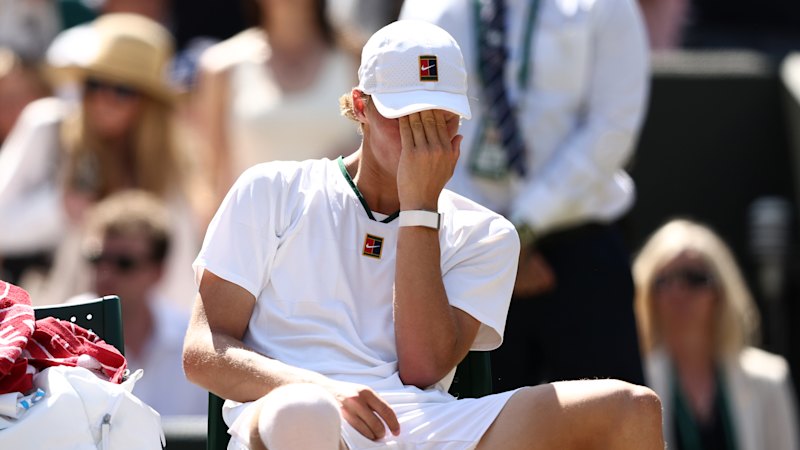
Jannik Sinner receives Gentlemen's Singles Trophy from Catherine after Italian defends Wimbledon title

How other outlets are covering this story
Compare narratives across 6 related reports from 6 sources. Real Narrative News aggregates the coverage spectrum so you can see who emphasises what — bias tags reflect the outlet, not the story.
Coverage bias distribution
6 sources
Left 33%
Center 33%
Right 33%
War on the Rocks
· Jun 25, 2026
The Importance of the Battle of the Little Bighorn
On June 25, 1876, Lt. Col. George Armstrong Custer and an entire battalion of the 7th Cavalry Regiment rode to their deaths and into American legend on the ridges north of Montana’s Little Bighorn River. The battle was decided in a few hours. Its meaning remains contested 150 years later.Little Bighorn stands alongside Yorktown, Gettysburg, and D-Day in the pantheon of iconic American battles. But it is a curious addition there, in that it was a small engagement, fought by just a few hundred men on a compact piece of terrain. More curiously still, it was a loss. Not just The post The Importance of the Battle of the Little Bighorn appeared first on War on the Rocks.
Mises Institute
· Jun 25, 2026
On Little Bighorn Anniversary, Remember Custer’s Crimes
The famed Custer's Last Stand at the hands of Native Americans defending their villages is a reminder of the brutality of the US war against the Plains Indians. History tells us that the heroic George Armstrong Custer was really the reckless Custer who died underestimating his foe.
Smithsonian Magazine
· Jun 24, 2026
A Century and a Half After Custer's Last Stand, the Battle of Little Bighorn Continues to Mystify
The June 1876 firefight resulted in the deaths of George Armstrong Custer and 267 of his men. Historians continue to debate exactly how the Lakota Sioux and the Northern Cheyenne secured their victory over the U.S. Army
Fark
· Jun 25, 2026
150 years ago today, the Sioux gave Custer an Arrow Shirt [Murica]
[link] [25 comments]
Free Press
· Jun 29, 2026
From Custer to Radioactive Death
Karl Grossman - Harvey WasseThe Battle of the Little Bighorn came as a complete shock to white America. Today we must worry about an even greater shock with an essentially infinite radioactive death toll.The stunning defeat of General George Armstrong Custer and the U.S. 7th Cavalry came on the Great Plains at the hands of the Lakota warrior-chiefs Sitting Bull and Crazy Horse on June 25, 1876, 150 years ago this week.
Libertarian Institute
· Jun 30, 2026
How I Busted the Ruby Ridge Coverup
On this day in 1995, I helped shatter the coverup of federal killings at Ruby Ridge, Idaho. For millions of Americans, those brazen killings epitomized how the U.S. government had become a deadly peril to their rights and liberties. In 1991, an ATF informant entrapped Randy Weaver into selling him two sawed-off shotguns. After ATF []
Topics:
Related coverage for "A rifle-toting war reporter died with Custer at Little Bighorn 150 years ago": War on the Rocks — The Importance of the Battle of the Little Bighorn. Mises Institute — On Little Bighorn Anniversary, Remember Custer’s Crimes. Smithsonian Magazine — A Century and a Half After Custer's Last Stand, the Battle of Little Bighorn Continues to Mystify. Fark — 150 years ago today, the Sioux gave Custer an Arrow Shirt [Murica]. Free Press — From Custer to Radioactive Death. Libertarian Institute — How I Busted the Ruby Ridge Coverup