Today in News History
On June 17, several notable moments in the history of News stand out. In 1596, The Dutch explorer Willem Barentsz discovers the Arctic archipelago of Spitsbergen. In 1821, E. G. Squier, American archaeologist and journalist (died 1888) was born. In 1843, The Wairau Affray, the first serious clash of arms between Māori and British settlers in the New Zealand Wars, takes place. In 1898, Harry Patch, English soldier and firefighter (died 2009) was born. In 1929, The town of Murchison, New Zealand is rocked by a 7.8 magnitude earthquake killing 17. At the time it was New Zealand's worst natural disaster. In 1950, Lee Tamahori, New Zealand film director was born. In 1963, A day after South Vietnamese President Ngô Đình Diệm announced the Joint Communiqué to end the Buddhist crisis, a riot involving around 2,000 people breaks out. One person is killed. In 1990, Josh Mansour, Australian rugby league player was born. In 1997, KJ Apa, New Zealand actor was born. In 2011, Rex Mossop, Australian rugby player and sportscaster (born 1928) passed away. Together, these milestones provide historical context for today's news news and ongoing narratives.
A rat sighting in New Zealand can trigger an urgent response. Meet the ‘ghostbusters’ hunting them down
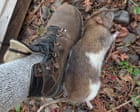
Detector teams in Wellington react to ‘intel’ from the public about pest sightings as part of the country’s push to eradicate all introduced predatorsIn many places around the world, discovering a rat in your garden would barely register a second thought.But in parts of New Zealand, a single rat, possum or stoat can trigger an urgent response, as the country embarks on a world-leading project to eradicate introduced predators by 2050 to save its unique wildlife from further decimation. Continue reading...
Narrative Intelligence Brief
This article was published by Animals | The Guardian, a source frequently categorized with a lean left bias based in United Kingdom. Our narrative intelligence engine continuously monitors coverage from this outlet to track framing, bias, and rhetorical patterns. Our initial algorithmic scan of this specific piece did not flag high-confidence rhetorical techniques, suggesting a generally straightforward reporting style or neutral framing. By understanding the editorial perspective of Animals | The Guardian, readers can better contextualize the information presented and compare it across our broader media matrix to find the real narrative.
More from Animals | The Guardian
June 17, 2026
Tuchel says World Cup will ‘bring out the best’ in England against old foes Croatia
June 17, 2026
Norway’s Erling Haaland punishes Iraq with double on World Cup debut
June 16, 2026
Argentina v Algeria: World Cup 2026 – live
June 16, 2026
Mbappé’s belter steals show as fluid France see off late Senegal challenge
June 16, 2026
Ghana’s Thomas Partey has visa appeal rejected by Canadian judge
Analysis Methodology
This narrative analysis was generated using the CoDataLab Global Intelligence Engine. Our proprietary AI scans thousands of cross-border sources to identify sentiment patterns, framing techniques, and potential media bias. While AI provides the data-driven foundation, our objective is to empower readers with additional context beyond the standard headline.The content displayed above is a structured summary designed for rapid information processing. For the full original report, please visit the source outlet.More Coverage
Discussion
"cup"
Football Daily | ‘Pico’ Lopes and Cape Verde give Spain’s boys one hell of a neutralising

Son Heung-min Boycotts South Korea Media Over ‘Leaked Derogatory Remarks’

The backlash against AI reveals it’s a terrible scapegoat