Today in News History
On June 22, several notable moments in the history of News stand out. In 1834, William Chester Minor, American surgeon and linguist (died 1920) was born. In 1897, Edmund A. Chester, American journalist and broadcaster (died 1973) was born. In 1921, Barbara Vucanovich, American lawyer and politician (died 2013) was born. In 1922, Clair Cameron Patterson, American scientist (died 1995) was born. In 1944, U.S. President Franklin D. Roosevelt signs into law the Servicemen's Readjustment Act of 1944, commonly known as the G.I. Bill. In 1956, Alfons De Wolf, Belgian cyclist was born. In 1960, Erin Brockovich, American lawyer and environmentalist was born. In 1974, Jo Cox, British politician (died 2016) was born. In 2002, An earthquake measuring 6.5 Mw strikes a region of northwestern Iran killing at least 261 people and injuring 1,300 others and eventually causing widespread public anger due to the slow official response. In 2009, A Washington D.C Metro train traveling southbound near Fort Totten station collides into another train waiting to enter the station. Nine people are killed in the collision (eight passengers and the train operator) and at least 80 others are injured. Together, these milestones provide historical context for today's news news and ongoing narratives.
A pet emergency can cost $8,000. For millions of Americans, that bill is now a ‘life and death’ decision

As emergency vet bills climb into the thousands, more Americans are making care decisions based on their bank balance—and turning to crowdfunding to cover the rest.
Narrative Intelligence Brief
This article was published by Fortune, a source frequently categorized with a center bias based in United States of America. Our narrative intelligence engine continuously monitors coverage from this outlet to track framing, bias, and rhetorical patterns. Our initial algorithmic scan of this specific piece did not flag high-confidence rhetorical techniques, suggesting a generally straightforward reporting style or neutral framing. By understanding the editorial perspective of Fortune, readers can better contextualize the information presented and compare it across our broader media matrix to find the real narrative.
More from Fortune
June 22, 2026
South Korean chipmakers are being paid such massive bonuses it’s becoming an inflation problem for the central bank
June 22, 2026
Exclusive: Index Ventures, Union Square Ventures back trading app Fomo at $550 million valuation
June 22, 2026
As public sentiment sours, Indonesia awaits MSCI verdict which risks $13 billion in capital outflows
June 22, 2026
AI is turning CMOs into some of the most powerful executives in business
June 22, 2026
NASA just named an all-male crew for ‘Artemis III’: what’s a woman to do?
Analysis Methodology
This narrative analysis was generated using the CoDataLab Global Intelligence Engine. Our proprietary AI scans thousands of cross-border sources to identify sentiment patterns, framing techniques, and potential media bias. While AI provides the data-driven foundation, our objective is to empower readers with additional context beyond the standard headline.The content displayed above is a structured summary designed for rapid information processing. For the full original report, please visit the source outlet.More Coverage
Discussion
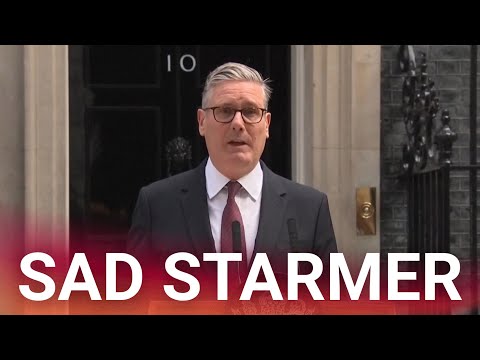
"keir starmer"
Breaking! Keir Starmer Steps Down, Trump’s Cuba Threats, Oil Barrel Crisis | PBD #821

Keir Starmer resigns - reaction as it happened | Reuters World News

‘Too hard for Starmer’: PM holds back tears as he resigns from office