47-kilo transformation: How Dubai expat used power of time to rewrite his life
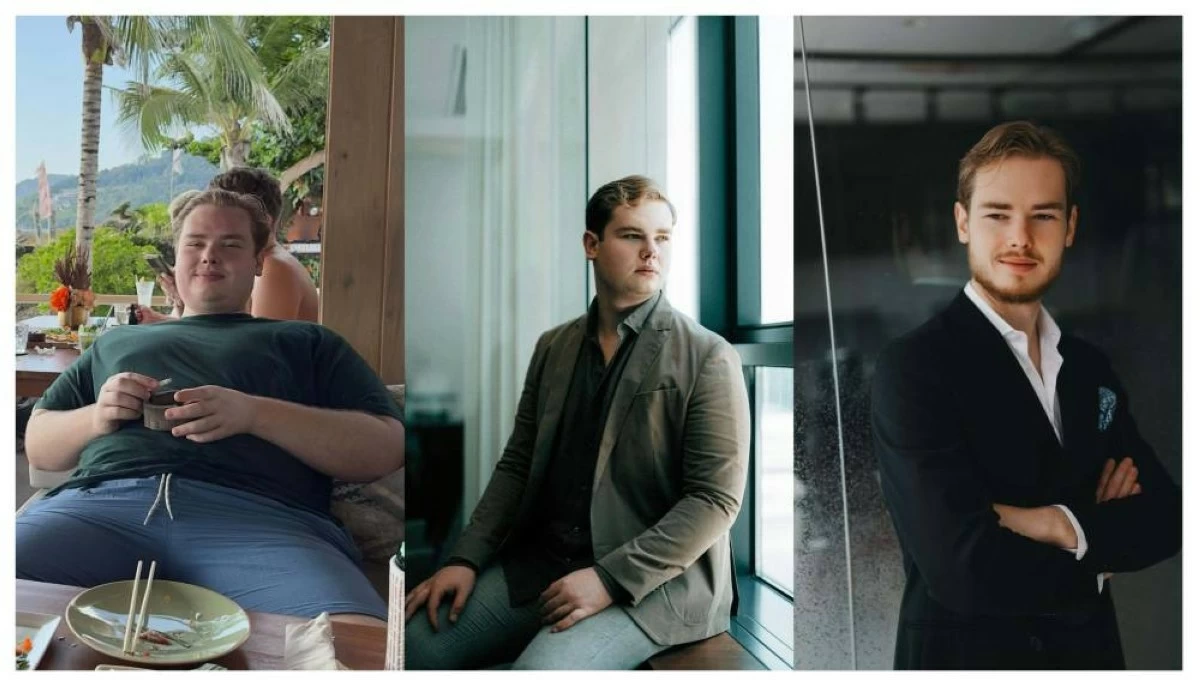
Dubai: When Ilia Sheludiakov moved from Russia to the UAE in 2022, he was chasing ambition. Drawn by “the safety aspect and the truly international environment,” the 26-year-old saw Dubai as a city built around opportunity, where people come to create something meaningful. It was, he reflects, one of the most important decisions of his life.But beneath the surface of that ambition, something was not right.“I was deeply unhappy with many aspects of my life. I was dissatisfied with the person I had become,” Sheludiakov admits. At the time, he weighed more than 132 kilograms. Despite living in one of the world’s most dynamic cities, he found himself disconnected from his own direction and wellbeing.That moment became the turning point.A journey that began with discomfortSheludiakov’s transformation did not begin with a trend diet or a radical overhaul. Instead, it started with a decision to change — steadily, consistently, and with purpose.“Everyday through discipline I not only transformed my body, but my mindset and my way of life,” he says.Over the past two years, the results have been striking:He has lost 47 kilogramsCompleted a full 42-kilometre marathonRun a total of 2,603 kilometresCompletely reshaped his habits and lifestyleWritten and published a bookToday, the entrepreneur is no longer focused solely on physical transformation. His journey has evolved into something broader — a redefinition of how he approaches time, effort, and long-term success.From convenience to conscious livingBefore his transformation, Sheludiakov’s daily routine revolved around convenience.“There was a lot of fast food, sweets, sugary drinks, snacks, and processed carbohydrates. I rarely thought about how food would affect me tomorrow,” he explains.Now, his approach is markedly different. Meals are built around simple, whole foods — lean protein, vegetables, fruits, eggs, fish, rice, potatoes, and water. The shift is not just nutritional, but intentional.“The biggest difference is that I now eat to support my goals rather than my impulses.”This same clarity applied to how he handled cravings. Rather than resisting them emotionally, he reframed them as part of the process.“I never viewed cravings as a problem. I viewed them as evidence that my body was adapting,” he says. “Instead of asking how I felt in the moment, I asked who I wanted to become in two years.”Consistency over complexitySheludiakov avoided extreme diets or rigid frameworks. He focused instead on fundamentals: reducing processed foods, increasing protein, improving quality, and maintaining a calorie deficit when needed.“I believe consistency beats complexity.”His training followed a similar philosophy. In the early stages, movement was the priority — long walks and basic cardio. Over time, this evolved into a more structured routine combining running and strength training. Today, he trains three to four times a week, with endurance and capability taking precedence over simple weight loss.Running has become a central pillar of his lifestyle, culminating in a full marathon and thousands of kilometres logged over two years.Navigating Dubai’s social lifestyleLiving in a city like Dubai, where dining and social gatherings are integral, posed its own challenges. Yet Sheludiakov did not isolate himself.“I never believed that discipline requires isolation,” he says.The change lay in mindset. Meals were no longer treated as constant celebrations. Decisions became practical rather than impulsive, with occasional indulgence balanced by overall direction.“One meal never became one week,” he adds.The long game: Understanding invisible progressFor Sheludiakov, one of the most important lessons was patience.The early benefits came quickly — improved energy, better sleep, and enhanced wellbeing within months. But the dramatic physical transformation took longer.“Most people underestimate how invisible progress can be in the beginning,” he says. Visible changes became noticeable after roughly a year, accelerating thereafter.Even during plateaus, he remained focused on behaviour rather than results.“If the actions were correct, I trusted that the results would eventually catch up.”Metrics, he notes, were used as tools — not emotional triggers. The long-term trend mattered more than any single number.'Temporalism': A philosophy born from transformationOut of this experience emerged 'Temporalism', a philosophy founded by Sheludiakov and formally introduced in 2026 through his book.At its core, Temporalism is built on a simple principle: time is the most valuable asset, and life is shaped by the relationship between present actions and future outcomes.“The future is not a random destination that arrives on its own. It is something we actively build through decisions made today,” he explains.The philosophy emphasises responsibility, patience, and long-term thinking — encouraging individuals to align their actions with the person they aim to become. It argues that most meaningful achievements are created long before they become visible.Weight loss through the lens of timeSheludiakov attributes his 47-kilogram weight loss directly to this philosophy.“Weight loss, diet, and exercise are among the clearest examples of how time converts small actions into major outcomes,” he says.Rather than focusing on rapid results, Temporalism reframes the question: not how quickly weight can be lost, but who a person becomes in the process.“People often overestimate what can be achieved in a day and underestimate what can be achieved in years.”In this framework, even small decisions — such as reducing sugar — are not temporary sacrifices but compounding investments in the future.“One day without sugar means little. One month creates noticeable change. One year changes health markers. Two years can transform a body and lifestyle.”A life rebuilt through directionFor Sheludiakov, the transformation goes far beyond physical change.“The difference is difficult to overstate,” he says. Increased energy, stronger focus, better endurance, and greater confidence now influence every aspect of his life — from business to travel and relationships.More importantly, the journey reshaped his belief system.“It proved that major life changes are often the result of small actions repeated over a long time.”As an investor, entrepreneur, and now philosophical writer, Sheludiakov believes the same principles apply across fields — from health to business and wealth creation.“Time does not ruin your life. Lack of direction does,” he says. “Years pass anyway. The question is, did time carry you somewhere or just away?”
Narrative Intelligence Brief
This article was published by Emirates 24/7, a source frequently categorized with a lean right bias based in United Arab Emirates. Our narrative intelligence engine continuously monitors coverage from this outlet to track framing, bias, and rhetorical patterns. Our initial algorithmic scan of this specific piece did not flag high-confidence rhetorical techniques, suggesting a generally straightforward reporting style or neutral framing. By understanding the editorial perspective of Emirates 24/7, readers can better contextualize the information presented and compare it across our broader media matrix to find the real narrative.
More from Emirates 24/7
June 14, 2026
Anwar Gargash
June 14, 2026
Banks in UAE cut loan interest rates to lowest level in five years
June 14, 2026
Dubai Police return lost bag with luxury watches and electronics worth AED 103,880 to traveller
June 14, 2026
Mohammed bin Rashid approves establishment of Federal Authority for Artificial Intelligence and Data
June 14, 2026
Trump marks 80th birthday with White House UFC spectacle
Analysis Methodology
This narrative analysis was generated using the CoDataLab Global Intelligence Engine. Our proprietary AI scans thousands of cross-border sources to identify sentiment patterns, framing techniques, and potential media bias. While AI provides the data-driven foundation, our objective is to empower readers with additional context beyond the standard headline.The content displayed above is a structured summary designed for rapid information processing. For the full original report, please visit the source outlet.More Coverage
Discussion