
Today in News History
On July 12, several notable moments in the history of News stand out. In -100 BC, Julius Caesar, Roman politician and general (died 44 BC) was born. In 1817, Alvin Saunders, Territorial Governor and Senator from Nebraska (died 1899) was born. In 1850, Otto Schoetensack, German anthropologist and academic (died 1912) was born. In 1852, Hipólito Yrigoyen, Argentinian lawyer and politician, 19th President of Argentina (died 1933) was born. In 1908, William D. Coleman, 13th President of Liberia (born 1842) passed away. In 1937, Mickey Edwards, American lawyer and politician was born. In 1944, Theodore Roosevelt Jr., American general and politician, Governor of Puerto Rico (born 1887) passed away. In 1979, Olive Morris, Jamaican-English civil rights activist (born 1952) passed away. In 1980, John Warren Davis, American educator, college administrator, and civil rights leader (born 1888) passed away. In 2014, Alfred de Grazia, American political scientist and author (born 1919) passed away. Together, these milestones provide historical context for today's news news and ongoing narratives.
250 years of American independence: Frederick Douglass, the former slave turned celebrity who skewered the Republic's hypocrisy
Narrative Analysis: Name Calling
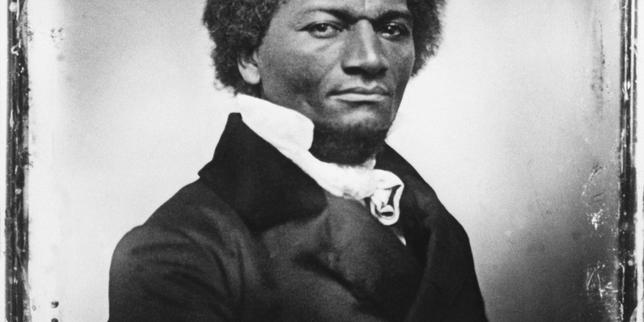
'America 250' (6/13). In April 1876, all of Washington's elite gathered to witness the unveiling of a statue of Abraham Lincoln emancipating enslaved people. The main speaker, Frederick Douglass, himself formerly enslaved and one of the most famous faces in the country, was known for directly challenging white Americans. A legendary speech he gave in 1852 proved just that.
Narrative Intelligence Brief
This article was published by Le Monde, a source frequently categorized with a lean left bias based in France. Our narrative intelligence engine continuously monitors coverage from this outlet to track framing, bias, and rhetorical patterns. In this specific piece, our systems detected the potential use of the "Name Calling" technique. This narrative approach is often used to shape reader perception by highlighting specific emotional or rhetorical angles. By understanding the editorial perspective of Le Monde, readers can better contextualize the information presented and compare it across our broader media matrix to find the real narrative.
More from Le Monde
July 12, 2026
US Senator and Trump ally Lindsey Graham has died aged 71
July 12, 2026
Argentina secures their place in World Cup semi-final with 3-1 victory over Switzerland
July 12, 2026
Martine Barrat, a photographer without fear or limits
July 12, 2026
Police arrest 28-year-old suspect over killing of UK politician
July 12, 2026
England defeats Norway 2-1 in extra time, sliding into World Cup semis
Reliability Insights
P
Technique: Name Calling
System analysis detected use of specific narrative techniques in this piece.Analysis Methodology
This narrative analysis was generated using the CoDataLab Global Intelligence Engine. Our proprietary AI scans thousands of cross-border sources to identify sentiment patterns, framing techniques, and potential media bias. While AI provides the data-driven foundation, our objective is to empower readers with additional context beyond the standard headline.The content displayed above is a structured summary designed for rapid information processing. For the full original report, please visit the source outlet.More Coverage
Discussion
"cup semifinal"
Argentina beat Switzerland to set up World Cup semifinal against England

[Photo] JUST IN: 🇦🇷 Argentina officially advances to the FIFA World Cup semifinal after defeat [...]

Argentina set up titanic World Cup semifinal against England with extra-time victory over Switzerland after Breel Embolo's embarrassing red card

How other outlets are covering this story
Compare narratives across 6 related reports from 6 sources. Real Narrative News aggregates the coverage spectrum so you can see who emphasises what — bias tags reflect the outlet, not the story.
Coverage bias distribution
6 sources
Left 83%
Center 0%
Right 17%
Democracy Now!
· Jul 3, 2026
"What to the Slave Is the 4th of July?": James Earl Jones Reads Frederick Douglass's Historic Speech
We begin our July Fourth special broadcast with the words of Frederick Douglass. Born into slavery around 1818, Douglass became a key leader of the abolitionist movement. On July 5, 1852, in Rochester, New York, Douglass gave one of his most famous speeches, “What to the Slave Is the Fourth of July?” He was addressing the Rochester Ladies’ Anti-Slavery Society. The late actor James Earl Jones read the historic address during a performance of Voices of a People’s History of the United States, which was co-edited by Howard Zinn.
Free Press
· Jul 2, 2026
What to the Black Community Is the Fourth of July?
In 1852, Frederick Douglass, the great abolitionist and political figure delivered a lengthy and profound address in upstate New York at a meeting organized by the Rochester Ladies’ Anti-Slavery Society titled, “What to the Slave Is the Fourth of July?” This week marks the 250th anniversary of the signing of the Declaration of Independence which was adopted by the Continental Congress on July 4, 1776.
Le Monde
· Jun 26, 2026
250 years of American independence: When John Adams predicted that democracy would commit suicide
'America 250' (5/13). John Adams, the second president of the United States, and his successor Thomas Jefferson did not share the same view of human nature. Adams, an educated anti-slavery advocate from the North, feared that democracy would perish under the weight of corruption among the powerful. Posterity, however, has largely remembered the soaring rhetoric of Jefferson, the slaveholding Southern planter.
Drudge Retort
· Jun 27, 2026
What Americans See as the Country's Greatest Achievements
NBC News asked an open ended question about America's greatest achievement in the past 250 years was and the majority named civil rights: The abolition of slavery was a magnificent achievement for us. I think one of our strengths was we used to make laws to help people, a Texas man in his 30s told the pollsters.
New York Amsterdam News
· Jun 29, 2026
The Meaning of July Fourth for the Negro by Frederick Douglass
Frederick Douglass’s 1852 speech challenges American freedom by exposing the injustice of slavery on Independence Day. The post The Meaning of July Fourth for the Negro by Frederick Douglass appeared first on New York Amsterdam News.
Sky News Australia
· Jul 6, 2026
America should be proud of role in abolishing Transatlantic slave trade
Heritage Senior Advisor and Research Fellow Allen Mendenhall has urged Americans to be proud of their country’s role in abolishing the Transatlantic slave trade. “If you think that either slavery or the abuses under the civil rights movement are the only story America has to tell, of course you’re going to come away with a very negative history,” Mr Mendenhall told Sky News host Danica De Giorgio. “America has a wonderful history and, in particular in this area of slavery, I think America has a lot to be proud of. The West did not invent slavery, but it played a leading role in abolishing the Transatlantic slave trade and promoting worldwide abolition. “That was really Britain and America leading the way there.”
Topics:
Related coverage for "250 years of American independence: Frederick Douglass, the former slave turned celebrity who skewered the Republic's hypocrisy": Democracy Now! — "What to the Slave Is the 4th of July?": James Earl Jones Reads Frederick Douglass's Historic Speech. Free Press — What to the Black Community Is the Fourth of July?. Le Monde — 250 years of American independence: When John Adams predicted that democracy would commit suicide. Drudge Retort — What Americans See as the Country's Greatest Achievements. New York Amsterdam News — The Meaning of July Fourth for the Negro by Frederick Douglass. Sky News Australia — America should be proud of role in abolishing Transatlantic slave trade