Today in News History
On June 28, several notable moments in the history of News stand out. In 1385, Andronikos IV, Byzantine emperor (born 1348) passed away. In 1490, Albert of Brandenburg, German archbishop (died 1545) was born. In 1575, Sengoku period of Japan: The combined forces of Oda Nobunaga and Tokugawa Ieyasu are victorious in the Battle of Nagashino. In 1904, The SS Norge runs aground on Hasselwood Rock in the North Atlantic 430 kilometres (270 mi) northwest of Ireland. More than 635 people die during the sinking. In 1914, Sophie, duchess of Hohenberg (born 1868) passed away. In 1950, Korean War: Packed with its own refugees fleeing Seoul and leaving their 5th Division stranded, South Korean forces blow up the Hangang Bridge in an attempt to slow North Korea's offensive. The city falls later that day. In 1950, Korean War: The Korean People's Army kills almost a thousand doctors, nurses, inpatient civilians and wounded soldiers in the Seoul National University Hospital massacre. In 1950, Korean War: Suspected communist sympathizers (between 60,000 and 200,000) are executed in the Bodo League massacre. In 1971, Franz Stangl, Austrian SS officer (born 1908) passed away. In 1991, Seohyun, South Korean singer, dancer, and actress was born. Together, these milestones provide historical context for today's news news and ongoing narratives.
23 South Korean-operated vessels depart Strait of Hormuz so far
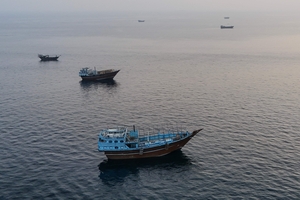
Two more South Korean-operated vessels have exited the Strait of Hormuz, Seoul’s oceans ministry said Sunday, leaving only three Korean ships inside the Persian Gulf after weeks of disruption caused by war in the Middle East. At the outbreak of the conflict, 26 South Korean-operated ships were stranded in the Gulf. As of Sunday, a total of 23 vessels had transited the key waterway, all of which were planning to exit immediately after a ceasefire agreement between the United States and Iran. Acco
Narrative Intelligence Brief
This article was published by The korea Herald News, a source frequently categorized with a center bias based in South Korea. Our narrative intelligence engine continuously monitors coverage from this outlet to track framing, bias, and rhetorical patterns. Our initial algorithmic scan of this specific piece did not flag high-confidence rhetorical techniques, suggesting a generally straightforward reporting style or neutral framing. By understanding the editorial perspective of The korea Herald News, readers can better contextualize the information presented and compare it across our broader media matrix to find the real narrative.
More from The korea Herald News
June 28, 2026
Gyeonggi extends healthcare access to people in Korea illegally
June 28, 2026
Supreme Court nullifies ruling made on the wrong day
June 28, 2026
Earthquake shifts political ground for Rodriguez
June 28, 2026
Trump names ex-state trooper as ICE director
June 28, 2026
Tanzania's ban on all political rallies sparks backlash
Analysis Methodology
This narrative analysis was generated using the CoDataLab Global Intelligence Engine. Our proprietary AI scans thousands of cross-border sources to identify sentiment patterns, framing techniques, and potential media bias. While AI provides the data-driven foundation, our objective is to empower readers with additional context beyond the standard headline.The content displayed above is a structured summary designed for rapid information processing. For the full original report, please visit the source outlet.More Coverage
Discussion
"cup"
This nuclear message is built to stomp MAGA — and it isn't corruption

Ghana showed what they are capable of — just far too late against Croatia to avoid a damaging defeat
/https%3A%2F%2Fsportsmole-media-prod.s3.gra.io.cloud.ovh.net%2Fuploads%2F2026%2F06%2Fimago1078920974-1-6a406682ac983771606326.jpg)
Russia Will Not Leave Russia Flag Ban at Romania Competition Unanswered – MFA Spox