
Today in News History
On June 20, several notable moments in the history of News stand out. In 1631, The Sack of Baltimore: The Irish village of Baltimore is attacked by Barbary slave traders. In 1840, Samuel Morse receives the patent for the telegraph. In 1875, Reginald Punnett, English geneticist, statistician, and academic (died 1967) was born. In 1921, Workers of Buckingham and Carnatic Mills in the city of Chennai, India, begin a four-month strike. In 1943, The Detroit race riot breaks out and continues for three more days. In 1956, A Venezuelan Super-Constellation crashes in the Atlantic Ocean off Asbury Park, New Jersey, killing 74 people. In 1964, A Curtiss C-46 Commando crashes in the Shengang District of Taiwan, killing 57 people. In 1973, Aeroméxico Flight 229 crashes on approach to Licenciado Gustavo Díaz Ordaz International Airport, killing all 27 people on board. In 1973, Snipers fire upon left-wing Peronists in Buenos Aires, Argentina, in what is known as the Ezeiza massacre. At least 13 are killed and more than 300 are injured. In 2011, RusAir Flight 9605 crashes in Besovets during approach to Petrozavodsk Airport, killing 47. Together, these milestones provide historical context for today's news news and ongoing narratives.
2 trains collide north of London, killing 1 and injuring dozens
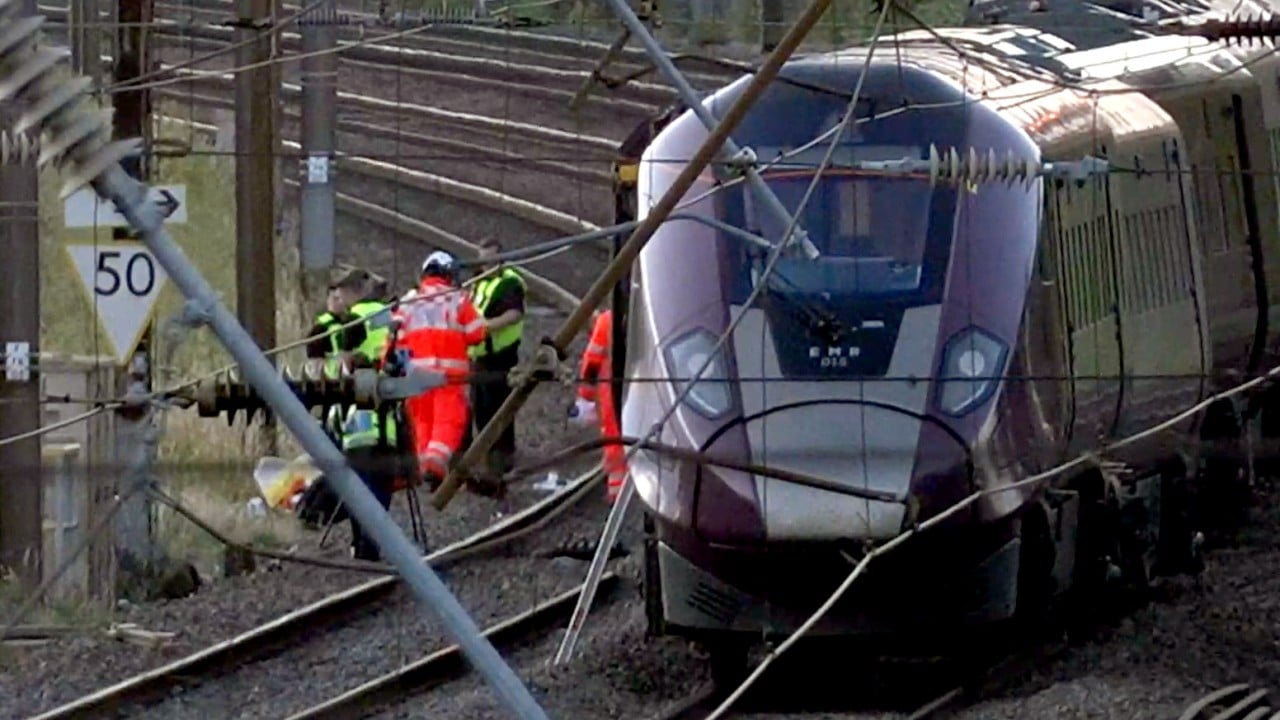
Emergency services rushed to the scene of a collision between two trains north of London on Friday afternoon that killed at least one person. A passenger reported that he was thrown forward by the impact then saw fellow travellers with broken bones and bloody injuries. Both trains were travelling south to London St Pancras station when they collided outside the town of Bedford around 5.15pm, according to information on rail tracking websites. Emergency services deployed a number of resources to...
Narrative Intelligence Brief
This article was published by South China Morning Post, a source frequently categorized with a lean left bias based in Hong Kong. Our narrative intelligence engine continuously monitors coverage from this outlet to track framing, bias, and rhetorical patterns. Our initial algorithmic scan of this specific piece did not flag high-confidence rhetorical techniques, suggesting a generally straightforward reporting style or neutral framing. By understanding the editorial perspective of South China Morning Post, readers can better contextualize the information presented and compare it across our broader media matrix to find the real narrative.
More from South China Morning Post
June 19, 2026
As populations fall, nations that can tap human potential will succeed
June 19, 2026
Trump unveils new Air Force One, as he plans trips to China and Turkey
June 19, 2026
Trump unveils new Air Force One gifted to him by Qatar
June 19, 2026
Poland’s president strips Ukraine’s Zelensky of top award
June 19, 2026
UK PM Starmer braces for cabinet showdown, with Burnham ready to pounce
Analysis Methodology
This narrative analysis was generated using the CoDataLab Global Intelligence Engine. Our proprietary AI scans thousands of cross-border sources to identify sentiment patterns, framing techniques, and potential media bias. While AI provides the data-driven foundation, our objective is to empower readers with additional context beyond the standard headline.The content displayed above is a structured summary designed for rapid information processing. For the full original report, please visit the source outlet.More Coverage
Discussion
