
Today in News History
On June 19, several notable moments in the history of News stand out. In 404, Huan Xuan, Jin-dynasty warlord and emperor of Huan Chu (born 369) passed away. In 930, Xiao Qing, chancellor of Later Liang (born 862) passed away. In 1718, At least 73,000 people died in the 1718 Tongwei-Gansu earthquake due to landslides in the Qing dynasty. In 1896, Rajani Palme Dutt, English journalist and politician (died 1974) was born. In 1934, Gérard Latortue, Haitian politician, 12th Prime Minister of Haiti (died 2023) was born. In 1945, Aung San Suu Kyi, Burmese politician, Nobel Prize laureate was born. In 1965, Nguyễn Cao Kỳ becomes Prime Minister of South Vietnam at the head of a military junta; General Nguyễn Văn Thiệu becomes the figurehead chief of state. In 1982, The People's Armed Police is de facto founded; It is officially established 10 months later on April 5, 1983. In 2009, Mass riots involving over 10,000 people and 10,000 police officers break out in Shishou, China, over the dubious circumstances surrounding the death of a local chef. In 2018, The 10,000,000th United States Patent is issued. Together, these milestones provide historical context for today's news news and ongoing narratives.
10 steps Hong Kong can take to make the most of its 5-year plan
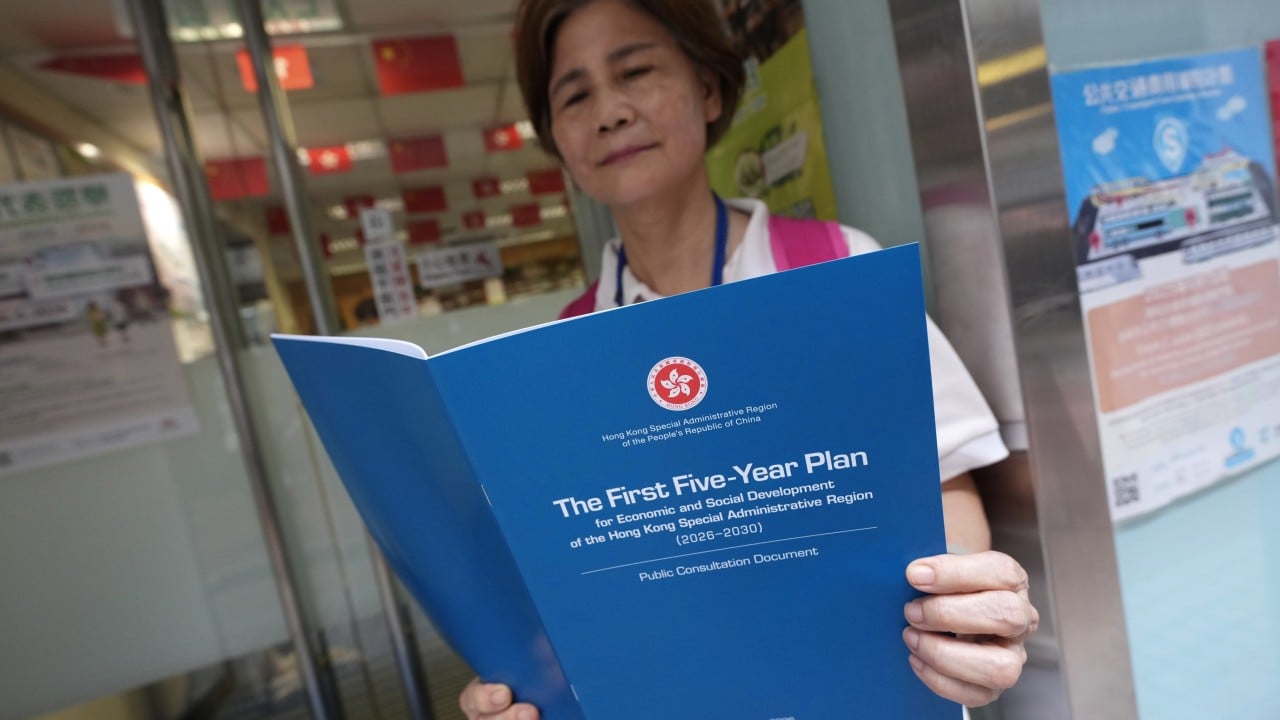
Under Chief Executive John Lee Ka-chiu’s leadership, Hong Kong is drawing up its first five-year plan to complement Beijing’s 2026-30 blueprint. A two-month public consultation exercise has just started. But what is the nation’s 15th five-year plan, why is it important and what’s Hong Kong’s role? China’s five-year plan responds to “great changes unseen in a century”, prescient words used by President Xi Jinping since 2018. Chinese policymakers have anticipated headwinds in the world system,...
Narrative Intelligence Brief
This article was published by South China Morning Post, a source frequently categorized with a lean left bias based in Hong Kong. Our narrative intelligence engine continuously monitors coverage from this outlet to track framing, bias, and rhetorical patterns. Our initial algorithmic scan of this specific piece did not flag high-confidence rhetorical techniques, suggesting a generally straightforward reporting style or neutral framing. By understanding the editorial perspective of South China Morning Post, readers can better contextualize the information presented and compare it across our broader media matrix to find the real narrative.
More from South China Morning Post
June 18, 2026
Japan, South Korea not for nuclear weapons: until one of them changes policy
June 18, 2026
Cuba unveils historic package of free-market reforms
June 18, 2026
US trade official takes aim at Beijing, faults Washington on industry
June 18, 2026
Chinese scientists create record-smashing brain implant electrode array thinner than hair
June 18, 2026
World Cup puts Ebola outbreak and pandemic lessons to the test
Analysis Methodology
This narrative analysis was generated using the CoDataLab Global Intelligence Engine. Our proprietary AI scans thousands of cross-border sources to identify sentiment patterns, framing techniques, and potential media bias. While AI provides the data-driven foundation, our objective is to empower readers with additional context beyond the standard headline.The content displayed above is a structured summary designed for rapid information processing. For the full original report, please visit the source outlet.More Coverage
Discussion
"cup"
Inside ‘bullied’ Marcus Rashford’s World Cup revival after escaping Man Utd hell

‘Living in a Movie’: World Cup Fans Are Losing Their Minds Over This U.S. Staple—and It’s Causing Chaos at Airports

Six arrested during England’s World Cup win – including for criminal trespass
