
Analysis
·
June 14, 2026
The English Channel Interception: UK Seizes Russian 'Shadow Fleet' Tanker Amid Defense Row
British Royal Marines have carried out what officials describe as a first-of-its-kind operation targeting elements of Vladimir Putin’s illicit oil network, marking a significant escalation in efforts to disrupt sanctions evasion and the financial channels supporting Russia’s war economy. The operation comes as Prime Minister Keir Starmer’s government faces growing domestic pressure over defense spending, military readiness, and calls from critics to increase investment in the armed forces amid rising global security challenges.
RNN Originals
·
Senior Narrative Analyst
·
206
Share
2 min read
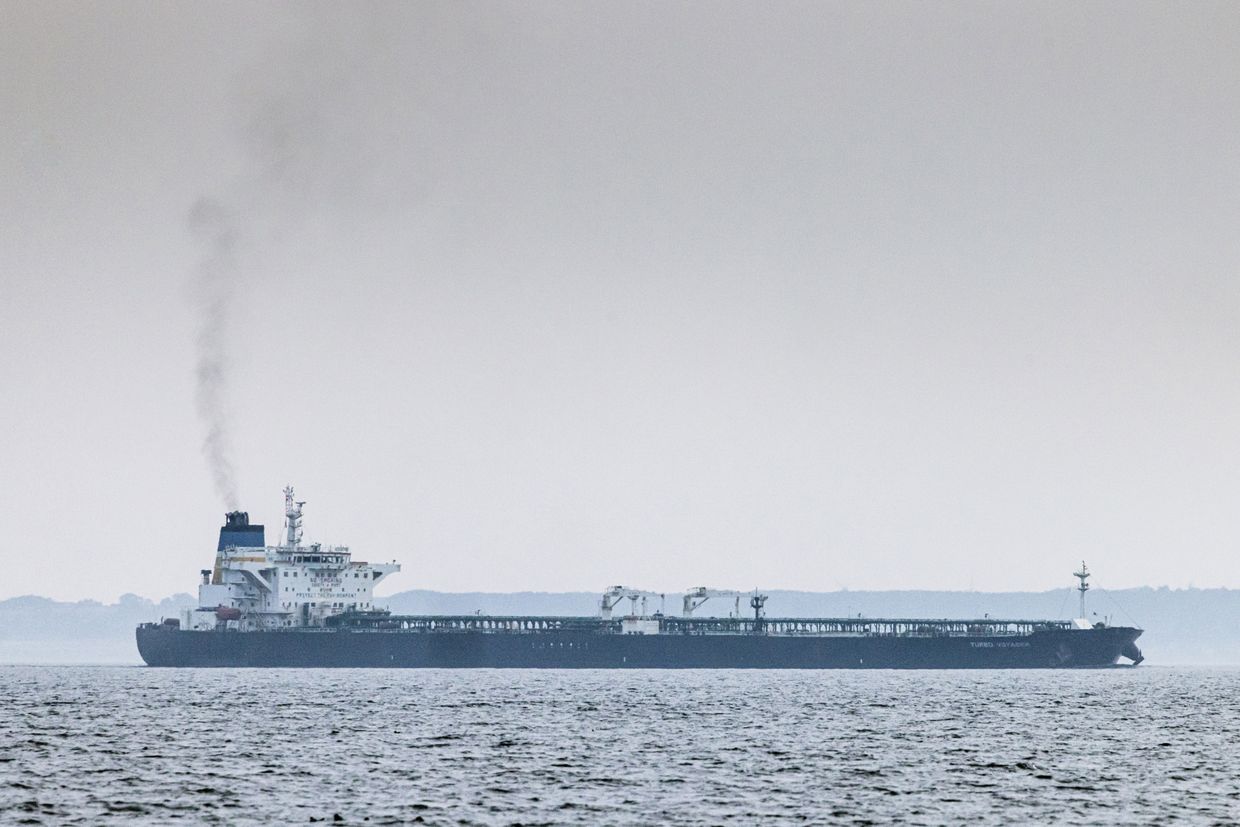 Getty Images / Kyiv Independent
UK commandos board Russian shadow fleet tanker in unprecedented operation
Loading tweet preview…
In a severe escalation of maritime sanctions enforcement, British forces successfully intercepted a sanctioned oil tanker linked to Russia's covert "shadow fleet" while it was navigating the English Channel. The Cameroon-flagged vessel, Smyrtos, was boarded by Royal Marine Commandos and National Crime Agency officials during an intensive six-hour night operation. The maneuver marks the first independent British operation of its kind aimed at strangling the illicit oil revenues funding Moscow's war effort. AIS data subsequently showed multiple sanctioned tankers abruptly altering course to avoid UK waters. However, this tactical victory on the waters intersects with a turbulent political reality in Westminster. Prime Minister Keir Starmer's administration is concurrently fielding intense domestic blowback regarding defense capabilities following the "shambles" double resignation of top defense officials John Healey and Al Carns. The contrasting realities—projecting strength against Russian logistics abroad while facing accusations of underfunding the military at home—have created a fragmented global media narrative.
UK seizes Russian shadow fleet oil tanker in 'first operation of its kind'
British commandos board Russian shadow fleet tanker, Zelensky grateful
UK forces board the Russian shadow-fleet’s oil tanker in the English Channel for the first time
Keir Starmer urged to 'get a grip' on defence by Tory frontbencher after 'shambles' double resignation
'It's not enough!' Lisa Nandy handed GB News grilling on defence spending after pledge to cut culture budget
UK captures Russian shadow fleet vessel while crossing Channel
Seizing the Smyrtos: How Global Media Frames the Operation
Left-Leaning Framing: Solidarity and Strategic Blows
Left-leaning and pro-Ukrainian outlets structure their coverage around the operational success and its direct punitive impact on Moscow's war machine. Publications like the Kyiv Independent and Euromaidan Press amplify Prime Minister Starmer's rhetoric that the action "delivers yet another blow to Russia." The South China Morning Post highlights President Zelensky’s explicit gratitude, framing the event not just as maritime policing, but as an act of international solidarity and a significant degradation of the financial infrastructure fueling the invasion of Ukraine.
Centrist Framing: Operational Mechanics and Security
Centrist and unaligned outlets maintain a procedural, clinically detached tone. The BBC and The Standard focus tightly on the logistical breakdown of the boarding itself—detailing the involvement of National Crime Agency officers alongside Royal Marines in a grueling six-hour mission supported by Chinook helicopters and minehunters. In this framing, the geopolitical implications are secondary to the objective facts of the seizure, treating the event as a mechanical enforcement of international maritime law within the English Channel.
Right-Leaning Framing: Domestic Defense Vulnerabilities
Right-leaning networks, particularly GB News, aggressively pivot the narrative from foreign policy triumph to domestic vulnerability. While nominally supporting the armed forces' interception of the shadow fleet vessel, commentators leverage the event to spotlight internal Labour Party chaos. Coverage heavily features Shadow Defence Secretary James Cartlidge demanding the Prime Minister "get a grip" on the military budget following the "shambles" surrounding the resignation of John Healey and Al Carns. This cluster juxtaposes the bravery of the Royal Marines with allegations of a government unwilling to adequately fund them, noting Culture Secretary Lisa Nandy being forced to defend budget reprioritizations on live television.
Loading tweet preview…
Conclusion
The interception of the Smyrtos reveals a dual reality for the UK. On the global stage, it demonstrates a proactive, highly capable intervention against the financial mechanisms sustaining Russian aggression—a move that immediately prompted other sanctioned vessels to alter their routes away from British waters. However, the domestic media intelligence readout indicates severe political fragmentation at home. The government's inability to synchronize its military successes with a coherent, unified defense spending strategy leaves it highly exposed to domestic critique. As the war in Ukraine demands persistent logistical pressure on Russian assets, the UK’s capacity to maintain this posture will be heavily scrutinized against the backdrop of its own internal defense funding battles.
Share
2 min read
Topics Covered
Discussion
Join the conversation
What's your read on this? Share your take with the community below.
Today in History
On July 29, several notable moments in the history of uk stand out. In 1030, Ladejarl-Fairhair succession wars: Battle of Stiklestad: King Olaf II fights and dies trying to regain his Norwegian throne from the Danes. In 1781, Johann Kies, German astronomer and mathematician (born 1713) passed away. In 1916, Rupert Hamer, Australian politician, 39th Premier of Victoria (died 2004) was born. In 1938, Nikolai Krylenko, Russian lawyer, jurist, and politician, Prosecutor General of the Russian SFSR (born 1885) passed away. In 1945, Mircea Lucescu, Romanian footballer, coach, and manager was born. In 1959, Ruud Janssen, Dutch blogger and illustrator was born. In 1970, John Barbirolli, English cellist and conductor (born 1899) passed away. In 1983, David Niven, English military officer and actor (born 1910) passed away. In 2013, Tony Gaze, Australian soldier, pilot, and race car driver (born 1920) passed away. In 2015, Peter O'Sullevan, Anglo-Irish sportscaster (born 1918) passed away. Together, these milestones provide historical context for today's uk news and ongoing narratives. More