
News
·
June 15, 2026
Trump Heads to G7 in France Amid US–Iran War Crisis
Trump heads to France for the G7 Summit as the US–Iran war escalates, with global leaders focused on security, energy stability, and urgent peace talks.
RNN Originals
·
1,205
Share
2 min read
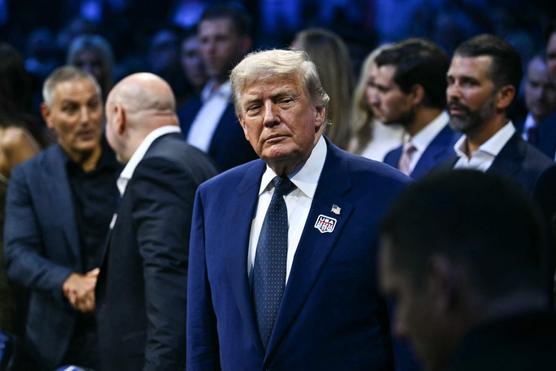 Donald Trump at the mixed martial arts event on his 80th birthday, on the White House grounds in Washington, on June 14, 2026. KENT NISHIMURA/AFP
Loading tweet preview…
G7 Summit 2026: US–Iran Deal, Strait of Hormuz Reopening, and Rising Protests in Geneva
G7 to discuss US-Iran deal and Strait of Hormuz reopening
G7 protest turns from carnival to violent stand-off
Anti-G7 march draws thousands on sidelines of summit

Violence erupts during anti-G7 protests in Geneva on eve of summit
Mark Carney says Iran is 'topic number one' for G7
G7 protest turns from carnival to violent stand-off
Trump's beefing with allies goes under microscope at G7

Protest staged in Geneva against upcoming G7 summit
Tesla set on fire, UN office's windows smashed in anti-G7 march
Geneva police clash with anti-G7 protesters ahead of summit
Tesla Torched as Thousands Protest G7 After Musk Milestone
Starmer humiliation as Trump 'ready to tell him off' at G7 over major UK issue
Police fire teargas at protesters who set fire to a Tesla and smashed United Nations office's windows in Geneva ahead of G7 summit
Swiss police fire tear gas as anti-G7 protesters target UN site
Zelenskyy congratulates Trump on turning 80 in birthday call, vows more Ukraine peace talks at G7 on Tuesday
The 2026 G7 Summit in France begins amid rising global tension, with leaders focused on the US–Iran conflict and possible progress on reopening the Strait of Hormuz, a key route for global oil trade. The talks are expected to shape energy markets and security priorities across major economies. At the same time, violent protests in Geneva have broken out ahead of the summit, with clashes between demonstrators and police, along with damage to property and heightened security measures. While diplomacy inside the summit aims at easing international tensions, the situation outside reflects growing public anger toward global political and economic decisions, setting a tense backdrop for the meeting. Overall, the summit is starting in a highly sensitive moment, where diplomatic breakthroughs and street-level unrest are unfolding at the same time, making this year’s G7 one of the most closely watched in recent memory.
What’s driving the protests around the G7 Summit
The protests around the G7 in Geneva are mainly coming from people who feel the group doesn’t represent their interests. Many demonstrators say the G7 makes big decisions about the global economy, wars, and energy without really considering the impact on ordinary people, especially around issues like inequality and climate change. Things escalated further because of the current global tension around the US–Iran war situation, with some protesters connecting the summit to wider concerns about military action and energy control, especially the Strait of Hormuz discussions. Reports from outlets like CNN, Al Jazeera, Reuters, Sky News, and The Japan Times describe how the situation started as a large peaceful march but turned into clashes with police in parts of Geneva, leading to tear gas use and damage in some areas near sensitive international buildings.
What leaders are expected to discuss at the G7 Summit
The G7 Summit in France is mainly focused on urgent global stability issues, with leaders expected to prioritize the US–Iran conflict and its wider impact on security and energy markets. A key point of discussion is the potential framework deal to reduce tensions and the possible reopening of the Strait of Hormuz, which is critical for global oil transportation. Beyond the Middle East crisis, leaders are also expected to address global economic pressure, inflation risks, and energy security as countries try to stabilize markets affected by ongoing geopolitical uncertainty. Other expected topics include coordination on the war in Ukraine, strengthening alliances, and managing rising global instability. Overall, the summit is centered on crisis management and preventing further escalation across multiple regions.
Share
2 min read
Topics Covered
Discussion
Join the conversation
What's your read on this? Share your take with the community below.
Today in History
On July 30, several notable moments in the history of G7 stand out. In 579, Pope Benedict I passed away. In 762, Baghdad is founded. In 1859, First ascent of Grand Combin, one of the highest summits in the Alps. In 1914, Michael Morris, 3rd Baron Killanin, Irish journalist and author, 6th President of the International Olympic Committee (died 1999) was born. In 1941, Hugo Celmiņš, Latvian politician, former Prime Minister of Latvia (born 1877) passed away. In 1943, Henri-François Gautrin, Canadian physicist and politician was born. In 1982, Jehad Al-Hussain, Syrian footballer was born. In 2005, John Garang, Sudanese colonel and politician, 6th President of South Sudan (born 1945) passed away. In 2006, Akbar Mohammadi, Iranian activist (born 1972) passed away. In 2018, Michael A. Sheehan, American author, former government official and military officer (born 1955) passed away. Together, these milestones provide historical context for today's g7 news and ongoing narratives. More