
News
·
August 15, 2026
Trump Claimed Hormuz Control. Then the Ships Vanished.
Trump claims the US controls the Strait of Hormuz and oil is flowing normally. Shipping data, an unreported oil spill, and Iran's own foreign minister tell a very different story.
Badis Jlassi
·
RNN Originals
·
509
Share
5 min read
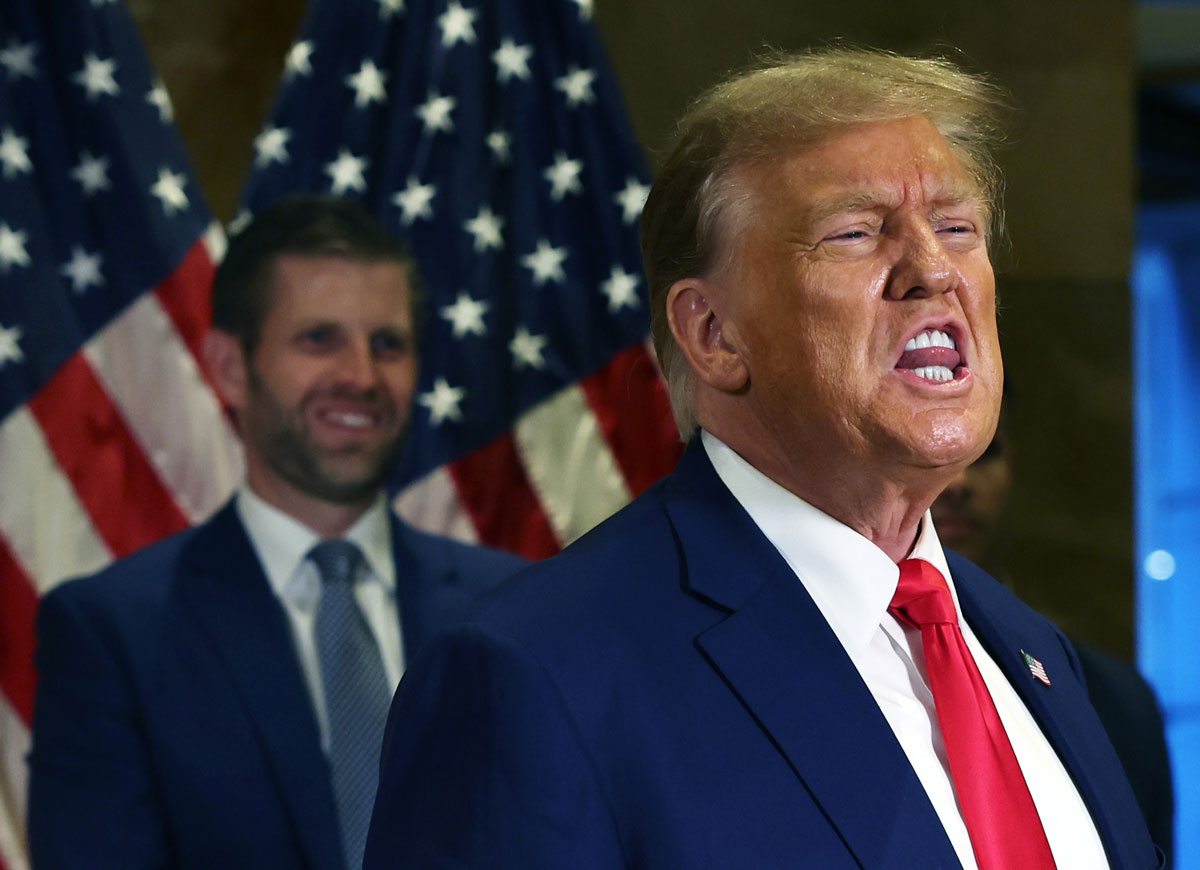 Image Credit : UPolitics
Trump Claimed Hormuz Control. Then the Ships Vanished.
There's a gap opening up between what the White House is saying about the Strait of Hormuz and what's actually moving through it, and this week that gap became impossible to ignore. President Trump declared on Truth Social that the United States has "total control" over the world's most important oil chokepoint, calling the American naval presence there a "WALL OF STEEL." Independent shipping data from the same week tells a very different story: barely a handful of tankers passing through daily, a fraction of what moved through before the war.
Loading tweet preview…
What Trump Actually Claimed
In a Truth Social post this week, Trump wrote that "the U.S.A. has total control over the Strait of Hormuz," adding "I THINK WE WILL KEEP IT!" and describing the American naval blockade as being called, by everyone, a "WALL OF STEEL" that Iran had no ability to counter. He went further, claiming Iran's military infrastructure had been severely degraded and mocking the country's economic condition, referencing "300% INFLATION." Days earlier, Energy Secretary Chris Wright made a related claim, telling reporters that oil exports from the Middle East had risen above pre-war levels and had been running roughly normal for a week straight.
What the Shipping Data Actually Shows
Neither claim holds up against independent tracking. According to UKMTO and vessel-tracking data cited in multiple reports this week, commercial traffic through the strait has fallen to roughly single-digit numbers of tankers transiting per day, compared with an average of around 130 daily transits before the war began. That's not a reduced flow — it's closer to a near-total halt dressed up in the language of normalcy. CNN's own reporting on Wright's claim found no observable shipping data to support it, calling it "highly dubious." The Iranian Revolutionary Guard Corps has reportedly continued demonstrating its presence along key transit lanes, and there remains an active risk of drifting or uncharted mines near the strait's traffic separation zones, according to maritime security advisories.
Iran's Response Was Blunt, and Came With Its Own Evidence
Iranian Foreign Minister Abbas Araghchi didn't just dispute Trump's framing — he tied it directly to a pattern he says has defined the entire conflict. "The U.S. has long miscalculated due to intelligence failures," he wrote on X, pointing to the war itself as exhibit one before adding, "Now, an even bigger miscalculation on the Strait of Hormuz. Worse than fake news is fake intelligence." Iran's Persian Gulf Strait Authority made a more procedural point in its own post, stating plainly that repeated American claims the strait was reopened "do not change the reality: the Strait of Hormuz remains blocked and will not be reopened until Iran's conditions are accepted." Under a June memorandum of understanding brokered by Pakistan, the responsibility for actually reopening and managing the strait sits with Iran, not Washington — which makes Trump's claim of American "control" a legally awkward one regardless of what the shipping data shows.
Meanwhile, an Oil Spill Nobody's Talking About
Buried in this week's coverage is a detail that complicates the picture further: Greenpeace has identified an oil spill off the coast of Oman now covering an estimated 500 square miles, roughly 200 kilometers from a tanker that remains stranded in the Arabian Sea. The spill has reportedly reached mainland Oman. In a conflict already defined by disputed claims about what's actually moving through the region's waters, a spill of that size sitting largely outside the headlines says something about how selectively this story is being covered by all sides — including, notably, by the administration currently insisting the waterway is functioning normally.
Why Trump Is Making This Claim Now
The timing isn't incidental. Trump has simultaneously made new demands on Iran, insisting on compensation for everyone Tehran has killed in past conflicts, after Iran separately requested its own reparations as part of talks to wind the war down. That demand has reportedly clouded prospects for the very deal that would actually reopen Hormuz on agreed terms. Trump told Axios over the weekend that the US is deliberately "low-keying" the standoff, saying "we are only semi-negotiating with them" while "watching Iran with its huge inflation and the fact they have no money." Read together, the "total control" claim looks less like a factual update and more like a pressure tactic — project strength publicly while quietly starving Iran's economy through sanctions, and let the reopening talks stall until Tehran's position weakens further. The US Treasury imposed its eighth round of Iran-related sanctions this year on Friday, targeting entities accused of helping Iran's Shahr Bank move money through what officials called a shadow-banking network.
The Market Isn't Buying the Confident Version Either
Oil prices tell their own version of this story, and it doesn't match the administration's messaging. Brent crude climbed roughly 5% in a single session this week and held near $88 a barrel after Trump's new compensation demands muddied the outlook for reopening talks — traders pricing in continued disruption, not the normalized flow Wright described. The International Energy Agency has warned separately that global oil stockpiles are being drawn down rapidly, calling the strait's reopening increasingly urgent. None of that squares with a waterway operating under confident American control. Markets tend to price in reality faster than press statements do, and right now they're pricing in a chokepoint that remains substantially closed.
Conclusion
Two things can't both be fully true here, and the evidence increasingly points to which one isn't. Trump's "total control" framing and Wright's "normal for a week" claim describe a strait functioning again under American oversight. The tanker-tracking data, the IEA's stockpile warnings, oil prices still elevated on disruption fears, and Iran's own insistence that reopening remains conditional on its terms describe something closer to a waterway still substantially blocked, with the US making confident public claims that get ahead of what's actually happening on the water. Whether that gap closes through an actual deal or simply gets talked over long enough that people stop checking the shipping data is, at this point, the real open question — not whether the strait is open, which by every independently verifiable measure, it still largely isn't.
Share
5 min read
Topics Covered
Discussion
Join the conversation
What's your read on this? Share your take with the community below.
Today in History
On August 15, several notable moments in the history of donald trump stand out. In 636, Arab-Byzantine wars: The Battle of Yarmouk between the Byzantine Empire and the Rashidun Caliphate begins. In 698, Theodotus of Amida, Syrian Orthodox holy man passed away. In 767, Abu Hanifa, Iraqi scholar and educator (born 699) passed away. In 1022, Nikephoros Phokas Barytrachelos, Byzantine rebel passed away. In 1920, Polish-Soviet War: Battle of Warsaw, so-called Miracle at the Vistula. In 1926, Konstantinos Stephanopoulos, Greek lawyer and politician, 6th President of Greece (died 2016) was born. In 1962, James Joseph Dresnok defects to North Korea after running across the Korean Demilitarized Zone. Dresnok died in 2016. In 2015, North Korea moves its clock back half an hour to introduce Pyongyang Time, 8.mw-parser-output .frac{white-space:nowrap}.mw-parser-output .frac .num,.mw-parser-output .frac .den{font-size:80%;line-height:0;vertical-align:super}.mw-parser-output .frac .den{vertical-align:sub}.mw-parser-output .sr-only{border:0;clip:rect(0,0,0,0);clip-path:polygon(0px 0px,0px 0px,0px 0px);height:1px;margin:-1px;overflow:hidden;padding:0;position:absolute;width:1px}1⁄2 hours ahead of UTC. In 2020, Robert Trump, American real-estate developer, business executive (born 1948) passed away. In 2021, Kabul falls into the hands of the Taliban as Ashraf Ghani flees Afghanistan along with local residents and foreign nationals, effectively reestablishing the Islamic Emirate of Afghanistan. Together, these milestones provide historical context for today's donald trump news and ongoing narratives. More