
Analysis
·
August 28, 2026
The AI Infrastructure Boom Is Becoming Too Big to Ignore
The artificial intelligence revolution is not, primarily, a story about chatbots, models or clever software.This is turning into a story of steel, silicon, electricity and debt.Based on their latest plans, the four biggest hyperscalers Amazon, Microsoft, Alphabet and Meta are expected to spend about $725 billion on capital expenditure in 2026. That would be an increase of about 77% from their combined $410 billion in 2025.And that's not just an AI investment cycle it's an industrial build-out.
Badis Jlassi
·
RNN Originals
·
2,147
Share
4 min read
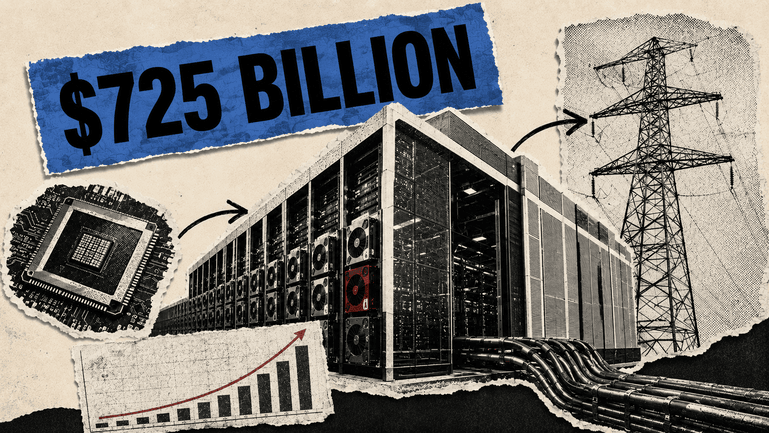 AI Infrastructure Boom can't be ignored anymore
 The trillion-dollar question
The fact that Big Tech is investing billions in AI is not the remarkable aspect. It means that even after the initial wave of AI infrastructure has been constructed, investment keeps rising. According to Goldman Sachs, between 2025 and 2030, the four biggest hyperscalers might invest a total of $5.3 trillion in capital.According to UBS, hyperscalers may invest an additional $4.1 trillion in AI infrastructure between 2026 and 2028.Because those figures are no longer relevant to the budgets of specific technology initiatives, they are hard to understand. They start to resemble infrastructure initiatives that are typically connected to entire sectors and governments. Businesses require transmission networks to link them, cooling systems to protect them from overheating, data centers to store them, and possibly most importantly electricity to keep them operating. The final prerequisite can end up being the actual bottleneck.

AI Infrastructure Race Begins
The generative-AI boom triggers an unprecedented demand for GPUs, cloud computing and specialized data centers as companies rush to scale models such as ChatGPT.
Big Tech Goes All-In
Microsoft, Google, Amazon and Meta dramatically increase capital spending on AI data centers, accelerators, networking and power infrastructure.
Hundreds of Billions Pour In
The major hyperscalers collectively spend hundreds of billions of dollars on infrastructure, while Nvidia's data-center business becomes the clearest financial indicator of AI demand.
The $725 Billion Spending Wave
Amazon, Microsoft, Alphabet and Meta are projected to spend around $725 billion on capital expenditure, with AI infrastructure accounting for a major share of the investment.
The Infrastructure Test
With global data-center electricity demand potentially approaching 950 TWh by 2030, the industry faces its biggest question: can AI-generated revenues grow fast enough to justify the enormous infrastructure investment?
Nvidia is the clearest evidence of the frenzy
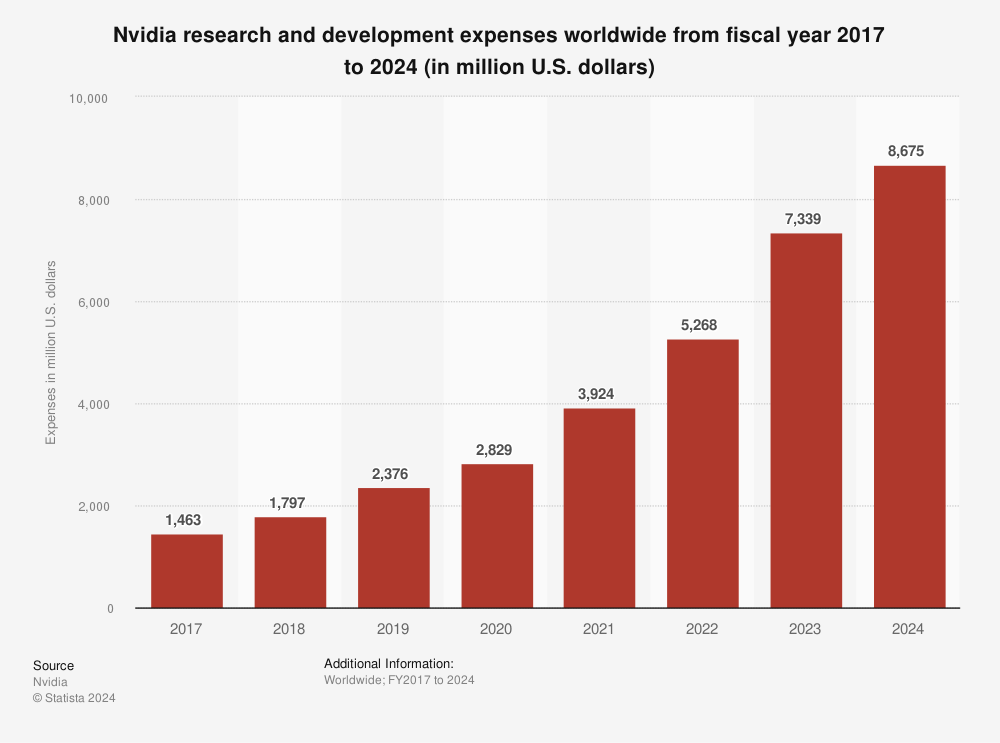
Few companies illustrate the scale of the boom better than Nvidia .In its latest quarter, Nvidia reported $96.2 billion in revenue, up 18% from the previous quarter. Its extraordinary growth continues to be driven overwhelmingly by demand for data-center computing. Earlier this year, Nvidia reported $62.3 billion in quarterly data-center revenue, up 75% from the same quarter a year earlier. Its full-year fiscal 2026 revenue reached $215.9 billion.The numbers reveal something important. The AI boom is not merely creating profitable software companies. It is creating an enormous supply chain around computation. Chip designers, memory manufacturers, networking companies, semiconductor equipment makers, construction firms, utilities and energy producers are all being pulled into the same investment cycle. The AI economy is increasingly becoming a physical economy.
The hidden cost of electricity and who pays for the boom?
It is uncommon that one simple question receives the attention it deserves : Where is all this computing power coming from? According to the International Energy Agency, global data-center electricity consumption was about 485 TWh in 2025, and could reach around 950 TWh by 2030, nearly doubling in five years. Another IEA analysis estimates that electricity use by data centers is growing at about 15% annually, more than four times the rate of growth in electricity use across other sectors.That changes the character of the AI race.” You can’t just buy more GPUs and hope the problem will go away. It needs physical places that have enough grid capacity. It needs transformers , substations , cooling and reliable generation .Which is why AI is now becoming an energy story.The tech industry’s conversation is broadening to include natural gas, nuclear, renewables, batteries and transmission infrastructure.Algorithms may not be the biggest constraint for the next generation of AI.Could be the electrical grid. But who pays the boom? Another embarrassing question is raised.In the end, how much of this spending can be justified by AI revenue? The optimistic case is simple: we’re building today’s infrastructure ahead of demand, just as previous generations built broadband networks, cloud infrastructure and mobile networks ahead of their full economic potential. But there’s a huge difference in scale. AI infrastructure is very expensive and the hardware becomes obsolete very quickly. Companies need to constantly replace accelerators with new generations while expanding capacity.That creates a huge capital requirement.Morgan Stanley analysis cited by Axios has even found roughly $3 trillion in AI-related commitments by major tech companies through off-balance-sheet arrangements. These commitments matter because they show that the headline capital expenditure numbers may not be a good measure of the total financial exposure created by the AI race. It’s not just current cash flow that’s funding the infrastructure boom, but increasingly long-term contracts, partnerships and financing arrangements.
The circular economy of AI
One of the most peculiar aspects of the current technological market is what this dynamic produces. AI firms require massive quantities of processing power, that computing infrastructure is built by cloud providers, and hardware is sold by chip companies. As the value of those hardware companies increases dramatically, they gain the financial strength to invest in AI businesses and infrastructure. Those AI firms then become major users of the same infrastructure, creating an effective feedback loop. That does not necessarily mean there is a bubble. There is clearly real demand for AI computing. But it does mean investors need to distinguish between sustainable economics and genuine demand. Even with millions of users, a company can struggle to generate enough revenue to cover the cost of providing its services. At the infrastructure level, the same principle applies: a $100 billion data-center investment ultimately needs customers capable of generating sufficient returns on that investment.
Loading tweet preview…
The real AI race has changed
The primary inquiry during the first two years of the generative-AI boom was: Which model is the most intelligent? Another question is slowly taking the place of that one: Who can develop the greatest amount of computing power? The businesses with the greatest algorithms might not be the only winners.These businesses might be able simultaneously obtain GPUs, memory, electricity, data centers, networking capacity, and funding. Because of this, the boom in AI infrastructure merits consideration outside of Silicon Valley.It is altering national energy policy, construction, financial markets, semiconductor markets, and the need for electricity. Furthermore, at hundreds of billions of dollars annually, it is growing too big to be classified as just a technological trend. AI is evolving as an infrastructure sector.
~$5.3T: Goldman Sachs estimates the four hyperscalers could collectively spend around $5.3 trillion between 2025 and 2030.
“AI is not just a software revolution. It is an infrastructure revolution”
Share
4 min read
Topics Covered
Discussion
Join the conversation
What's your read on this? Share your take with the community below.
Today in History
On August 28, several notable moments in the history of ai stand out. In 1900, Henry Sidgwick, English economist and philosopher (born 1838) passed away. In 1916, World War I: Germany declares war on Romania. In 1916, World War I: Italy declares war on Germany. In 1940, William Cohen, American lawyer and politician, 20th United States Secretary of Defense was born. In 1943, Boris III of Bulgaria (born 1894) passed away. In 1954, Ravi Kanbur, Indian-English economist and academic was born. In 1954, Katharine Abraham, American feminist economist was born. In 1965, Satoshi Tajiri, Japanese video game developer; created Pokémon was born. In 2013, Edmund B. Fitzgerald, American businessman (born 1926) passed away. In 2014, Hal Finney, American cryptographer and programmer (born 1956) passed away. Together, these milestones provide historical context for today's ai news and ongoing narratives. More