
News
·
August 26, 2026
Meta's $18 Billion Settlement Ends Trial, Not the Fight
Meta agreed to an $18 billion settlement and new teen safety limits to avoid Mark Zuckerberg testifying in a landmark trial. Florida rejected the deal outright, calling it 'peanuts' compared to the harm alleged.
Badis Jlassi
·
RNN Originals
·
1,568
Share
4 min read
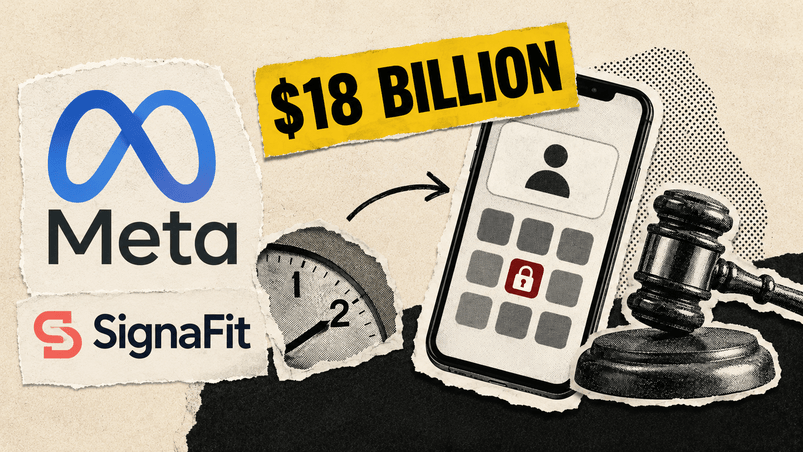 Meta's $18 Billion Settlement Ends Trial not the war
Meta's $18 Billion Settlement Ends Trial, Not the Fight
Mark Zuckerberg was supposed to take the stand this week. He never had to. Hours before he would have testified in a federal courtroom in Oakland, Meta agreed to pay up to $18 billion and rebuild key parts of how teenagers use Facebook and Instagram, ending a trial that had already forced Instagram chief Adam Mosseri to defend the platform's safety record under oath. It's the largest settlement of its kind in tech history. It's also, by Meta's own account, not an admission that any of the allegations were true.
Loading tweet preview…
What the Trial Was Actually About
The case, brought by 29 states in 2023 and joined by additional attorneys general since, accused Meta of deliberately engineering addictive features into Facebook and Instagram, features the states alleged the company understood were harmful and concealed from the public. It also claimed Meta violated federal children's privacy law by collecting data on users under 13 without parental consent. The trial began just last week in front of US District Judge Yvonne Gonzalez Rogers, with California, Colorado, Kentucky, and New Jersey pressing forward as the lead plaintiffs seeking, by some reports, close to $200 billion in civil penalties before the settlement cut the case short.
The settlement isn't just a check. Over the next decade, Meta has agreed to cap teen usage of Facebook and Instagram at two hours a day by default, block access entirely between midnight and 6 a.m. without parental consent, and shut off most push notifications to teenage accounts during school hours. It also commits to strengthening age-verification tools, tightening parental controls, limiting features tied to social comparison like visible "like" counts, and improving content filters meant to keep material about bullying, eating disorders, and self-harm away from young users. An independent auditor will monitor whether Meta actually follows through. Notably, the deal doesn't touch the two things at the center of Meta's business model: personalized content recommendation algorithms and targeted advertising to teens remain untouched.
What Actually Changes on the App
A Number Designed to Pressure Rivals, Not Just Punish Meta
There's a built-in incentive buried in the fine print that's easy to miss. Meta says it will withhold roughly $5.3 billion of the total settlement unless TikTok and YouTube adopt comparable safety measures of their own, effectively daring its two biggest competitors to match its new restrictions or watch Meta avoid paying out nearly a third of the deal. Meta publicly urged both platforms to follow its lead. Whether that's a genuine push for industry-wide reform or a calculated way to shrink its own bill while looking proactive is something regulators and child-safety advocates are likely to be watching closely over the next several years.
For One Family, the Money Was Never the Point
Behind the corporate numbers, the case carried real personal weight for some of the families who joined it. Reuters spoke with a parent whose teenage child died by suicide, and who said she was "pleased" the settlement would force concrete changes to how Meta designs its products for young users, even as no amount of money could undo what her family had already lost. That's the tension sitting underneath every dollar figure in this story: for the states, this was about leverage and enforceable change. For families like hers, it was never really about the settlement number at all.
Florida Wants Its Own Trial
Not every state signed on. Florida Attorney General James Uthmeier rejected the deal outright, calling it a "weak payoff attempt" and arguing the payouts are "peanuts compared to the profound harms" Meta's design choices inflicted on children. "This agreement is nothing more than a slap on the wrist for a trillion-dollar corporation that has already paid more to its lawyers than it will pay the states," Uthmeier said, vowing Florida will pursue its own case to trial rather than accept a negotiated number. It's a reminder that "nearly every state" settling doesn't mean every state agrees the number, or the underlying safety commitments, actually match the scale of harm alleged.
Conclusion
$18 billion sounds enormous until it's measured against what actually generated it: Meta's 2025 revenue alone was roughly $201 billion, meaning the entire settlement, spread across a decade, amounts to a fraction of a single year's earnings. That math is exactly why critics like Uthmeier see this as an affordable cost of doing business rather than genuine accountability, while the states that did sign on call it the most substantial forced change to how a major platform treats young users that any court has ever ordered or is likely to order. Meta avoided a jury verdict, avoided Zuckerberg testifying, and avoided admitting wrongdoing. What it didn't avoid is a decade of independent auditing over promises it now has to keep in public, with Florida's separate trial waiting to test, under oath, whether this settlement actually captures what happened inside the company or merely closes the most convenient chapter of it.
Share
4 min read
Topics Covered
Discussion
Join the conversation
What's your read on this? Share your take with the community below.
Today in History
On August 27, several notable moments in the history of meta stand out. In 1921, Benjamin C. Bradlee, American journalist and author (died 2014) was born. In 1922, Irving R. Levine, American journalist and author (died 2009) was born. In 1986, Cassie Ventura, American singer, dancer, actress and model was born. In 1989, James Harden, American basketball player was born. In 2002, Lil Tecca, American rapper was born. In 2011, Patrick C. Fischer, American computer scientist and academic (born 1935) passed away. In 2014, The Jay Report into the Rotherham child sexual exploitation scandal is published. In 2014, Caroline Kellett, English journalist (born 1960) passed away. In 2015, Two U.S. journalists are shot and killed by a disgruntled former coworker while conducting a live report in Moneta, Virginia. In 2015, Stefanos Manikas, Greek politician (born 1952) passed away. Together, these milestones provide historical context for today's meta news and ongoing narratives. More