
Explainer
·
June 23, 2026
Global Oil Prices Fall as US-Iran Peace Hopes Ease Fears
Oil prices have dropped sharply as US-Iran talks progress, reducing concerns over supply disruptions and easing pressure on global energy markets.
RNN
·
Briefing
 Photo: Reuters
Key Risks That Could Push Oil Prices Higher Again
Key risks that could push oil prices higher again include geopolitical tensions, OPEC+ production cuts, stronger global demand, lower US shale output, and falling inventories. Even a mix of these factors can tighten supply quickly and drive prices up again.
Oil prices could climb again if a few key risks start to line up at the same time. One of the biggest is geopolitics. Any escalation in tensions in major oil-producing regions like the middle east or parts of eastern europe can quickly trigger fears of supply disruptions, and markets usually price that in immediately, even before actual shortages happen.
Inventory levels matter too. When crude stockpiles in major hubs like the U.S. fall faster than expected, traders interpret it as a tightening market, which can fuel bullish momentum.Finally, financial conditions play a role. a weaker U.S. dollar, inflation expectations, and speculative trading in commodities can all amplify price swings beyond pure supply and demand fundamentals.
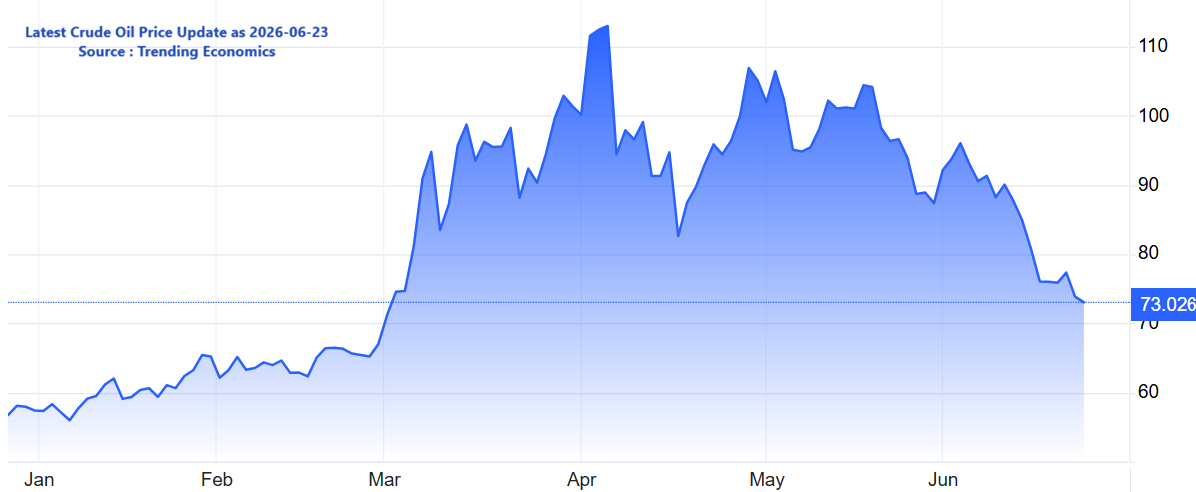
Another major factor is the behavior of producers, especially OPEC and its allies. If OPEC+ decides to cut output further or extend production limits, global supply tightens and prices tend to react upward. Even hints of stricter supply discipline can move markets. Demand is also a wildcard. If global growth picks up faster than expected particularly in China, India, and the U.S. oil consumption can rise quickly. That often catches supply chains off guard, especially after periods of weak demand forecasting.
Monthly Oil Price Trends (February–June 2026): Key Market Movements and Drivers
Oil Prices Decline
Prices dropped due to weaker demand from China, rising US crude inventories, and stable OPEC+ output.
Market Volatility Increases
Prices fluctuated on mixed signals—US shale slowdown vs improving global industrial activity and currency shifts.
Oil Prices Stabilize
Balanced market conditions with steady demand, controlled OPEC+ supply, and neutral geopolitical tensions.
Oil Prices Rise
Gains driven by stronger summer demand expectations, lower inventories, and potential supply tightening.
Oil Prices Strengthen Further
Prices increased due to peak seasonal demand, refinery activity growth, and concerns over global supply risks.
Other Factual Reporting :
Topics Covered
Today in oil History
On June 23, several notable moments in the history of oil stand out. In 1305, A peace treaty between the Flemish and the French is signed at Athis-sur-Orge. In 1812, War of 1812: Great Britain revokes the restrictions on American commerce, thus eliminating one of the chief reasons for going to war. In 1879, Huda Sha'arawi, Egyptian feminist and journalist (died 1947) was born. In 1919, Mohamed Boudiaf, Algerian politician, President of Algeria (died 1992) was born. In 1953, Armen Sarkissian, Armenian physicist, politician and President of Armenia was born. In 1959, Hidir Lutfi, Iraqi poet. (born 1880) passed away. In 1967, Cold War: U.S. President Lyndon B. Johnson meets with Soviet Premier Alexei Kosygin in Glassboro, New Jersey for the three-day Glassboro Summit Conference. In 2012, James Durbin, English economist and statistician (born 1923) passed away. In 2014, The last of Syria's declared chemical weapons are shipped out for destruction. In 2017, A series of terrorist attacks take place in Pakistan, resulting in 96 deaths and wounding 200 others. Together, these milestones provide historical context for today's oil news and ongoing narratives.