
0
Why Seed Patents—Yes, Seed Patents—Are Key to the Democrats’ Future
May 4, 2026
Posted 5 hours ago by
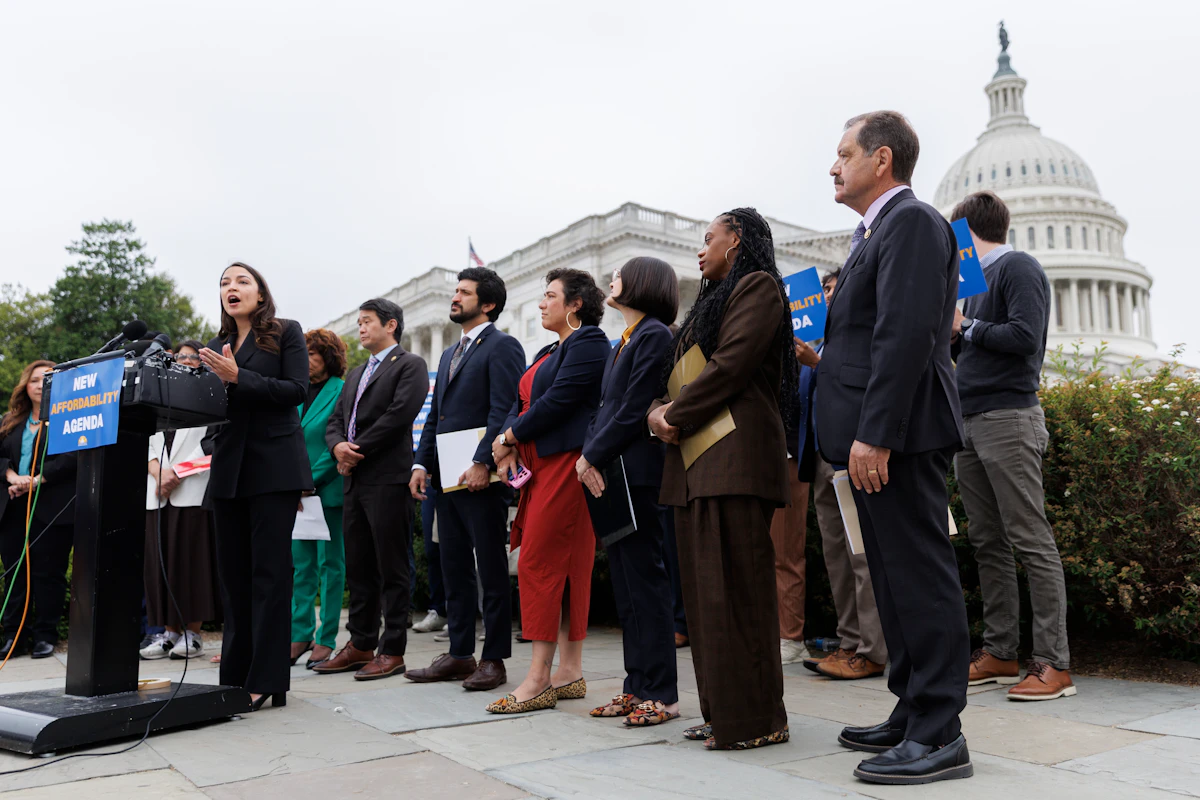
The House Progressive Caucus released its affordability agenda last week. Ever since Zohran Mamdani rode the multisyllabic a-word to his surprise victory in the New York mayoral race last year, Democrats of every ideological stripe have been nattering about affordability. I’ve been around long enough to know that when that happens, and the consultants get their hands on it, the end result is usually that the word du jour gets bleached of all meaning and loses the potency that made it a weapon in the first place.
So, I clicked on the link on the caucus’ web site with not a little trepidation.To my relief, it wasn’t at all bad. The daily experiences, needs, and frustrations of working people received the proper emphasis. Here are the main things they propose to do:Establishing a government program to sell generic drugs at a discount. This, says the caucus, will lower the price of insulin from 300 a vial to 50. I have long argued that the Democrats ought to make insulin free by paying the manufacturers a negotiated fee, just like they did with Moderna and Pfizer on the Covid vaccine (although that fee that would be considerably less than their current crazy profits). But 50 is closer to free than 300. It’s a start.Charging oil companies a tax on extra profits collected because of Donald Trump’s war, then refunding that money to consumers, which the caucus says could save families up to 324.Building millions of new homes, offering new homeowners 20,000 in downpayment assistance, and expanding rental aid. Requiring companies to offer double pay for overtime (Barack Obama expanded overtime pay, and Trump reversed that). Guaranteeing every worker two weeks of paid vacation.Cracking down on price-fixing among big grocers.Banning “surveillance pricing,” an insidious algorithm-driven process whereby companies use consumer data to set individualized prices, hoping to locate the maximum price consumers are willing to pay. These are all good things. Kamala Harris won 43 percent of the non-college (i.e., working-class) vote in 2024, which was five points less than Joe Biden won in 2020. If the Democrats can get back to Biden’s 48, or ideally a few points better, they should win in 2028 and possibly beyond. Efforts like the above, explained and marketed in the right way, should convince enough working-class to return to the D column, especially given Trump’s broken promises and tergiversations. But one promise not mentioned above caught my eye more than all the others: The caucus promises to crack down “on companies that abuse seed patents to make farming more expensive.”Seed patents? What on earth are seed patents? And why does this vow excite me?The short version is that conglomerate seed producers—notably Monsanto, which was acquired in 2018 by Bayer, the aspirin people, for 66 billion—have patented various seeds that farmers use, requiring them to buy new seeds every year. Corteva Agriscience is the other seed producer that, with Bayer, controls thousands of seed patents. Their claims aren’t wholly without merit—they invest a lot of money in all this. And it’s true that seeds can be patented not only in the United States, but across Europe as well. But the extent of the U.S. patent claims costs small farmers a lot of money because they can’t reuse seeds, and it has led to intense market concentration. So, as the caucus says, it’s not the existence of seed patent laws that’s the problem. It’s the abuse and overuse of them.Why should you care about this? Because this is exactly the kind of issue Democrats ought to be stressing and talking about, for two reasons.First, it speaks to a rural constituency that Democrats have done a horrible job of talking to in recent years. On a substantive level, Trump has done nothing but screw farmers, especially soybean farmers, with his tariffs. But they still support him. They support him because they feel like he represents their “values.” And they feel that in no small part because Democrats never talk about farmers. Farmers basically don’t exist to national Democrats.So, zeroing in on an issue that resonates in Waterloo, Iowa but may mean absolutely nothing to the young progressives in Brooklyn is a good thing right off the bat. The Democrats’ biggest electoral problem is that there are vast swaths of the country, congressional districts and entire states, where the idea of electing a Democrat is about as realistic as electing Colin Kaepernick. To have a chance of becoming a true majoritarian party again, Democrats must change that. That means taking the concerns of people like farmers seriously.Second, it affords Democrats the opportunity to wage a good old-fashioned class-warfare fight, complete with the naming of the bad guys. As I wrote in my big 10,000-word piece for the March print issue of The New Republic, the Democrats need to create conflict. They need to identify villains—the big corporate entities that are making working people’s lives harder and harder. They need to name names. Naming the bad guys is the surefire way to make working people understand: If the Democrats are against those guys—the corporate bad actors who’ve been nickel-and-diming honest working folks—they must be on my side.Democratic messaging in recent years seems mostly oblivious to this. Democrats try to find the issue that focus groups tell them is already popular. That’s fine to an extent. It works on some matters. It worked last year when they emphasized the Obamacare subsidies during the government shutdown. They “won” that shutdown politically (even though some senators caved, but that’s another column).But focus groups and polls can’t tell you everything. Sometimes, you have to make something an issue. Politics is a way of creating a new majority where one didn’t exist before, and ripe but under-the-radar policy issues are a good way to do that. In seed patents, we find something that many people had no idea they should care about, because it doesn’t get much press and isn’t discussed daily on cable news. That’s intellectual leadership. That’s political guts. And the Democrats too rarely show political guts.Spirit Airlines closed over the weekend. The Trump administration was going to bail it out, then decided not to. Obviously, it flip-flopped under pressure from the big four carriers. I carry no brief for Spirit one way or the other, but this week, I’d like to see Democrats raising tough questions about the market power of the big four airlines. It’s the same thing as Monsanto/Bayer and Corteva. I applaud the 100 or so members of the Progressive Caucus for their class-driven agenda. But I hope they really mean it. I hope the mention of patent seed abuse wasn’t just a sop to one noisy member, to get him or her to shut up. Their path back to victory runs precisely through aggressive anti-monopoly issues like this one. As I’ve written a thousand times since George W. Bush was president, the point is not to follow the polls. The point is to change them.
The New Republic
Coverage and analysis from United States of America. All insights are generated by our AI narrative analysis engine.