We’re going back to the moon! Here’s how to watch
March 31, 2026
Fast Company
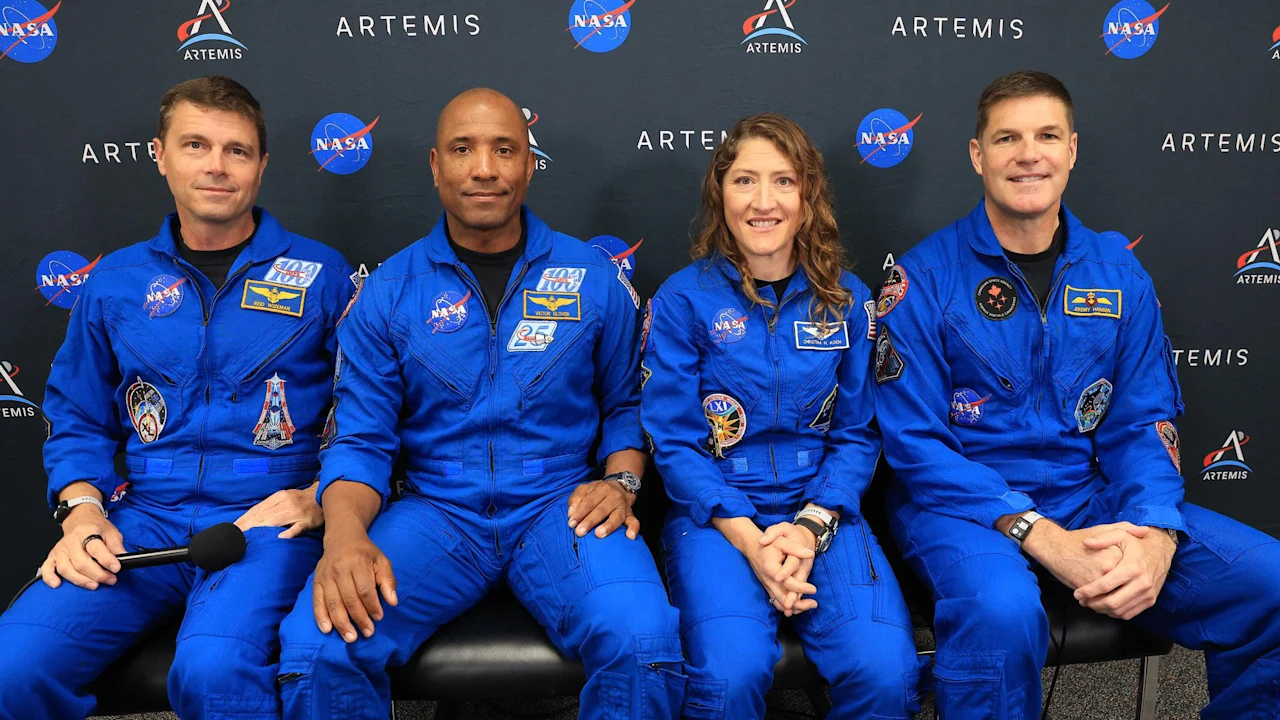
It’s finally happening. The Artemis II mission—returning humans to the lunar neighborhood for the first time in more than 50 years—is set to launch on April 1 from Kennedy Space Center in Florida during a two-hour window that opens at 6:24 p.m. (EDT), with additional launch opportunities through April 6. The first crewed Artemis mission will send NASA astronauts Reid Wiseman, Victor Glover, and Christina Koch, along with Canadian Space Agency astronaut Jeremy Hansen, on a 10-day journey around the moon.
Objectives include testing the Orion spacecraft’s life support systems in situ for the first time with people, gathering additional data on how spaceflight affects the human body, and laying the groundwork for future crewed Artemis missions. It may also offer views of the moon never before seen. This mission will break six major records: the first Black astronaut (Glover, as Orion’s first pilot), first woman (Koch), first non-American (Hansen, his maiden voyage to space), and oldest (Wiseman, aged 50) to visit the lunar arena, traveling the farthest from Earth (250,000 miles), and returning with the fastest re-entry speed (25,000 mph). NASA’s Artemis II Space Launch System (SLS) rocket and Orion spacecraft are seen at Launch Complex 39B, Friday, March 27, 2026, at NASA’s Kennedy Space Center in Florida. [Photo: NASA/Aubrey Gemignani] NASA is streaming a series of prelaunch, launch, and in-flight mission events and briefings on NASA’s YouTube channel, NASA+, as well as its other social media platforms. The public can find a full list of activities here. Enthusiasts can register for the mission’s virtual guest program and receive curated launch resources, notifications about related opportunities or changes, and a NASA virtual guest passport stamp. Likewise, C-SPAN will offer Artemis programming on C-SPAN.org, its YouTube channel, radio station, and mobile app. Fun fact: The Zero Gravity Indicator—the plush toy flying with the astronauts to visually confirm when they’ve reached weightlessness—was designed by Lucas Ye, a second-grader from Northern California, chosen from 2,600 entries submitted in 50+ countries through the Moon Mascot: NASA Artemis II ZGI Design Challenge run by Freelancer on behalf of NASA. [Photo: Freelancer] Beginning April 2, NASA will conduct daily updates from the Johnson Space Center in Houston and on the Artemis Blog, and the crew will engage in live conversations throughout the mission. To track Orion in space, visit: nasa.gov/trackartemis. New York-based folks still jonesing for more post-launch space theatrics can check out We Chose to Go to the Moon, an immersive experience recounting America’s Apollo moon race, on April 7 and 8, featuring Broadway stars and Neil Armstrong’s son and granddaughter. [Photo: Susan Karlin] Here’s to smooth sailing after a turbulent couple of months. First, NASA scrubbed the initial February 6 launch to repair hydrogen leaks and helium flow issues in the Space Launch System (SLS) rocket. In early March, NASA Administrator Jared Isaacman announced a revamped schedule for subsequent Artemis missions to standardize the SLS configuration, push back the moon landing to Artemis IV in 2028, and align workforces with private contractors to enable more frequent launches. On March 20, the 322-foot SLS and Orion rolled back out to Launch Pad 39B. Now, let’s light this candle.
Fast Company
Coverage and analysis from United States of America. All insights are generated by our AI narrative analysis engine.