
0
Unions or Abundance? That’s a False Choice.
April 30, 2026
Posted 4 hours ago by
This week, Ezra Klein invited on his podcast his Abundance co-author, Derek Thompson, and Marc Dunkelman, the scholar and author of Why Nothing Works?, to talk about the movement their books launched. It was good timing: The shadow primary for the 2028 Democratic nomination for president is already underway, and for some, it’s a battle between the “abundance” movement—which is often shorthand for a deregulatory, centrist agenda—and the populists.
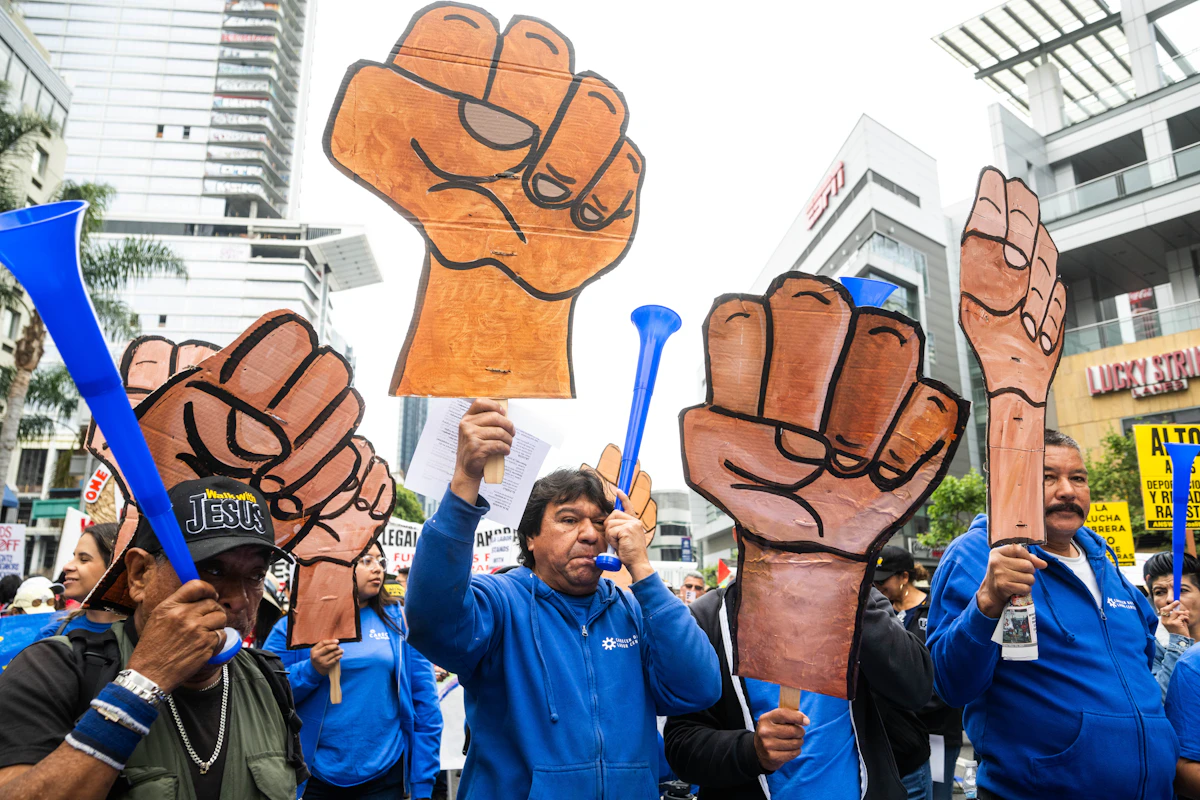
Two early Democratic frontrunners have adopted at least some of the language of the abundance agenda: Pennsylvania Governor Josh Shapiro is touting his record of cutting regulation and building quickly—his mantra is “Get Stuff Done”—and California Governor Gavin Newsom has an aggressive plan to build more housing in the state. How unions fit into that agenda has been a central question. Newsom’s housing push has stalled over some concerns from unions, while Shapiro has argued that there’s no reason unions can’t be part of an effort to speed up building.A new report on Thursday from The Roosevelt Foundation argues that unions form a key ally in the abundance movement, and makes the case for what its authors, Columbia University labor experts Kate Andrias and Alex Hertel-Fernandez, call “democratic abundance.” Unions are important in bringing workers’ rights to the table in any discussion, they say. The report comes as the mammoth No Kings movement around the country is joining forces with workers for May Day on Friday, and as workers are showing a renewed interest in forming and joining unions.“We thought it was really important to take a step back and ask where are workers in this story, and in particular, to think about why organized labor needs to be part of the conversation when it comes to abundanceto get the kind of things that abundance seekers want,” Hertel-Fernandez said.Their report pushes back on some of the criticisms of unions from the abundance movement, mainly that they slow down and raise the costs of building, especially when it comes to housing. They point out that construction costs in the U.S. are higher than countries with higher union density, and have gone up in states that don’t have a strong union presence, indicating that other forces are at play. They also argue that unions are unusually democratic—their electoral and governance structures are actually required by law—and so they aren’t subject to some of the criticisms abundance proponents lob at other “interest groups,” which is that they don’t truly represent the ideals and desires of the people they say they represent.But the report is much more forceful about the benefits they say unions can bring to a strong abundance movement. Unions are a source of skilled labor and have some of the best training programs for the trades that building the country’s physical infrastructure require. And, as democratic organizations, unions can also work to get more buy-in from the communities they’re in to make sure projects reflect community needs and that lawsuits and other objections don’t slow projects down. The quickest way to launch an abundance agenda that builds more infrastructure and housing, then, would be to get unions on your side early for any project or program.More than that, though, any abundance agenda that doesn’t include workers’ representatives won’t benefit everyone. “What we saw in some of the more specific policy conversations is that policymakers and academics who are in the mix in these conversations really aren’t centering the needs of workers or the participation ability of workers,” Andrias said. “It’s also important to have organizations participating in the public policy making process that are focused on the rights of workers, making sure that working conditions are safe, that wages are fair, as well as increasing jobs and providing and building in an efficient way.” Otherwise, who is abundance for?This comes at a time of renewed interest in rebuilding union power in the U.S. Earlier this month, New York State Assemblymember Claire Valdez, a candidate for Congress in New York’s 7th District who has been endorsed by Senator Bernie Sanders and New York Mayor Zohran Mamdani, launched an agenda that would make it easier for workers to join unions and give them more power. “I think unions are essential, not just for winning on the affordability agenda and winning the material things that workers deserve, but for really building our democracy and fighting back against the people who want to strip us of our rights,” she said.The note on building democracy was also important to Andrias and Hertel-Fernandez, who write that workers who feel disempowered and displaced are more likely to be swayed by the right-wing populism of President Donald Trump. Unions can be a countervailing, democratizing force. That may explain why the organizers of the No Kings protest movement against Trump are also joining forces with labor unions to expand their actions on May Day. “Worker solidarity and progress are going to be incredibly important, because we are at this potential breaking point for a democracy and for our economy if we don’t realign ourselves in favor of the people this country was made to represent,” said Hunter Dunn, one of the organizers of 50501 in Los Angeles, which is helping to organize May Day actions.For the Roosevelt report’s authors, unions are part of the fight over not just how well a Democratic government might perform and respond to the infrastructure needs in the U.S. but also a more existential one about how to rebuild our political system—and perhaps even democracy itself. “On multiple levels, having a strong labor movement and bringing workers into the governing process is a way of strengthening some of the Democratic muscles that are so weakened in our society,” Andrias said.
The New Republic
Coverage and analysis from United States of America. All insights are generated by our AI narrative analysis engine.