
0
Trump calls Iran's response to US plan ´totally unacceptable´
May 10, 2026
Posted 2 hours ago by
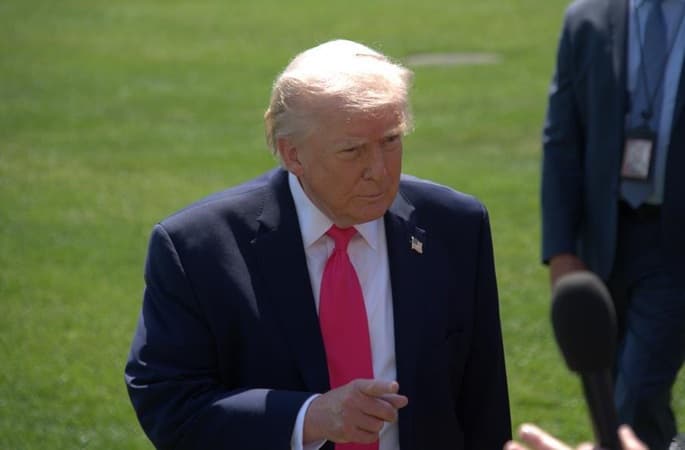
US President Donald Trump on Sunday came down heavily on Iran, expressing his displeasure over the response received from Tehran to end hostilities and establish peace amid the developing security situation in West Asia and the Gulf region, terming it completely unacceptable, reported ANI. Lambasting Tehran in a post on Truth Social, Trump said that he did not like the response received from the 'representatives'.
I have just read the response from Iran's so-called Representatives. I don't like it -- TOTALLY UNACCEPTABLE! Thank you for your attention to this matter, he said on Truth Social. This comes after Iran submitted its reaction to the American proposal for de-escalating regional hostilities through Islamabad, Iranian state media announced on Sunday. The move follows several affirmations from the Foreign Ministry spokesperson that Tehran's views and considerations concerning the Washington-led initiatives would be dispatched once a thorough review and final conclusions had been reached. Detailing the development, the state-run IRNA news agency stated, The Islamic Republic of Iran sent today, through Pakistani mediators, its response to the latest text proposed by the United States to end the war. The state media outlet further clarified the immediate objectives of the diplomatic outreach, adding that According to the proposed plan, at this stage, negotiations will focus on ending the war in the region. According to the reports, the Iranian draft includes specific demands for Washington to lift sanctions on Iran and terminate the blockade on Iranian ports. Furthermore, the proposal reportedly insists that the US must withdraw US forces from the region and cease all hostilities, including a demand to end Israel's war in Lebanon. However, this diplomatic overture occurs against a backdrop of deteriorating security, as Tehran recently cautioned Washington that it would cease its policy of strategic restraint regarding retaliatory strikes. This warning coincided with reports from Gulf nations of fresh maritime and territorial hostilities, including an assault on a freighter bound for Qatar. The latest slew of remarks by Trump comes shortly after he lambasted former US presidents for their leniency and what he claimed of ensuring financial security towards Iran. Meanwhile, earlier during an interview with independent journalist Sharyl Attkisson, which aired on Sunday, Trump asserted that Washington is maintaining rigorous surveillance of Iran's enriched uranium stockpiles, warning that any attempt to access the sites would result in immediate military action. On the current military status of the conflict, the US President characterised Iran as a nation already militarily defeated. He argued that the country's defensive and offensive capabilities have been systematically dismantled. They have no navy, no air force, they have no anti-aircraft weaponry, no leaders, Trump remarked, adding that while Tehran continues to vacillate over potential diplomatic resolutions, its infrastructure is in ruins. He further claimed that were the US to withdraw today, it would take the Islamic Republic 20 years to rebuild. When questioned on whether American combat operations in the region have reached a conclusion, the President indicated that Washington is not done yet. Estimating that the US military has probably destroyed 70 per cent of its intended targets, he suggested that a further push may be on the horizon. Reiterating his long-standing opposition to Tehran's atomic ambitions, Trump insisted that the international community cannot allow the crazy regime to acquire nuclear weapons. Iran to decisively respond to warships' presence in Hormuz to accompany US A top Iranian diplomat on Sunday warned that the presence of French and British warships in the Strait of Hormuz to accompany the U.S. illegal and internationally unlawful actions will be met with a decisive and immediate response from Iran's armed forces. Kazem Gharibabadi, Iran's deputy foreign minister for Legal and International Affairs, made the remarks in a social media post while reacting to France's deployment of its nuclear-powered aircraft carrier Charles de Gaulle to the Red Sea and the Gulf of Aden to prepare for a future joint mission between Paris and London to secure the freedom of shipping and navigation through the Strait of Hormuz. Gharibabadi said the British government has also announced that to accompany France, it will send a warship to the Red Sea, adding any deployment and stationing of trans-regional destroyers around the Strait of Hormuz under the pretext of protecting shipping is nothing but an escalation of the crisis, the militarization of the vital waterway, and an attempt to cover up the true root of insecurity in the region. He added that maritime security cannot be ensured through a show of military power, especially by actors who themselves contribute to the problems through their support, participation, or silence in the face of the anti-Iran aggression and blockade. He claimed that Iran, as a coastal country, has the right to exercise sovereignty over the Strait of Hormuz and determine its legal arrangements. Meanwhile, the semi-official Tasnim news agency quoted Iran's Navy Commander, Shahram Irani, as saying the navy has deployed light, homegrown submarines in the Strait of Hormuz to counter the enemy's warships. Also on Sunday, French President Emmanuel Macron said in Nairobi, Kenya, that France had never envisaged a naval deployment in the Strait of Hormuz, but rather a security mission to be coordinated with Iran, noting that he was sticking to his position of opposing a blockade from either side. Iran tightened its grip on the Strait of Hormuz beginning Feb. 28, when it barred safe passage to vessels belonging to or affiliated with Israel and the United States following joint strikes on Iranian territory. The United States has also imposed a naval blockade on the strait, preventing ships traveling to and from Iranian ports from transiting the waterway. Sporadic clashes erupted on Thursday and Friday between Iran and the United States in and around the Strait of Hormuz after Washington launched a project, called Project Freedom, to guide stranded ships out of the waterway.

Daily Finland
Coverage and analysis from Finland. All insights are generated by our AI narrative analysis engine.