
0
Truce extension unlikely: Trump, Iran says US actions hinder talks
April 20, 2026
Posted 2 hours ago by
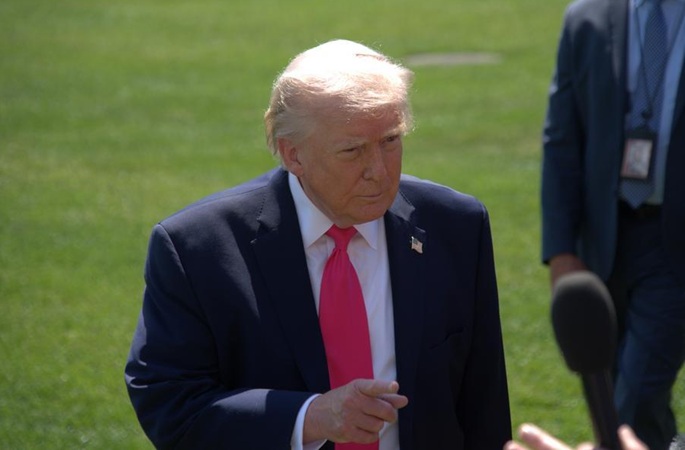
U.S. President Donald Trump said Monday it is highly unlikely he would extend a two-week ceasefire with Iran, if a deal is not reached before it ends this week, reported Xinhua, quoting Bloomberg. The Strait of Hormuz would remain blocked until a peace agreement is finalized, Trump said in a phone interview. They want me to open it. The Iranians desperately want it opened.
I'm not opening it until a deal is signed, he said. Oil prices jumped as Washington maintained its blockade and the U.S. Navy seized an Iranian-flagged ship over the weekend. I'm not going to be rushed into making a bad deal. We've got all the time in the world, Trump said. He said the truce, which he announced on April 7, will expire on Wednesday evening U.S. Eastern Time. Asked if he expects strikes to resume immediately afterward if no deal is reached, Trump said: If there's no deal, I would certainly expect. In a phone call with PBS News on Monday morning, Trump said that if the ceasefire with Iran expires, then lots of bombs start going off. Asked if Iranian negotiators will participate in fresh talks in Islamabad, Trump said: I don't know. I mean, they're supposed to be there. We agreed to be there, although they say we didn't. But no, it was set up. And we'll see whether or not it's there. If they're not there, that's fine too. He told the New York Post on Monday morning that U.S. Vice President JD Vance is set to head to Pakistan for the second round of negotiations with Iranian officials. According to The New York Times, which cited two U.S. officials, Vance is expected to leave Washington for Pakistan on Tuesday. Trump also told the Post that he is willing to meet with senior Iranian leaders if a breakthrough is reached. But he told Bloomberg, also on Monday morning, that he did not think it would be necessary for him to attend the talks in person. As of Monday morning, U.S. forces have turned back 27 ships to or from Iranian ports, the U.S. Central Command said on X. Meanwhile, Iran's Foreign Minister Seyed Abbas Araghchi said Monday that U.S. provocative actions and ceasefire violations are major obstacles to continuing peace negotiations between the two countries. During separate phone calls with his Pakistani and Russian counterparts, Araghchi condemned U.S. actions against Iranian commercial shipping, including the reported seizure of the container vessel Touska and its crew, and cited contradictory positions and rhetoric of threat from Washington, according to a Foreign Ministry statement. A ceasefire that took effect on April 8 after 40 days of fighting remains fragile. Pakistan has mediated indirect talks between Tehran and Washington, hosting a first round in Islamabad on April 11 and 12, but Iran has not confirmed participation in another round. Iran's semi-official Tasnim news agency reported that Tehran's attendance depends on Washington meeting preconditions. It cited a U.S. naval blockade and excessive demands as key obstacles. Araghchi said Iran would decide whether to continue diplomacy based on all aspects of the issue and U.S. behavior, adding that Tehran would take steps to protect its interests and national security. Earlier, Iranian Foreign Ministry spokesperson Esmaeil Baghaei said here Monday that Iran currently has no plan for the second round of peace negotiations with the United States. The United States takes actions that are in no way indicative of its seriousness in pursuing a diplomatic process, Baghaei told a weekly press conference, noting that since the ceasefire took effect on April 8, we have been faced with the breaking of promises and nagging by the United States. The United States claimed that the truce in Lebanon was not part of the ceasefire while the Pakistani mediator had made this clear, he said, adding that after an agreement was reached on that issue, we faced their actions in the Strait of Hormuz, what they called the 'naval blockade.' He also noted an attack against an Iranian commercial ship earlier in the day, which he said is also considered a violation of the ceasefire. Baghaei said according to UN General Assembly resolutions, the blockade of a country's seas and ports is an act of aggression. He said Iran will carefully take the necessary decision on the continuation of the path while taking into account one main criterion, which is safeguarding the Iranian nation's interests. He said the issue of transferring Iran's enriched uranium has never been an option in any of the negotiations, stressing it is definitely important for Iran to maintain its nuclear, industrial and scientific achievements. Iran is still reviewing a plan submitted by Pakistan during Pakistani Army Chief Asim Munir's recent visit to Tehran, Baghaei said. The plan is not a new one, but a package produced at the end of the U.S.-Iran peace negotiations in Pakistan's Islamabad based on the U.S.-proposed 15-point plan, Iran's 10-point proposal and Washington's considerations and viewpoints, he said. The United States and Iran are reportedly expected to hold another round of peace talks in Pakistan on Tuesday. Earlier on Monday, Pakistan's Interior Minister Mohsin Naqvi updated the U.S. side about the security arrangements for the second round of talks, and informed the Iranian side that preparations for the second round had been completed. Israeli strikes hit S. Lebanon despite ceasefire A hostile drone targeted the vicinity of the Litani River in the village of Qaqaiyet El Jisr in southern Lebanon on Monday, despite the ongoing ceasefire, according to the National News Agency. Israeli forces also set off a powerful explosion in the area between Qsair and Qantara, followed by another blast in the town of Taybeh shortly afterward, the agency reported. No immediate information was available on casualties or the extent of damage from the incidents. A fragile 10-day ceasefire between Israel and Lebanon took effect at midnight between Thursday and Friday local time (2100 GMT) after weeks of fighting between Israel and Hezbollah. Israeli, Lebanese officials to meet Thursday for 2nd round talks Israeli and Lebanese officials will meet on Thursday for a second round of peace talks, an Israeli official told Xinhua on Monday. The two sides will meet in Washington for direct talks, the official said on condition of anonymity, without providing further details. Meanwhile, Reuters, citing an Israeli source, reported that Israeli Ambassador to the United States Yechiel Leiter, who took part in the first round of talks on Tuesday, will lead the Israeli delegation this time. The meeting will be the first of its kind since a fragile 10-day ceasefire between Israel and Lebanon took effect at midnight between Thursday and Friday local time (2100 GMT) after weeks of fighting between Israel and Hezbollah. Earlier on Monday, the Lebanese presidency said on social media platform X that the Lebanese delegation will be headed by former Lebanese Ambassador to the United States Simon Karam. The presidency said the goals of the negotiations are to halt hostilities, end the Israeli occupation of southern areas, and deploy the army to the internationally-recognized southern border. No one else will participate on Lebanon's behalf or take its place in this mission, it said. It said the anticipated talks are separate from any other negotiation tracks, framing the situation as a choice between prolonged war with its humanitarian, social, economic, and sovereignty costs or a negotiated settlement. IMO urges maximum alert for ships near Strait of Hormuz A spokesperson for the International Maritime Organization (IMO) said on Monday that the situation in waters near the Strait of Hormuz remains volatile, urging vessels in the area to take maximum caution. The situation continues to be volatile. Ships should take maximum caution and not take risks without security guarantees, the spokesperson said in a statement. According to information released on the IMO website, as of April 19, a total of 24 attacks on ships in the affected waters had been confirmed, resulting in the deaths of 10 seafarers. The IMO, the United Nations specialized agency responsible for maritime safety and security, as well as the prevention of marine and atmospheric pollution by ships, has called for de-escalation, dialogue, and multilateral cooperation regarding the situation in the Strait of Hormuz. 2 main airports reopen in Tehran Iran's Civil Aviation Authority said Monday the permit has been issued for the resumption of passenger flights at the Imam Khomeini International Airport and Mehrabad International Airport in the capital Tehran starting Monday, the semi-official Fars news agency reported. Passenger flights at airports in Urmia, Abadan, Kermanshah, Shiraz, Kerman, Rasht, Yazd, Zahedan, Gorgan, and Birjand will also resume as of Saturday, the authority said in a statement cited by Fars. Separately, Iran announced on Sunday that international flights from Mashhad International Airport in the northeastern province of Khorasan Razavi would restart the next day. The country reopened its eastern airspace to international flights on Saturday, paving the way for the partial resumption of airport operations. Iran shut down its airspace after joint U.S. and Israeli strikes starting on Feb. 28, halting civilian aviation operations across the country. The aviation authority has said that flight services at Iranian airports will gradually return to normal once technical and operational preparations are completed by military and civilian authorities.

Daily Finland
Coverage and analysis from Finland. All insights are generated by our AI narrative analysis engine.