
0
The story of the 1972 hammer attack on Michelangelo's Pietà
May 21, 2026
Posted 2 hours ago by
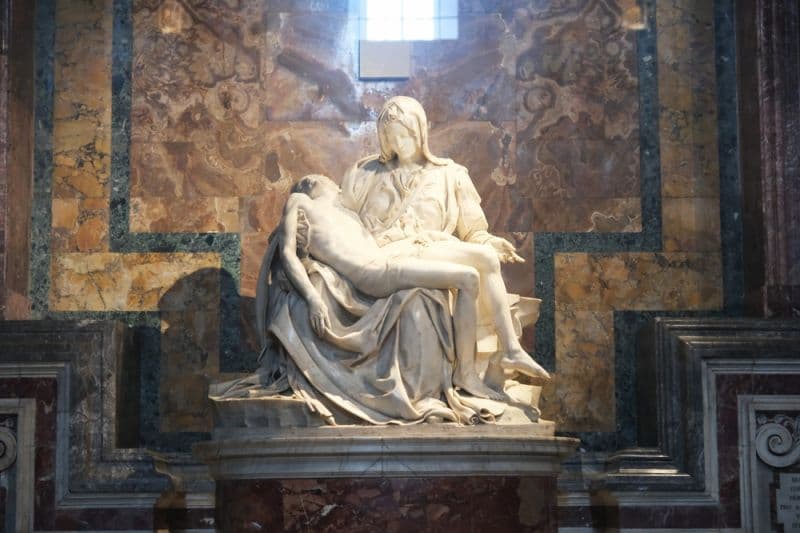
Notorious attack on Michelangelo's Pietà occurred on 21 May 1972. On this day 54 years ago, a Hungarian man called Laszlo Toth climbed over an altar rail in St Peter’s Basilica and attacked Michelangelo’s Pietà with a geologist's hammer, while screaming: “I am Jesus Christ – risen from the dead.” The Renaissance masterpiece, which portrays the Madonna holding the dead body of Jesus after he was taken down from the cross, suffered extensive damage from Toth's approximately 15 hammer blows.
Analysis Methodology
This narrative analysis was generated using the CoDataLab Global Intelligence Engine. Our proprietary AI scans thousands of cross-border sources to identify sentiment patterns, framing techniques, and potential media bias. While AI provides the data-driven foundation, our objective is to empower readers with additional context beyond the standard headline.The content displayed above is a structured summary designed for rapid information processing. For the full original report, please visit the source outlet.Toth was apprehended by bystanders The attack, which took place in front of horrified pilgrims, saw Toth knock the Madonna's left arm off at the elbow, chipping off an eyelid and a significant part of the statue's nose. Vatican dispays casts of Michelangelo's three Pietà sculptures The 33-year-old Toth was quickly restrained by bystanders, including the American sculptor Bob Cassily who punched the assailant several times before pulling him away from La Pietà. Before and after the restoration of La Pietà The chapel floor was littered with around 100 fragments from the statue which Michelangelo carved from a single block of Carrara marble before it was unveiled in 1499. Some of those present pocketed these chipped remains as souvenirs, with at least one person subsequently repenting and sending the ill-gotten memento back to Rome anonymously from the United States. Restoration of the Pietà The Vatican was faced with a dilemma regarding the restoration, with art historians divided on how to proceed. Some experts said the statue should remain in its damaged state, others argued that it should be fixed but distinguishing clearly the restored parts from the original. Laszlo Toth In the end the Vatican opted for an “integral” procedure invisible to the naked eye, according to Reuters, resulting in one of the most delicate and complex art restorations in history. Florence restores Michelangelo's Pietà in public The operation saw restorers spend more than five months identifying all the fragments, some minuscule, before beginning to piece them together invisibly with glue and powder ground from Carrara marble. When the painstaking restoration was complete, about 10 months after the attack, the Pietà went back on display - this time behind bulletproof glass. What happened to Laszlo Toth? In view of his apparent insanity, Toth was never charged with the crime. In January 1973 he was committed to a psychiatric hospital in Italy. Toth was released in February 1975 and deported from Italy to Australia, where he had studied prior to the Pietà attack. Australian authorities did not detain him and he faded into oblivion, reportedly living a hermit-like existence in a remote part of New South Wales. Toth died on 11 September 2012.
Analysis Methodology
This narrative analysis was generated using the CoDataLab Global Intelligence Engine. Our proprietary AI scans thousands of cross-border sources to identify sentiment patterns, framing techniques, and potential media bias. While AI provides the data-driven foundation, our objective is to empower readers with additional context beyond the standard headline.The content displayed above is a structured summary designed for rapid information processing. For the full original report, please visit the source outlet.Narrative Intelligence Report
Our AI engine has processed this content to identify structural patterns, rhetorical techniques, and underlying sentiment.
Source Credibility
This article aligns with typical narrative patterns from its source. Our engine suggests evaluating this piece with awareness of its detected rhetorical framing.
Wanted in Rome
Coverage and analysis from Italy. All insights are generated by our AI narrative analysis engine.