The Question That Torpedoed Trump’s Birthright Citizenship Case
April 2, 2026
The New Republic
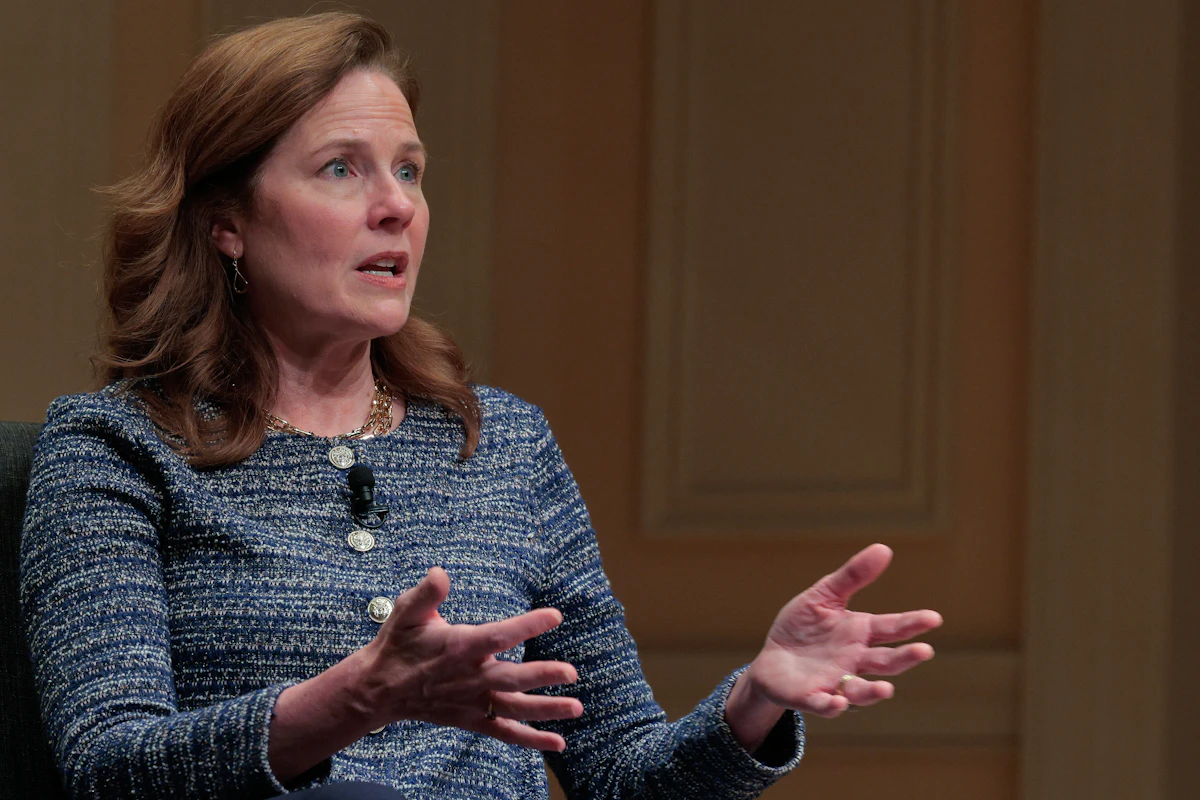
A combative line of questioning from Justice Amy Coney Barrett could have been the death knell for Donald Trump’s scheme to undo birthright citizenship.Solicitor General D. John Sauer argued Wednesday on behalf of the Trump administration that children should not receive citizenship if their parents lack “domicile” in the U.S.—an attempt to strip citizenship from people born in the U.S.
to foreign, noncitizen parents.Evan Bernick, a professor at Northern Illinois University College of Law, explained on Slate’s Amicus podcast later that day that Barrett’s decision to home in on the issue of slavery—and the presence of people who were forced by external powers to live in the U.S.—could have torn an irreparable hole in the government’s case.“She made very clear that she viewed the children of slaves through the lens of unlawful immigration,” said Bernick. “She thought that the situation of enslaved people’s children was not something that could be settled on the basis of any domicile requirement. Because if we think about domicile as ‘presence with intent to remain.’” “Well, enslaved people didn’t intend to remain anywhere!” Bernick continued. “They were taken. They were forced into a place. So domicile can’t be the rule, because then you can’t unproblematically grant citizenship to the children of formerly enslaved people.”Birthright citizenship was enshrined in 1866 by way of the Fourteenth Amendment, which reads: “All persons born or naturalized in the United States, and subject to the jurisdiction thereof, are citizens of the United States and of the State wherein they reside.” Sauer was similarly flustered by a query from Justice Neil Gorsuch, who asked if the government considered Native Americans as birthright citizens. Despite the fact that native people lived on the land long before European colonizers arrived, Sauer could only point to the Indian Citizenship Act of 1924 as evidence of their deserved U.S. citizenship.“Do you think they’re birthright citizens?” Gorsuch pressed.“No, I think the clear understanding that everybody agrees in the congressional debates is that the children of tribal Indians are not birthright citizens,” Sauer said.Gorsuch asked Sauer to clarify based on the domicile of the parents.“I think so, on our test. They’re lawfully domiciled here. I have to think that through, but that’s my reaction,” Sauer said. Trump tried and failed multiple times over the last year to strip the constitutionally enshrined right. Mere hours after he was sworn into office, Trump signed an executive order stating that children born to immigrants on temporary visas or who are in the country illegally are not entitled to birthright status. That order was unanimously blocked by several judges in different court circuits over the last year. The Supreme Court had a chance to consider the executive order but opted to roll back nationwide injunctions instead.This case stems from a challenge out of New Hampshire, finally bringing a birthright legal challenge to the nation’s highest judiciary. The nine-justice bench, stacked with three Trump appointees, who include Gorsuch and Barrett, heard the merits of the case with Trump in the room, making him the first sitting U.S. president ever to attend Supreme Court arguments.
The New Republic
Coverage and analysis from United States of America. All insights are generated by our AI narrative analysis engine.