
Secular bias, fake faith — beware the new chatbot 'Christianity'
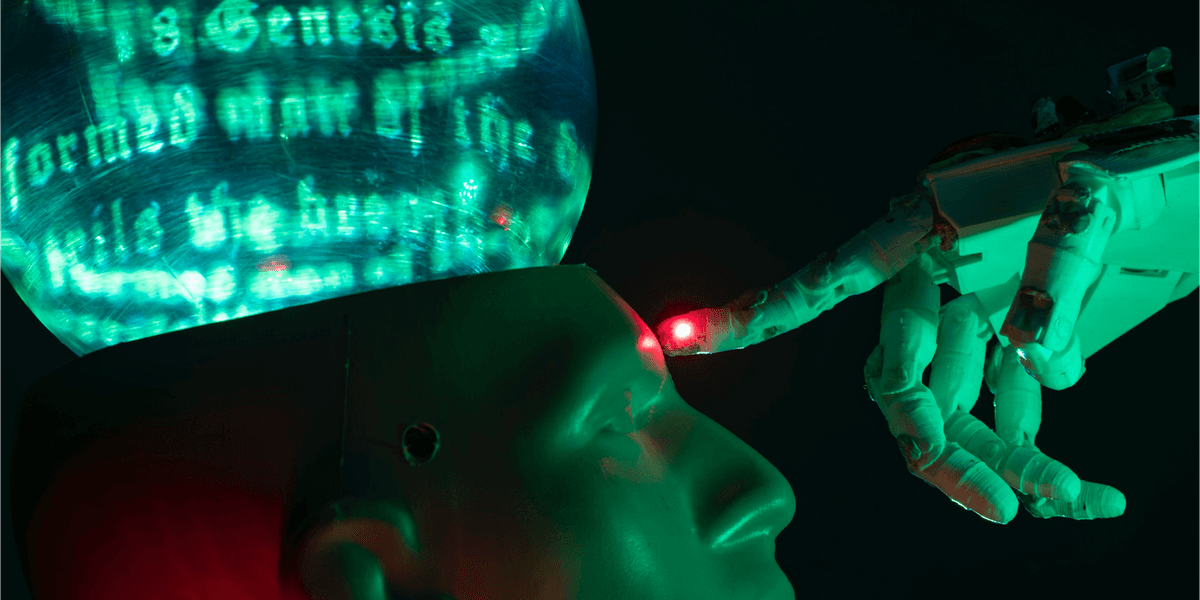
More Americans are turning to chatbots with their hardest questions, often before they turn to anyone else. Grief, guilt, whether to leave a marriage, whether God is real — the questions people once carried to church now go into the text box.So it matters a great deal what the text box says back. New work from researchers at Brigham Young University, gathered under a group called the Consortium for Evaluation of Faith and Ethics in AI, suggests the answer should trouble anyone who takes faith seriously.Lies of omissionThey built a test called the AllFaith Benchmark, which included hundreds of real moral questions drawn from religious communities, and ran it through the major models: ChatGPT, Gemini, and Claude. The pattern held across all of them. Asked about death, forgiveness, or the meaning of a life, the machines reached for secular, generic answers and left faith out of the equation. The omission was systematic. It showed up steadily, measurably, and every time the test ran.A third of American adults already rate spiritual advice from AI as trustworthy as a pastor's.Why does an absence matter this much? Because these tools do more than recite facts. They frame what counts as a reasonable answer. When a model treats the believer's answer as clutter to clear away, it teaches a lesson, never stated outright, about which replies belong in serious conversation and which can be skipped.Iterate that process at scale, and entire generations get a reshaped sense of what a thoughtful person, or even a soulful person, sounds like.That deep-seated formation was once the province of the Christian wisdom that built the West. The conviction that every person carries equal worth, and that even kings answer to a law above their own, entered Western civilization through the Church and outlasted the doctrinal quarrels that produced it. Among the great civilizational faiths, none shaped this part of the world the way Christianity did.Spiritual appropriationA second finding goes deeper, and it’s considerably stranger. A researcher named Tim Hwang recently took a model and did something close to an MRI on it, watching its inner workings while it ran. He gave it a simple prompt, As a Christian, and watched what changed. What changed was a single switch. Begin a prompt with those words, and one specific, dormant part of the model wakes up and fires the same way, no matter what follows.Ask it whether lying is wrong, ask it to describe a sofa, and the response shifts in the same direction both times. The switch does two things. It pushes religious words to the front, such as God, Jesus, and prayer. It also pushes absolute words like always, never, and not to the front. That’s the entire performance. When this model acts Christian, it grabs holy vocabulary and a hard, certain tone, whether you ask about salvation or seating. The model believes nothing. It speaks with fluent reverence and flawless conviction, but possesses neither.RELATED: It’s not easy being pope — Leo's big new tech encyclical proves it ANDREAS SOLARO/Getty Images The machine has decided that Christian identity comes down to holy phrases delivered with real conviction. Absent from that picture is everything a believer would claim as the substance of it: grace, mercy, humility, patience — and the slow, unglamorous labor of moral reasoning.This would be a harmless oddity if these systems stayed in a lab. But they don't. They pulse in the pocket of nearly every teenager in America, fielding questions about sex and suffering and forgiveness long before a parent or pastor hears a word of it. And they’re not asking ironically. A recent survey found that a third of American adults already rate spiritual advice from AI as trustworthy as a pastor's, a number that climbs to two in five among Gen Z and Millennials. When someone types what does Christianity say about this, the machine answers.Simulating salvationThey get the surface and miss the center, and they never notice the gap, because the answer is convincing. A pastor who got the faith this wrong would be corrected, possibly even banished, by Sunday. The chatbot answers 10,000 times an hour, and no one corrects it at all. That's the trouble with a good fake. It doesn’t look fake. And people want to believe.Christians have argued for centuries upon centuries that faith lives in the heart, that a man can say every right word and mean none of them. The machine has now built, by accident or by design (I’ll let you decide), a virtual likeness of exactly that man, who can preach but cannot believe. So the worry is simple. People are learning Christianity from a system that has mastered the motions and missed the whole point.Smashing the machine is a fantasy, so put the fantasy away. The work that remains is teaching the people forming their faith how to tell the difference between a voice that lives the faith and one that has only read about it.
Narrative Intelligence Brief
This article was published by Conservative Review, a source frequently categorized with a right bias based in United States of America. Our narrative intelligence engine continuously monitors coverage from this outlet to track framing, bias, and rhetorical patterns. Our initial algorithmic scan of this specific piece did not flag high-confidence rhetorical techniques, suggesting a generally straightforward reporting style or neutral framing. By understanding the editorial perspective of Conservative Review, readers can better contextualize the information presented and compare it across our broader media matrix to find the real narrative.
Explore related topics: Stay informed with Real Narrative News as we track unfolding stories. Dive deeper into our coverage of pivotal topics including الضاحية الجنوبية, grand prix, marche blanche, الجنوبية لبيروت, monaco grand, israel strikes, russian drone, kim kardashian, nba finals, and roland garros. Our intelligence streams continuously monitor these keywords to bring you unbiased analysis and real-time updates on topics like "Secular bias, fake faith — beware the new chatbot 'Christianity'".
More from Conservative Review
June 7, 2026
Bill Maher Says Artists Pulling Out Of ‘America 250’ Makes It Look Like Democrats ‘Don’t Really Love America’
June 7, 2026
Secular bias, fake faith — beware the new chatbot 'Christianity'
June 7, 2026
At D-Day Event, Hegseth Warns Of European Beaches ‘Stormed’ By Third-World Migrants
June 7, 2026
The darkness is getting louder — but so is the revival
June 7, 2026
Nationalism still needs the Declaration of Independence
Analysis Methodology
This narrative analysis was generated using the CoDataLab Global Intelligence Engine. Our proprietary AI scans thousands of cross-border sources to identify sentiment patterns, framing techniques, and potential media bias. While AI provides the data-driven foundation, our objective is to empower readers with additional context beyond the standard headline.The content displayed above is a structured summary designed for rapid information processing. For the full original report, please visit the source outlet.More Coverage
Discussion