
Rubio warns risk of escalation in Russia-Ukraine war is ‘more real than it was two years ago’
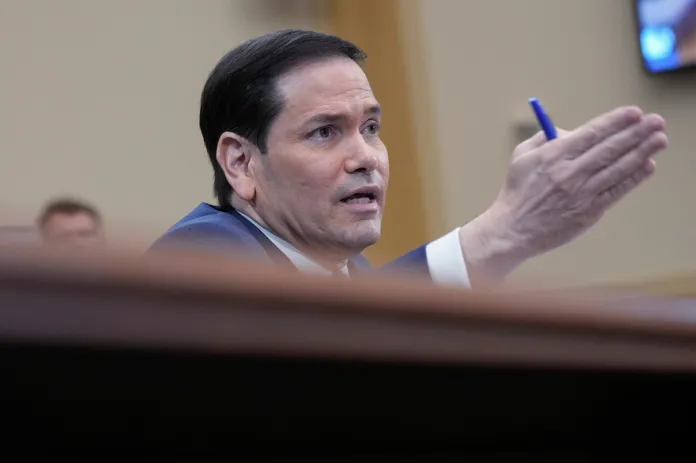
Secretary of State Marco Rubio believes the Russia-Ukraine war “has no military solution” but fears an increase in long-range exchanges could dramatically escalate the violence. Speaking to Sen. Dick Durbin (D-IL) during a Senate Appropriations subcommittee hearing on Wednesday, Rubio offered a lengthy assessment of the Russian invasion. He noted specifically that “one thing that []
Narrative Intelligence Brief
This article was published by Washington Examiner, a source frequently categorized with a lean right bias based in United States of America. Our narrative intelligence engine continuously monitors coverage from this outlet to track framing, bias, and rhetorical patterns. Our initial algorithmic scan of this specific piece did not flag high-confidence rhetorical techniques, suggesting a generally straightforward reporting style or neutral framing. By understanding the editorial perspective of Washington Examiner, readers can better contextualize the information presented and compare it across our broader media matrix to find the real narrative.
Explore related topics: Stay informed with Real Narrative News as we track unfolding stories. Dive deeper into our coverage of pivotal topics including iran war, conference transcript, nba finals, real madrid, war powers, sells stock, powers resolution, earnings transcript, house passes, and donald trump. Our intelligence streams continuously monitor these keywords to bring you unbiased analysis and real-time updates on topics like "Rubio warns risk of escalation in Russia-Ukraine war is ‘more real than it was two years ago’".
More from Washington Examiner
June 3, 2026
Thune moves to neutralize immigration bill landmines from DOJ lawfare fund
June 3, 2026
Trump ‘proud’ of Iran war for making everyone ‘a lot of money’: ‘Everything’s good’
June 3, 2026
Intelligence committee lawmakers say they haven’t spoken with Bill Pulte
June 3, 2026
Trump makes a splash with Oval Office chart comparing reflecting pool to skyscrapers
June 3, 2026
Poland asks US to build permanent military base on its territory
Analysis Methodology
This narrative analysis was generated using the CoDataLab Global Intelligence Engine. Our proprietary AI scans thousands of cross-border sources to identify sentiment patterns, framing techniques, and potential media bias. While AI provides the data-driven foundation, our objective is to empower readers with additional context beyond the standard headline.The content displayed above is a structured summary designed for rapid information processing. For the full original report, please visit the source outlet.More Coverage
Discussion