One company’s obsessive, decade-long quest to make American cheese that’s actually cheese
March 31, 2026
Fast Company
Bad, yet still pretty good, American cheese refuses to expire—and not just because of all the preservatives. American cheese—pasteurized, processed, and super-melty—is, for better or worse, arguably the 20th century’s most iconic food product. And yes, “pasteurized, processed cheese food” is what federal regulators call it instead of “cheese.” It is a paradox embraced shamelessly by some of the most elite food names around.
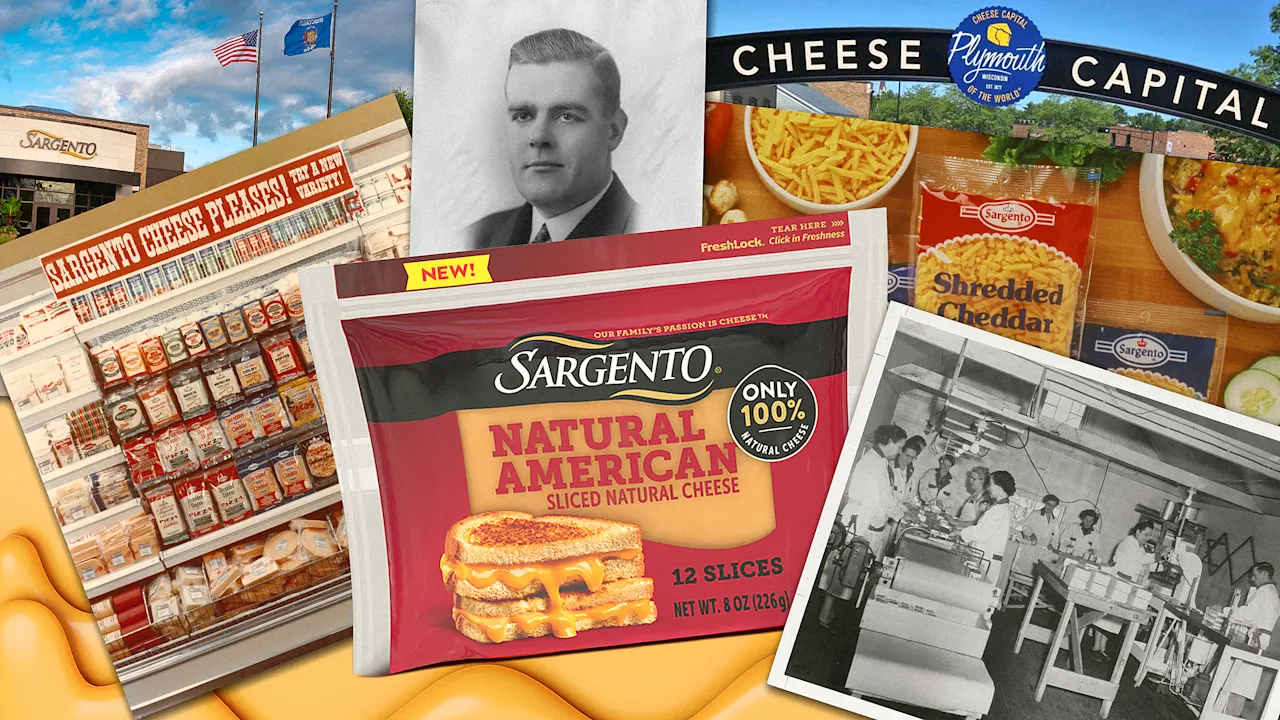
From Salt Fat Acid Heat author Samin Nosrat (“I have a secret love of American cheese, the yellow kind that has a plasticky quality when it melts”), to J. Kenji López-Alt, whose The Food Lab dedicates a chapter to the science of melting cheese (“damn right it’s gonna be American”), to even the, er, killer high-end chef in The Menu, played by Ralph Fiennes (“American cheese is the best cheese for a cheeseburger, because it melts without splitting”), the culinary world has simply never found a substitute. What makes American cheese “American”—its uniformity, gooey texture, the way it behaves—are ingredients that don’t naturally lend themselves to being made fresher, fancier, or healthier. Most brands have largely left the recipe alone, making just cosmetic adjustments (a cleaner ingredient or two, something spicy for an exciting kick) even as attitudes about food have shifted. About two decades ago, the family-owned natural cheese company Sargento, founded in Wisconsin in 1953, began asking a question seemingly nobody else was asking: Can you make an exceptional American cheese from real ingredients without destroying what makes it distinctive? Or, as Louie Gentine, who, as the company’s third-generation CEO (who notably did not grow up eating American cheese at home) puts it: “If these consumers really are attached to that cheese, can we take advantage of that—bring them a natural cheese option for what they love?” The answer, improbably, was yes. Sargento’s Natural American Cheese, which started hitting grocery shelves nationwide in March 2025, was the result of a secret RD operation that spanned a decade. The bet behind it was that those bland 3.5-by-3.5-inch yellow squares represented serious untapped market potential. [Photo: courtesy Sargento] “It’s a 2 billion category,” COO Michael Pellegrino says with a shrug. There are more than 400 million pounds of American cheese sold each year, or more than a pound per American person. Sargento estimated that a natural version could become a 100 million product. The push and pull of American cheese By the mid 2010s, the writing was clear. Consumers had officially broken from their boomer forebears, turning their backs on processed foods to chase more natural options, and now the cheese police were out in force. A report from the Food and Drug Administration that was circulated widely in 2016 found that some shelf-stable pre-grated “100 Parmesans” contained no Parmesan at all, instead relying on a mixture of mostly Swiss, mozzarella, white cheddar, and wood pulp. As the category’s standard bearer, American cheese was squarely in the crosshairs. Online, videos went viral of people trying to melt a Kraft Single over an open flame, only to watch it turn black like a piece of plastic. By 2018, the entire processed-cheese category had posted four straight years of sales declines. (A headline on a big Bloomberg piece from that October read: “Millennials Kill Again. The Latest Victim? American Cheese.”) Better-for-you brands like Organic Valley and Horizon Organic rushed out “organic” processed cheeses. Restaurant chains like Cracker Barrel, Wendy’s, and Panera replaced American with fancier varieties, and claimed that customers were rewarding them for that move. McDonald’s announced a fully proprietary new American cheese that it said was free of artificial ingredients. But the attempts at improving American cheese itself went only so far. Even if it was no longer “artificial,” McDonald’s solution still blended real cheddar and Colby with unknown amounts of cheaper dairy ingredients and stabilizers such as soy lecithin. (On TikTok, former McDonald’s corporate chef Mike Haracz later recommended Walmart’s Great Value Deluxe American to followers looking to score a near-identical product.) Kraft believed it had built a liquified orange moat around itself, telling the press that the reason it paid 30 people in RD to put more American cheese in more home kitchens is because natural cheeses “just don’t melt that way.” Still, in 2023 Kraft completely revamped Singles anyway, debuting caramelized onion and jalapeño flavors while announcing that all artificial flavors, colors, and preservatives were being eliminated. Packaging got an update, too: Next to the word “American,” is a graphic with the words “MADE WITH REAL DAIRY.” Yet for anyone counting at home, a basic Single still contains 17 ingredients—among them milk protein concentrate, sorbic acid, vitamin A palmitate, and oleoresin paprika for that telltale yellow color. Meanwhile, total cheese consumption in America has been on an unstoppable tear, with each decade’s per-capita rate crushing the previous one since the 1950s. Data from the U.S. Department of Agriculture’s Economic Research Survey shows that natural cheese consumption has grown exponentially—from 26.9 pounds in 1995 to 32.9 pounds in 2010 to 40.5 pounds today—while consumption of processed cheese has risen by about half a pound, suggesting that people are buying way more natural cheese but not necessarily giving up the processed stuff. (Consumption of entirely nonnatural cheese products, such as cheese spreads, has cratered by as much as 25.) Sargento, in its own research, was noticing a prevalence of what Gentine dubs “dual users”: households buying a natural Muenster or Gouda plus processed American cheese on the same trip. When Sargento asked why, participants said they were just making the best of the options available to them. “That was the ‘aha’ moment for us,” Gentine says. If Sargento could create a cheese with the same simple ingredients that go into natural cheesemaking—fewer than half a dozen—and, through some technical prowess, make it perform the way American does, it could be a cross-generational breakthrough. [Photo: courtesy Sargento] The Sargento Story Processed cheese was such a mind-blowing innovation a century or so ago, with attributes so unmatchable that it has stayed far more culturally relevant than other processed products of the era, such as TV dinners and Crisco. It was created when a Chicago cheesemaker named James Kraft patented a process in 1916 for pasteurizing cheese to kill bacteria and extend shelf life. Traditional cheesemakers lobbied food regulators to call this new category “embalmed cheese,” but the FDA eventually decided that “processed” would be okay. The label wasn’t a handicap for Kraft. The company’s genius lay not in old-fashioned cheesemaking but in creating a milk-based product that, thanks to emulsifying salts, was convenient, reliable, and high-performing. By 1952, a generation glued to Kraft-sponsored television never thought to question whether Singles were cheese. The brand became like Heinz ketchup, the indisputable category leader. Leonard Gentine, circa 1930s [Photo: courtesy Sargento] Two hours north, meanwhile, in Plymouth, Wisconsin—a hamlet of around 9,000 today that sports a “Cheese Capital of the World” arch downtown—Louie Gentine’s grandfather Leonard opened a cheese store in a building owned by his funeral home business. In 1953, it became the Sargento Cheese Company, with a mission to sell natural cheese in more accessible forms, and maybe even some brand-new ones. Leonard, a machinist by training, was “always trying to make something go through the machines better,” Gentine explains. Early vacuum-sealing process [Photo: courtesy Sargento] Sargento grew to dominate the packaged natural cheese space that Kraft had ignored, becoming America’s leading brand. Today it is one of the largest privately held companies in the country, with 2,500 workers spread across five sites in Wisconsin’s Sheboygan County, and reported revenue as high as 1.8 billion per year, a sizable portion of the 45 billion U.S. cheese industry. [Photo: courtesy Sargento] Sargento was the first to sell prepackaged natural sliced cheeses—Italian-style varieties like Parmesan and Romano. In 1955, it introduced the vacuum seal for cheese sold in stores. In 1958, it began selling the first pre-shredded cheese (in nitrogen-flushed bags to prevent clumping). In the ’60s, it developed round slices for burgers, and smaller square-shaped ones for crackers. By the ’70s, it had pioneered the peg-hook system now standard in dairy cases; in the ’80s, it debuted resealable zipper bags; in the ’90s, it combined two different types of shredded cheese for the first time in a single pack. From left: Larry, Lee, Leonard, and Lou Sargento, circa early 1980s [Photo: courtesy Sargento] Leonard passed the baton in 1981 to his son, Lou, who brought in his brothers Larry and Lee. In 2006, a group of nearly 100 factory workers won the largest Powerball jackpot in Wisconsin history, worth 208 million. Most kept their jobs, telling reporters they planned to use the money to build additions onto their homes, visit Disney World, or, in one man’s case, convert his 1999 Sportster Harley-Davidson motorcycle into a three-wheeler. It was the kind of job people didn’t leave. Louie Gentine took over in 2013, after a stint in commercial banking in Chicago, as Sargento was hitting a groove. Every year in the consumer packaged goods industry more than 30,000 products are introduced, but the vast majority fail within two years. Megahits are so rare that a major consumer research group, NIQ, gives out awards for them. Sargento took one home in 2014 for Ultra Thin slices, then in 2017 and 2022 for its snack packs. To make Ultra Thin slices, one Sargento engineer registered 10 patents. (Trying to goose sales in 2023, Kraft released Singles in similarly themed Extra Thin and Ultra Thick varieties.) This period, while millennials were busy killing American cheese, would have been an ideal moment to release Sargento Natural American Cheese. But the company—or more precisely, its product concept—wasn’t ready. Rod Hogan, SVP of innovation, recalls that in 2014 and 2015, the company spent 18 months developing a couple of options the team believed could win over American cheese enthusiasts—one made from a very mild cheddar, the other from Monterey Jack—and tested them with consumers. “They were like, That ain’t it,” he says. The company knew it had a good idea, “but we just couldn’t deliver it.” So Sargento called a time-out in 2015. That was when the American cheese gauntlet got thrown down in the C-suite. If Sargento wanted to challenge processed American cheese, it wouldn’t be through a minor tweak. This needed muscle—the project would go to Elkhart Lake. [Photo: Sargento] “We made grilled cheese until the cows came home” Six miles north of Plymouth, in a building in the quaint resort village of Elkhart Lake, is a division cordoned off from Sargento headquarters in an almost Area 51-ish way: the “Strategic Area of Interest” group. Here, a small set of researchers works on Sargento’s most confidential projects that lie “beyond our three-year strategic plan,” as Gentine explains it. This time, it meant thousands of grilled cheeses. “We made grilled cheese until the cows came home,” VP of RD John Rodgers tells me. “We went through a lot of frying pans.” The goal wasn’t to copy processed cheese. “We knew we couldn’t mimic what they’re doing,” Rodgers says, meaning a one-for-one “natural” version of what Kraft and others in the category do. “It was more: How do we take the attributes of processed cheese and apply them to natural cheese? Really, what’s at the heart of American? It’s that melt, and it’s the flavor.” Step one entailed what Hogan labels “the most rigorous grilled-cheese-making protocol ever developed,” hich meant settling some deceptively basic questions: Which bread? How much cheese? What cook time? What temperature? Butter in the pan? Mayo? They landed on a teaspoon of oil to control how the bread crisped, and, after some mishaps, two slices of cheese. “It’s just, like, a grilled cheese sandwich,” says Hogan, “but the team is in there with their temperature gauges and stopwatches.” With the protocol locked, they discovered—as days became weeks, then years—that the task was going to be genuinely difficult. In a natural cheese, melt and flavor are in careful equilibrium; getting one of these attributes to behave like a processed cheese throws the whole balance out of whack. “I mean, this was an apple and orange, it was a dog and a cat,” Hogan says with a laugh. “We were trying to figure out how to make a dog that purrs and likes to climb.” [Photo: Sargento] Sometimes, a prototype with a good pull gave an off flavor; other times, better taste sacrificed texture. Even if Rodgers’s team ever solved the riddle, the end consumer—the greatest variable of all—still needed to say that the product looked and tasted like American cheese, only better. During this time, Rodgers’s team reported directly to Gentine, which meant the CEO was consuming his fair share of grilled cheeses, too. “We couldn’t just be close enough. We had to be exact,” Gentine says. “I remember tasting early versions and thinking, We have great melt, but maybe the flavor profile has too much of an aftertaste that lingers?” He compared the stubborn flavor-versus-texture problem to displacement when you squeeze a water balloon. “You solve the aftertaste, and something else moves. Then you fix that, and something else tweaks.” At one point, the team recruited researchers based in Europe, people with fewer preconceived ideas of what American cheese should be. They continued making grilled cheeses, chasing a particular mouthfeel and working to nail a cheese pull of 4 to 6 inches—far less than mozzarella, which can string up to 3 or 4 feet, but a proper “ooey-gooey” texture for American. Ultimately, the winning recipe contained five ingredients: pasteurized milk, cheese culture, salt, enzymes, and annatto, a nutty plant dye that makes many cheddars yellow. “It’s going to be very difficult for somebody else to knock it off,” Rodgers says with a chuckle. “You can’t just put an emulsifier in there and get what you need [as you can with processed cheese] It’s going to take someone as singularly focused as we were to reverse-engineer what we’ve done.” Since Sargento’s Natural American launched last March, it has boosted sales for the U.S. American cheese segment by 37, and the company says it boasts the highest repeat-purchase rate in the brand’s entire “Natural Slice” line. Put another way, Sargento made a natural cheese that one year in is beating processed cheese at its own game, while essentially being voted most popular among its fellow natural cheeses. “Anytime you research something for 10-plus years, you learn a lot,” Rodgers says of the effort. “There are learnings that came out of this development that we’re going to apply in the future.” After a half-second beat, he adds: “I am hoping we can cut that development time down.”
Fast Company
Coverage and analysis from United States of America. All insights are generated by our AI narrative analysis engine.